In front of a packed audience at Arena Monticello in Santiago, Chile, Patrick Haines, VP of fresh sourcing at Kroger, delivered a clear message to Southern Hemisphere producers: the US cherry market still has enormous room for growth.
Speaking as a keynote speaker at the 7th edition of the Global Cherry Summit, held on April 21, Haines described the United States as a high-potential market for imported fresh fruit. In Kroger stores, he explained, the produce department is almost always positioned at the entrance, a choice designed to immediately communicate freshness, quality and value to consumers.
“Our customers are very fresh-forward: they are looking for new things and want to expand their experience in the fresh department,” he said.
Chilean cherries and Peruvian grapes: strong reputation, still limited market share
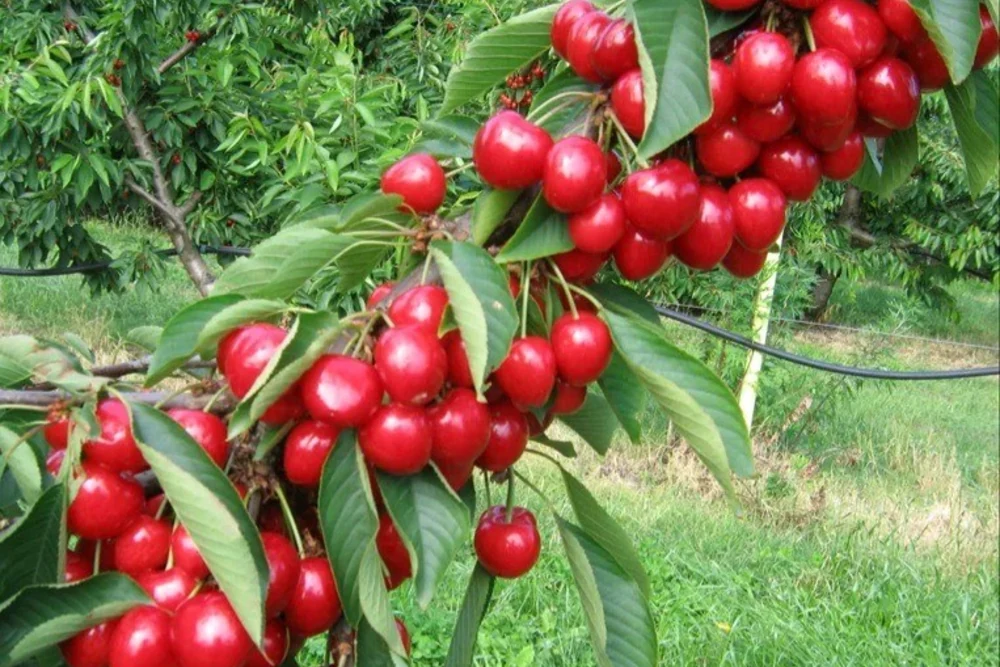
According to Haines, products such as Chilean cherries and Peruvian grapes have not yet achieved a market share in the United States proportionate to the volumes available and the reputation they have built in international markets.
For Kroger, the point is not to chase isolated seasonal peaks, but to turn these supplies into a more stable commercial relationship, capable of generating value for both producers and American consumers.
The gap with grapes and citrus: cherries could grow eightfold
The core of Haines’ speech was the comparison between the performance of grapes, citrus and cherries in the transition from the Northern Hemisphere season to the Southern Hemisphere season.
During the US summer, domestic grape sales represent the 100% benchmark for Kroger. When the season shifts to the Southern Hemisphere, between November and May, the retailer still manages to maintain around 74% of those volumes. A similar trend can be seen for soft citrus, which retains 76% of domestic volumes thanks to supplies from Peru, Chile and South Africa.
For cherries, however, the scenario is very different. Domestic sales from Washington and California are solid, but the Southern Hemisphere share, in the season just ended, reached only 9% of Northern Hemisphere volumes.
For Haines, this is the real “opportunity gap”.
“If we could bring this business to a level similar to what we have with soft citrus and grapes, in the United States we would have the opportunity, very directly, to sell eight times more cherries than we do today,” he said.
The estimate, described by the manager himself as “rough,” points to a potential worth 800 million dollars, achievable through greater alignment between production, distribution and retail.
The challenge for the Chilean sector: more high-quality fruit for the US
Haines invited participants at the Global Cherry Summit and, more broadly, the Chilean cherry industry to allocate a greater share of high-quality fruit to the US market.
This reasoning fits into a context in which demand from other global markets, such as China, tends to stabilize. According to the manager, the United States can therefore become a strategic destination to expand sales and diversify channels.
Three levers to unlock potential: quality, retail and consumers
To turn the 800-million-dollar opportunity into concrete results, Haines proposed a shared strategy between producers, retailers and consumer-facing marketing organizations.
On the production side, the priority must be consistent quality. The manager drew attention to the need for more uniform selection, better post-harvest practices to reduce pitting, and the ability to promote the product at its peak freshness.
Another issue concerns packaging. Haines encouraged producers to share the innovations already developed in global markets, especially those capable of attracting American consumers who are most responsive to the fresh category.
“At Kroger, we have focused mainly on bulk cherry bags and, to some extent, on a few limited clamshells. We saw some very interesting packaging in the demonstration area, and we will take some of those ideas with us,” he explained.
The role of retail: moving beyond cautious growth
Retailers, according to Haines, must also change pace. Many chains plan annual category growth of between 1% and 3%, but for cherries this approach risks being too conservative.
To get closer to the potential outlined, he said, it will be necessary to aim for much more ambitious increases in the short term, even doubling or tripling volumes. This requires investments in margins, more attractive prices and greater visibility for cherries, including in digital spaces.
“Reawakening” the American consumer
The final piece is communication. Since cherries disappear from shelves for several months, they also fall out of consumers’ purchasing habits. For this reason, Haines spoke of the need to “reawaken” public interest.
The idea is to create in the United States a recurring event or a symbolic moment linked to cherries, following the model of the association built in China with Lunar New Year.
“I can imagine something at the Macy’s Thanksgiving Day Parade, at the Christmas parade or in other high-visibility locations in the United States, to bring consumers back into the right mindset and get them thinking about cherries again,” he said. “I would like to create an event that connects the presence of fresh cherries on the market with the Christmas period.”
Toward a new standard for Chilean cherries in the US
Superior quality, faster logistics, more effective packaging and targeted marketing: for Haines, these are the elements that can turn the “best case scenario” for Chilean cherries into a new standard for US retail.
The challenge now is to move from opportunity to strategy. If the industry succeeds in coordinating production, distribution and promotion, the US market could become one of the most interesting growth avenues for Southern Hemisphere cherries in the future.
Source: www.freshfruitportal.com
Image source: Stefano Lugli
Cherry Times - All rights reserved