At the first online seminar dedicated to the 2025/26 season, the Chilean Cherry Committee of Frutas de Chile updated industry professionals in China on production performance, promotional activities and the nutritional benefits of Chilean cherries.
The event, held on December 23, provided a detailed overview of a campaign that, despite climatic challenges, is aiming high in terms of quality and visibility.
Production down 15%
Dr. Charif Christian Carvajal, marketing director for Asia and Europe at Frutas de Chile, opened the seminar with a key update: export projections for the 2025/26 season have been revised downward by 15% compared to the October estimate, standing at approximately 110 million 5-kg boxes, equivalent to about 550,000 metric tons (or 29,891 containers).
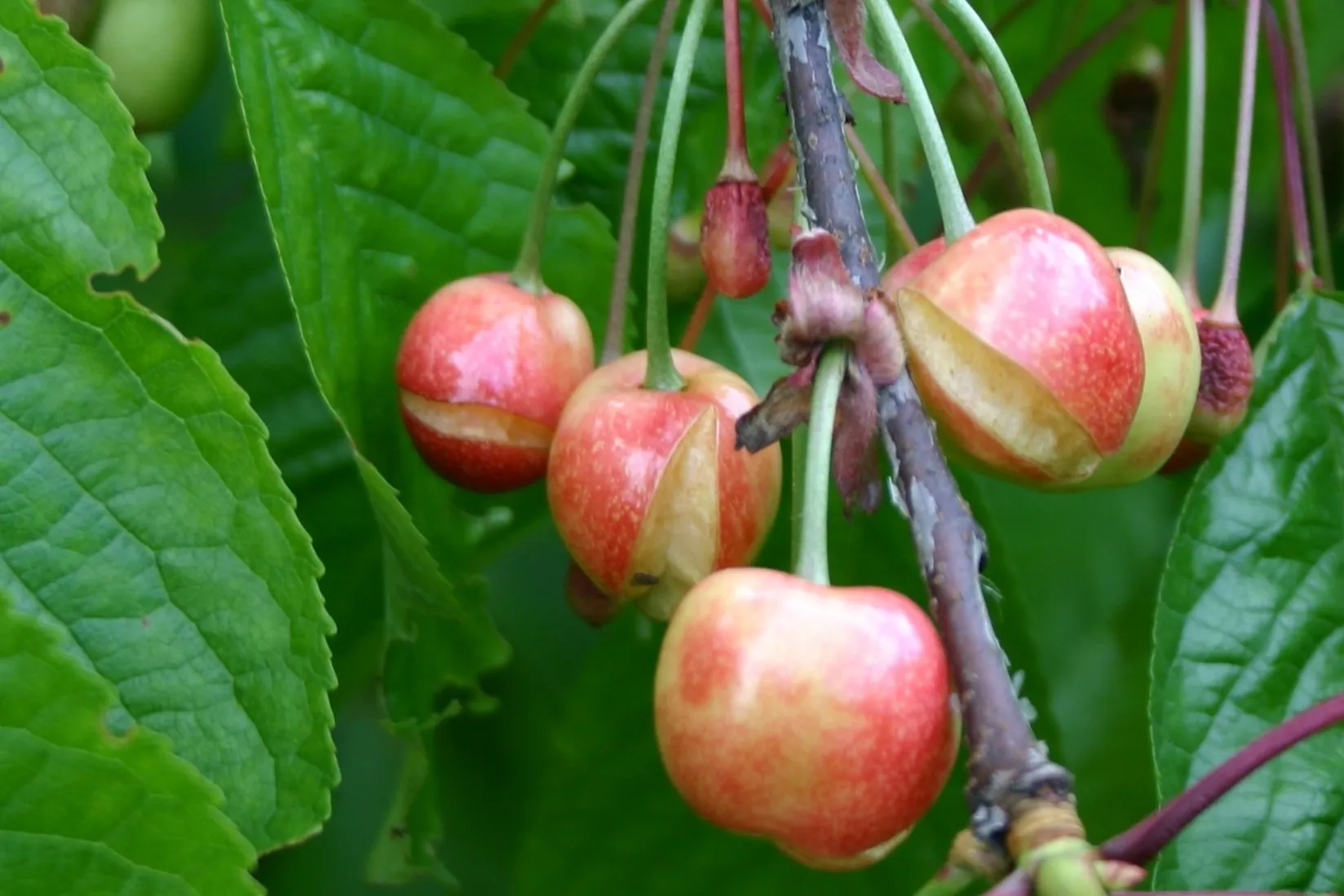
The downturn is mainly due to adverse weather conditions toward the end of spring, which brought the harvest forward by 7–10 days, concentrating shipment flows within a shorter time frame.
The most affected regions are Maule and O’Higgins, particularly for the Lapins and Regina varieties.
Despite these challenges, Carvajal highlighted that the quality of exported fruit remains high: “This demonstrates the commitment of growers and exporters throughout the entire supply chain, from orchard management to harvest and fruit selection.”
Santina leads exports
According to data updated to week 50, the Santina variety accounts for 58% of Chilean exports, followed by Lapins at 30%.
The main destination remains the Far East, which absorbs 90.1% of total volume, in line with historical trends.
Export volumes to date are lower than those recorded over the same period last season, confirming the earlier peak in harvesting and shipping.
Chilean Cherry Ice and Snow Festival
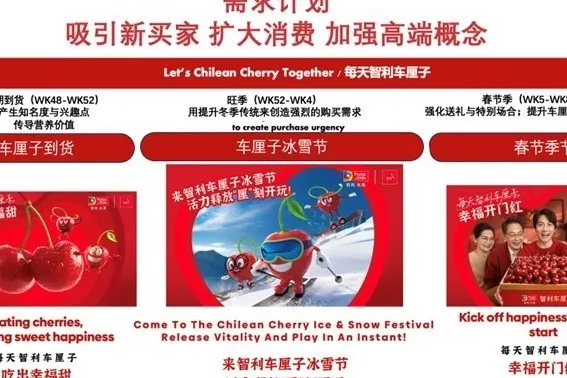
To support sales during such a concentrated period and in the run-up to Chinese New Year, Frutas de Chile has launched a new multisensory marketing strategy: the Chilean Cherry Ice and Snow Festival.
The initiative aims to link the world of cherries with winter sports, Lunar New Year traditions and healthy lifestyles, creating a cultural bridge between Chilean fruit and the everyday lives of Chinese consumers.
The campaign, launched in mid-December and running through the end of January, involves regional and national markets, with events in key cities such as Changchun and Jilin.
These events will feature the participation of local authorities, celebrities, influencers and national media to generate viral social media trends.
Major e-commerce platforms will also take part through dedicated live-streaming sessions, with the aim of converting online interest into actual purchases.
Awards, documentaries and resources
As a form of recognition for retail partners, Frutas de Chile announced the first edition of the Chilean Cherry Annual Awards, with a ceremony scheduled for March 2026 and eight award categories honoring top performers across the supply chain.
At the same time, the documentary “Sweet Miracle”, produced in collaboration with CCTV’s documentary channel, has captured the attention of Chinese audiences: in just 12 days from its release (December 3), it became the most-watched fruit-themed documentary of the year, surpassing 8.26 million views.
The video is available on WeChat, Weibo, Xiaohongshu and Douyin.
Cherries and wellbeing
During the seminar, Associate Professor Qu Chunbo of Shanghai’s University of Health Sciences illustrated the nutritional profile of Chilean cherries.
“They are an excellent source of potassium (335 mg per 420 kJ), magnesium (16 mg) and anthocyanins, and thanks to early, mid-season and late varieties, they cover a seasonal window of more than four months,” he explained.
According to the Dietary Guidelines for Chinese Residents (2022), the recommended daily fruit intake ranges between 200 and 350 grams.
However, in 2018 average consumption stood at just 50 grams per day.
Cherries, with their nutrient density and versatility, represent an ideal choice to help bridge this gap, especially during the winter months.
Text and image source: Frutas de Chile
Cherry Times – All rights reserved