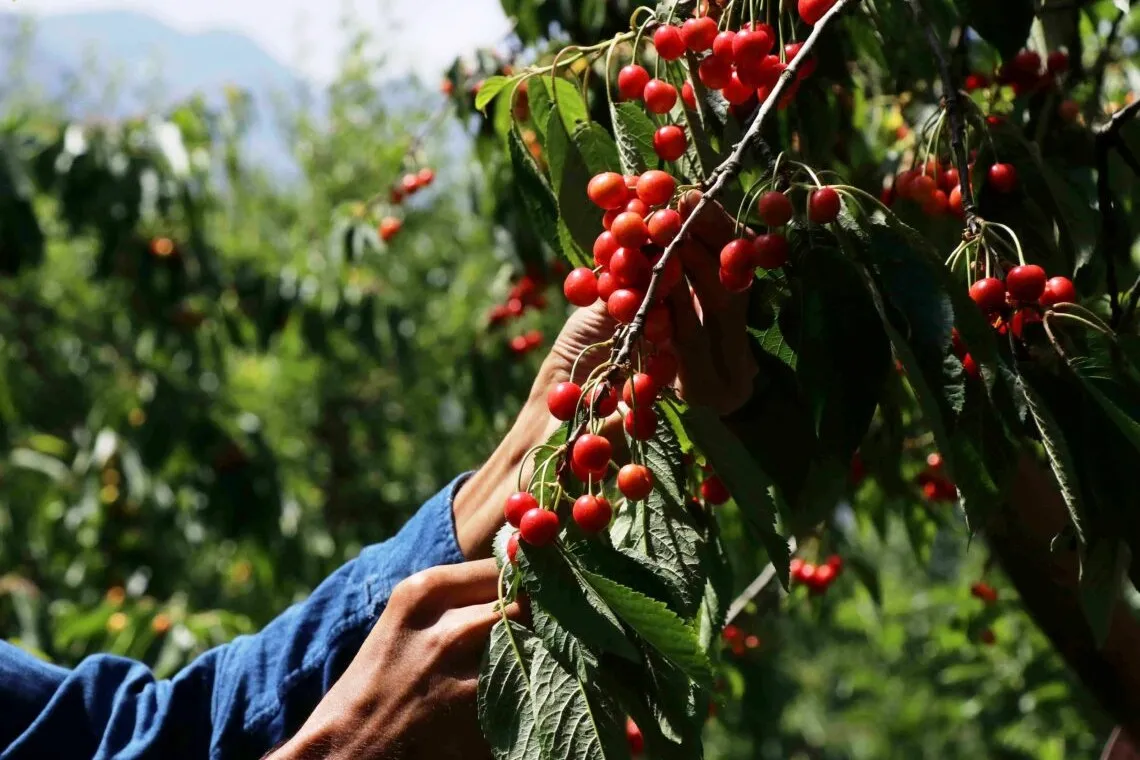
Cherry-growing companies in New Zealand and Australia are facing increasingly unpredictable weather. With sudden rainfall and fluctuations in field conditions, the risk to fruit quality increases, pushing research to identify practical solutions to support growers.
The goal is to preserve firmness, fruit size and commercial value of cherries even in seasons characterized by greater climate variability.
The issue of rain covers
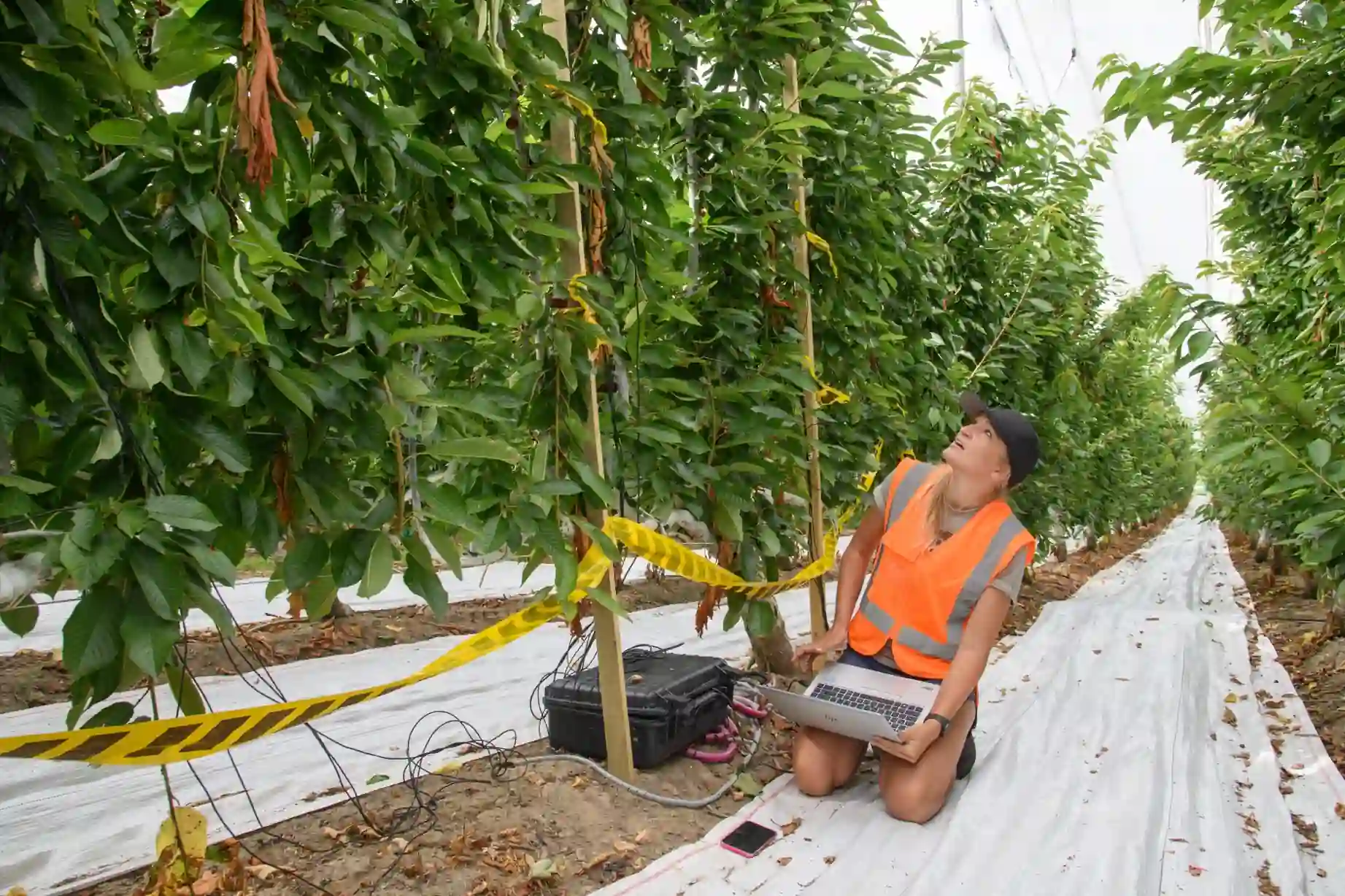
One of the most critical problems for cherry growers is rain-induced cracking: when the fruit splits, it effectively becomes unsellable. To limit this damage, several summer stone fruit producers have introduced rain covers in orchards.
These structures provide direct protection from rainfall, but they also modify the orchard microclimate by trapping more heat and increasing humidity. This creates conditions that differ from those found in fully uncovered orchards.
Claire Scofield, a researcher in the fruit crop physiology team at the Bioeconomy Science Institute, explains that early results collected in Australia show a scenario with both advantages and trade-offs for growers.
Covers protect crops and help increase fruit size, but at the same time they tend to reduce fruit firmness. In other words, both covered orchards and uncovered ones currently present benefits as well as critical issues.
Research on microclimate and fruit firmness
The work of the research group aims to better understand the processes of fruit development and to transform this knowledge into practical tools to improve cherry quality.
Claire Scofield, who has been working on her PhD for two years, is collecting detailed data in orchards across New Zealand and Australia to understand how microclimate differences influence the quality characteristics of cherries.
One of the central questions concerns the relationship between relative humidity in the orchard and fruit firmness. Rain covers increase humidity, but the precise effects of this condition are still not fully understood.
This issue is particularly relevant for export: firmness is one of the decisive variables for commercial quality. Consumers prefer firm cherries, and when fruit becomes too soft, its resistance during transport may be compromised.
This aspect is especially important for shipments to high-value international markets, where product quality plays a crucial role in determining the final price.
Field trials between Central Otago and Tasmania
The project is being carried out on both sides of the Tasman Sea. In New Zealand, a small-scale trial is underway in Central Otago, while in Australia larger experiments are taking place in orchards in Tasmania.
Within experimental blocks under plastic tunnels, researchers recreated different temperature and humidity conditions by installing sensors capable of recording data every 10 minutes between September and February.
The goal is to understand how these variables contribute to the production of softer fruit and which strategies could help growers maintain high quality standards.
Calcium and natural hormones as possible tools
The trials coordinated by Claire Scofield also focus on the role of calcium in maintaining cherry firmness. Growers apply it during specific stages of the season to support the fruit’s cell walls.
The research is also evaluating the use of natural plant hormones as another potential tool to sustain crop quality under more humid climate conditions.
According to the hypothesis under investigation, more humid conditions may reduce the plant’s ability to absorb calcium. The project therefore aims to verify whether a greater supply could compensate for the impact of humidity.
Nearly 4,000 cherries already analyzed
Alongside the data collected by sensors in experimental blocks, researchers have so far analyzed nearly 4,000 cherries to measure firmness and understand how microclimate, calcium applications and other treatments influence fruit texture.
For growers facing increasingly unstable seasons, the practical value of this research could be significant, particularly considering the rise in abnormal weather events.
These phenomena are appearing with growing frequency in the sector and may have very significant economic consequences for cherry producers.
Conclusion
Claire Scofield hopes that this work will provide solid and useful insights to help cherry growers develop new crop management strategies. The research is supported by the Bioeconomy Science Institute and a Tasmanian Graduate Research Scholarship from the University of Tasmania.
The project is also part of the program “Sustainably growing horticulture value in cool climate Australia”, funded through Hort Innovation Frontiers with co-investment from the Tasmanian Institute of Agriculture and support from the Australian Government.
Source: www.bioeconomyscience.co.nz
Image source: Bioeconomyscience
Cherry Times - All rights reserved