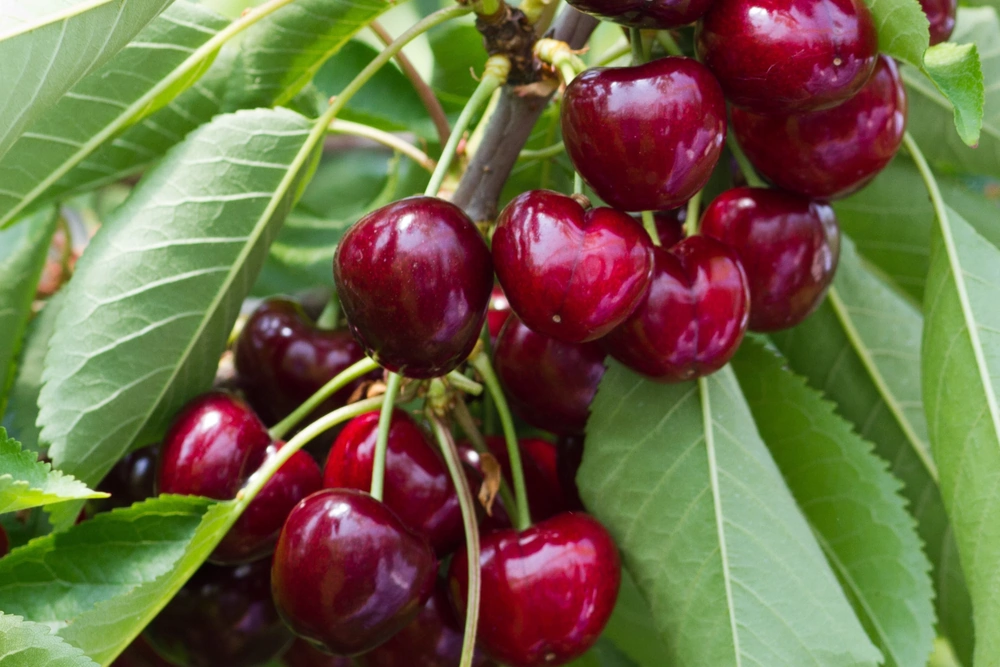
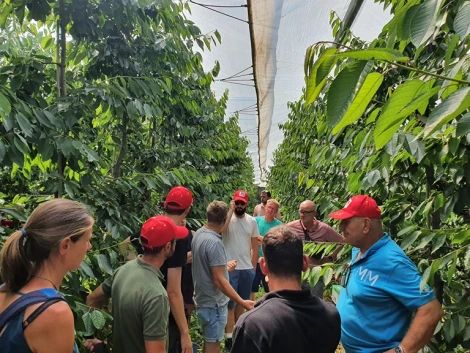
Drosophila suzukii, or spotted-wing drosophila, is a pest that shows a particular preference for crops such as berries, cherries and grapes. Its characteristics make it difficult to control. Native to Japan, where it was first reported in the 1930s — hence its original name —, it arrived in Europe during the first decade of the 21st century.
Although Drosophila suzukii is highly adaptable, it prefers mild, humid climates. It becomes active from 10 °C and reaches peak activity between 20 and 25 °C, while activity ceases above 30 °C. The risk of attack is particularly high in berries such as blueberries and raspberries, which are often grown under cover in conditions with moderate temperatures and high relative humidity.
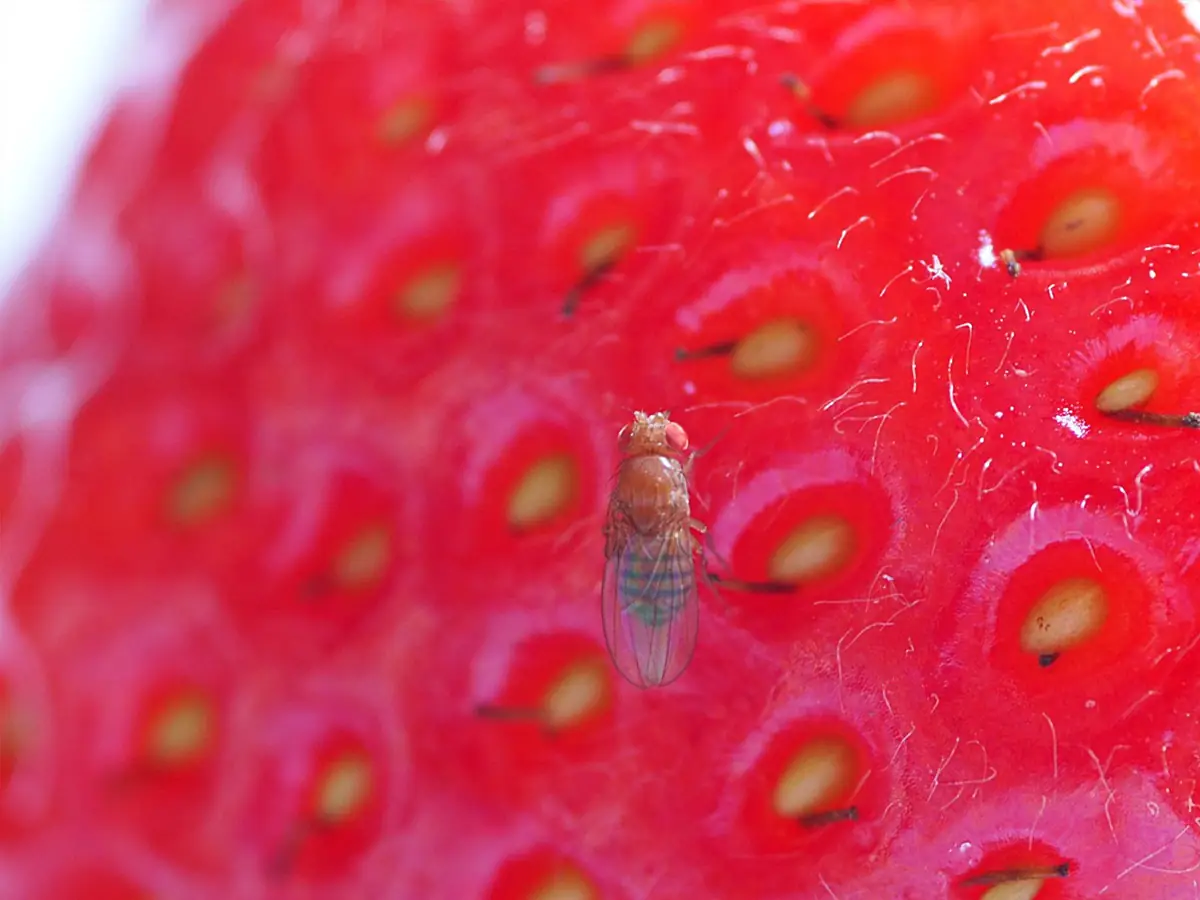
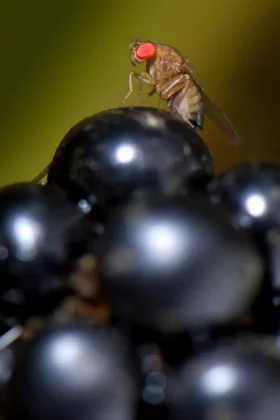
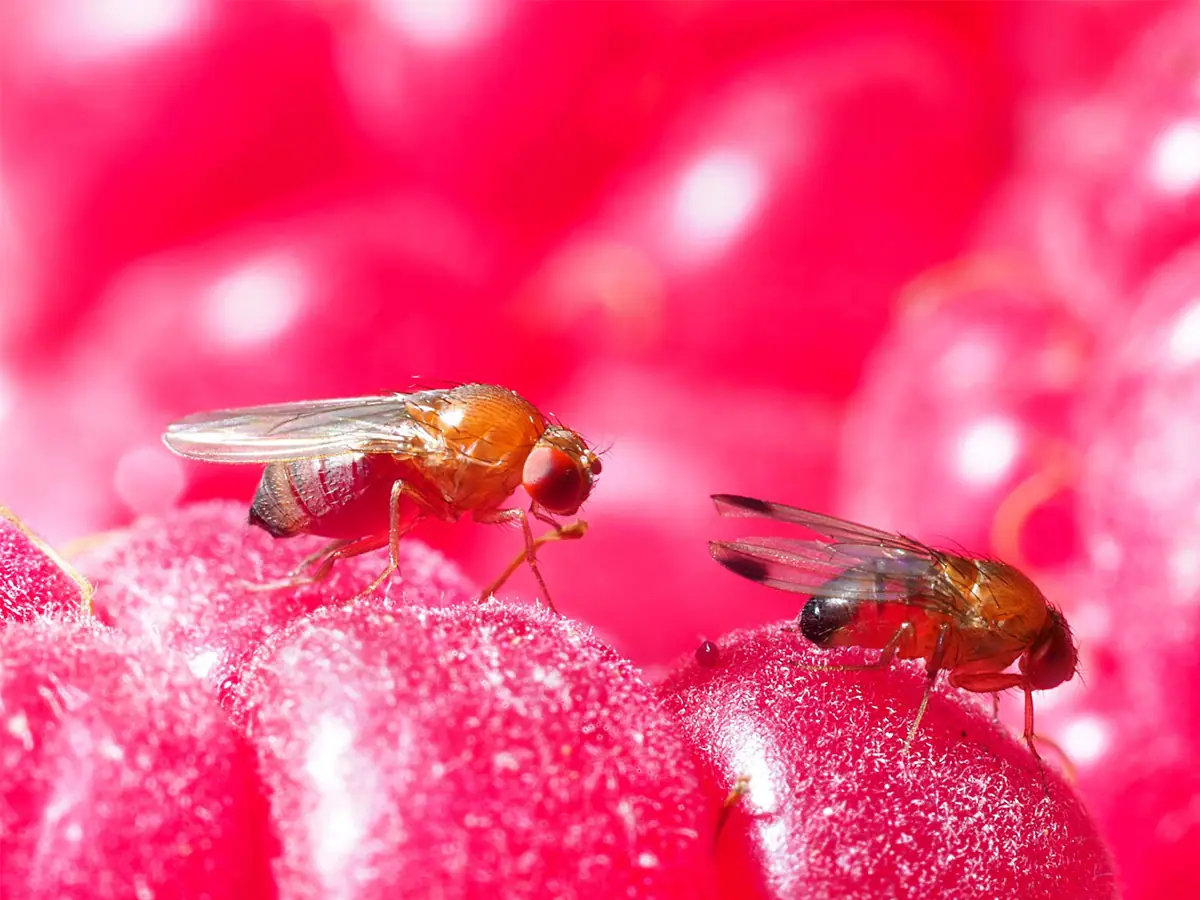
The spotted-wing drosophila is a small insect, measuring 2 to 3.5 mm in length. It is yellowish to brown, with transverse bands on its abdomen and bright red eyes. It is particularly dangerous because it attacks fruit as it ripens. Unlike other vinegar flies, which feed on rotten, damaged, overripe or decaying fruit, Drosophila suzukii attacks healthy, undamaged fruit. This behaviour significantly worsens the damage, reducing the fruit’s commercial value and causing greater economic losses at harvest.
Damage and life cycle
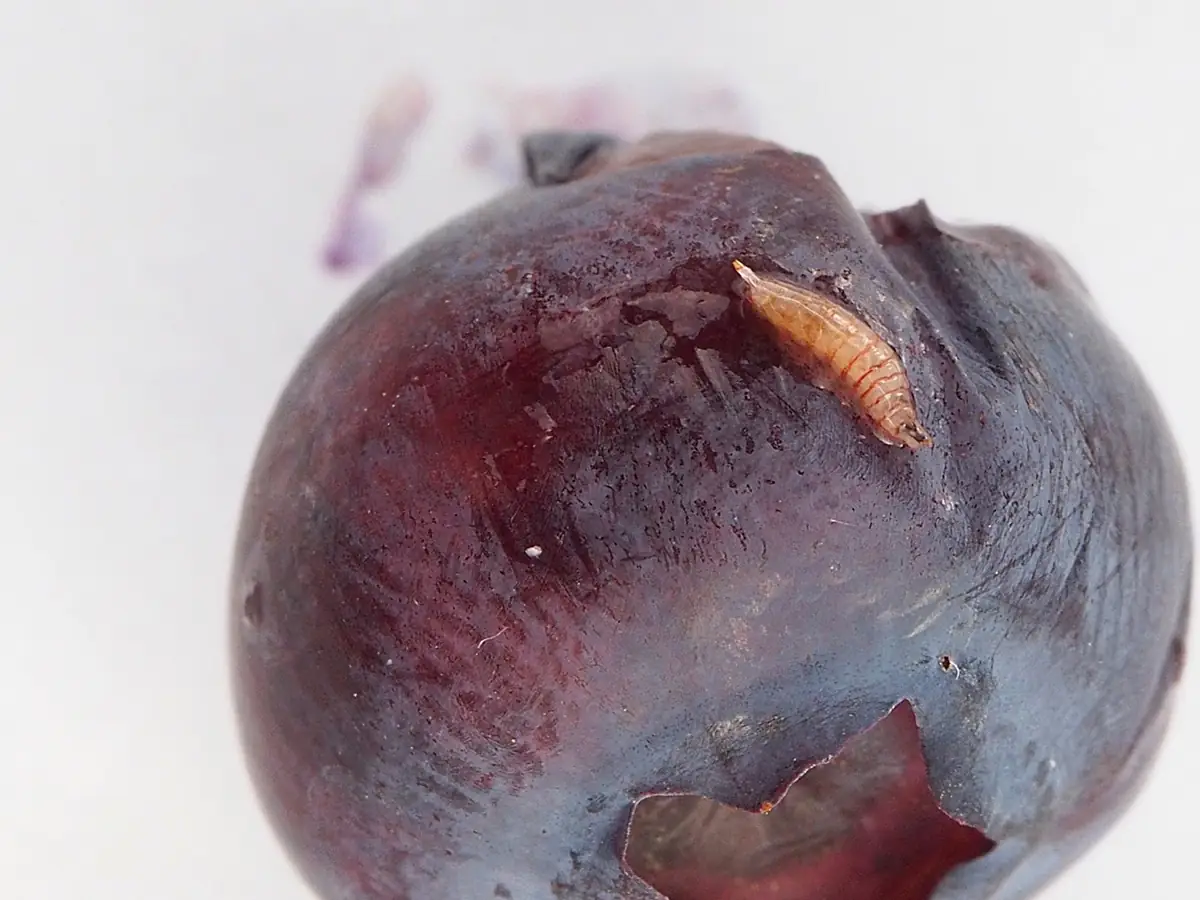
Signs of Drosophila suzukii damage to the fruit flesh are not always visible to the naked eye and often go unnoticed. The female lays her eggs in the skin of ripe or ripening fruit. Careful inspection may reveal tiny puncture marks from which the larvae develop. They grow and feed inside the fruit, causing it to deteriorate and lose commercial value. The larvae pose the main threat: the holes they create can allow secondary infections caused by fungi and other pathogens to develop, increasing losses.
Control strategies for Drosophila suzukii call for solutions that act on both adults and larvae.
In this context, the bioinsecticide Pyrecris by AST – Seipasa provides a rapid knockdown effect against D. suzukii. The product has also received an extended registration covering new authorised uses on berries (strawberries, blueberries, raspberries and blackberries), stone fruit, pome fruit and persimmons, in addition to the crops already listed on its label.
Biocontrol
Pyrecris by AST – Seipasa is a bioinsecticide developed from natural active substances. It provides a rapid knockdown effect, helping to control insect populations quickly and safely. In addition to its efficacy, Pyrecris by AST – Seipasa leaves no residues on fruit.
The action of Pyrecris by AST – Seipasa is based on an exclusive, patented formulation designed to ensure an optimal balance between the PI and PII molecules that make up the active substance. This enables the product to deliver maximum insecticidal efficacy with a reduced dose of active substance. The formulation’s micromolecules condense to form a stable, balanced network in the solution, ensuring complete coverage of the leaf and the insect.
Its rapid knockdown effect blocks sodium and potassium channels in insects, disrupting the transmission of nerve impulses. This causes hyperactivity and abnormal movements, quickly eliminating the pests after application.
Pyrecris by AST – Seipasa: proven efficacy
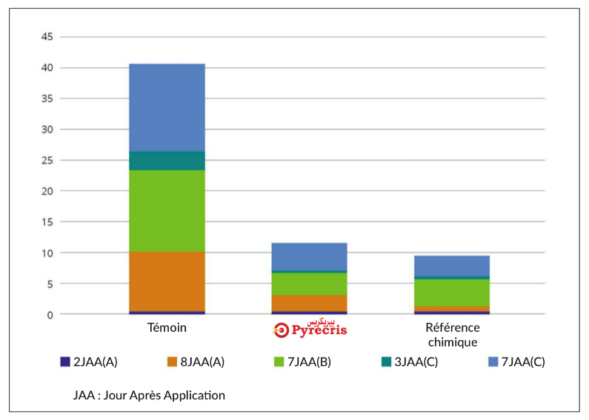
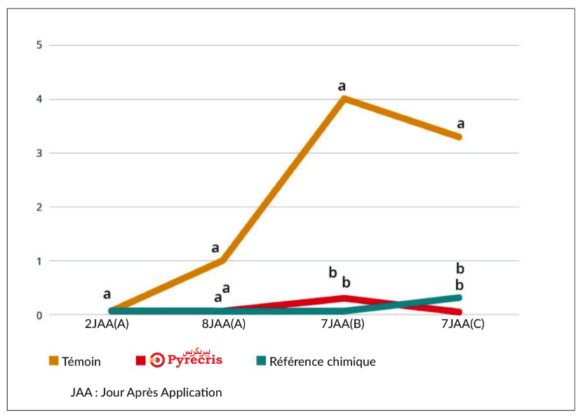
The efficacy of Pyrecris by AST – Seipasa against spotted-wing drosophila in strawberries is illustrated in Graph 1, which shows the total number of fruit affected across the three applications carried out during the trial. After the third application, the results showed no significant difference between Pyrecris by AST – Seipasa and the chemical reference product used for comparison. Seipasa’s bioinsecticide limited the pest’s spread and reduced its impact on the fruit.
Graph 2 shows the number of Drosophila suzukii larvae and the knockdown effect of Pyrecris by AST – Seipasa in a blueberry crop. The product drastically reduced larval presence after the first application, with results very similar to those of the chemical reference product. Again, no significant differences were observed.
It is important to remember that the larvae developing after egg-laying are the main cause of fruit destruction. In addition to direct damage, the holes they create can provide entry points for infections. This makes it important to have solutions such as Pyrecris by AST – Seipasa, which act on eggs and larvae and significantly reduce the number of new generations.
Pyrecris by AST – Seipasa is also certified for use in organic farming. Its inclusion in treatment programmes allows products to be rotated and helps prevent the development of resistance.
Biocontrol strategies against Drosophila suzukii in berry crops should be combined with ongoing crop monitoring and surveillance practices. In addition to installing insect-proof nets as a physical barrier, it is advisable to carefully check any materials or tools that may be contaminated and to manage harvesting rigorously. Berries should be picked at the right time, and no fruit should be left on the plant after harvest, as it could become a food source for new spotted-wing drosophila.
Controlling Drosophila suzukii is a major challenge in protecting berry crops, whose vulnerability increases in climatic conditions favourable to the pest. Since traditional control methods are often limited, innovative biocontrol strategies, such as using the bioinsecticide Pyrecris by AST – Seipasa, offer a promising option. With its demonstrated efficacy, specific mode of action and environmentally friendly profile, Pyrecris by AST – Seipasa can help control spotted-wing drosophila and preserve crop quality and profitability.
Text and images source: www.agri-mag.com
Cherry Times - All rights reserved