Accurate characterization of phenological stages is essential for effective orchard management.
In research, the BBCH scale has become a globally accepted and widely adopted system for describing plant phenology, integrating climatology, meteorology, and environmental sciences to better understand plant developmental responses.
A recent review proposes a unified characterization of the phenology of major fruit crops using the extended BBCH scale, confirming its role as an international standard language for describing plant development and supporting both scientific research and agronomic decision-making.
Phenological method
The review covers numerous fruit species from tropical, subtropical, and temperate regions, including sweet cherry, peach, walnut, kiwifruit, blueberry, hazelnut, guava, pitaya, rambutan, and several other crops of increasing economic importance, demonstrating how the methodology can be effectively adapted to the biological peculiarities of each species.
The BBCH scale (Biologische Bundesanstalt, Bundessortenamt und Chemische Industrie) uses a standardized numerical coding system to identify the different stages of vegetative and reproductive development, from dormancy to senescence.
Although the system is already widely employed in agriculture, the review highlights that its extension to a broad range of tree fruit crops has enabled the accurate description of 7 to 8 principal growth stages and between 36 and 57 secondary stages, tailored to the specific morphological and physiological characteristics of each species.
Field applications
One of the main advantages of phenological standardization is the improvement of orchard management.
A precise understanding of the sequence of developmental stages allows growers to schedule key practices such as pruning, irrigation, fertilization, plant protection, and harvest with greater accuracy, thereby increasing the efficiency of orchard operations.
Furthermore, the ability to correlate specific phenophases with local climatic conditions makes it possible to predict crop responses to environmental variability more reliably, an increasingly important aspect under current climate change scenarios.
Crop-specific adaptation
The review also emphasizes that, while maintaining a common framework, the BBCH scale can be appropriately adapted when specific cultural practices alter the normal developmental pattern of a crop.
This is the case, for example, of pruned guava trees, where the conventional coding system required modification to accurately describe changes in the phenological sequence.
Likewise, species characterized by multiple flowering events, successive vegetative flushes, or unique growth habits require crop-specific adaptations without compromising the overall standardization of the scale.
Scientific comparison
The adoption of a shared phenological terminology also makes studies conducted across different geographical regions and environmental conditions directly comparable, facilitating information exchange among research groups and improving the interpretation of experimental results.
This approach is particularly valuable for germplasm characterization, breeding programs, and the evaluation of cultivar responses to climatic stresses.
According to the authors, the increasing availability of crop-specific BBCH scales for an expanding number of fruit species provides a robust methodological framework to address the emerging challenges facing modern fruit production.
Future prospects for fruit production
Integrating phenological observations with climatic information enables the development of more effective climate adaptation strategies, improves orchard management, and enhances production sustainability.
The extended BBCH scale therefore emerges not only as a descriptive tool but also as an operational reference capable of supporting more rational crop management while promoting standardized scientific communication and collaboration at the international level.
Source: Kumar, A., Mehta, A., Sharma, V. K., Sharma, S., Sharma, P. K., & Prince. (2026). Unified Phenological Characterization of Fruit Crops Using the Extended BBCH Scale. Applied Fruit Science, 68(1), 68. https://doi.org/10.1007/s10341-026-01781-9
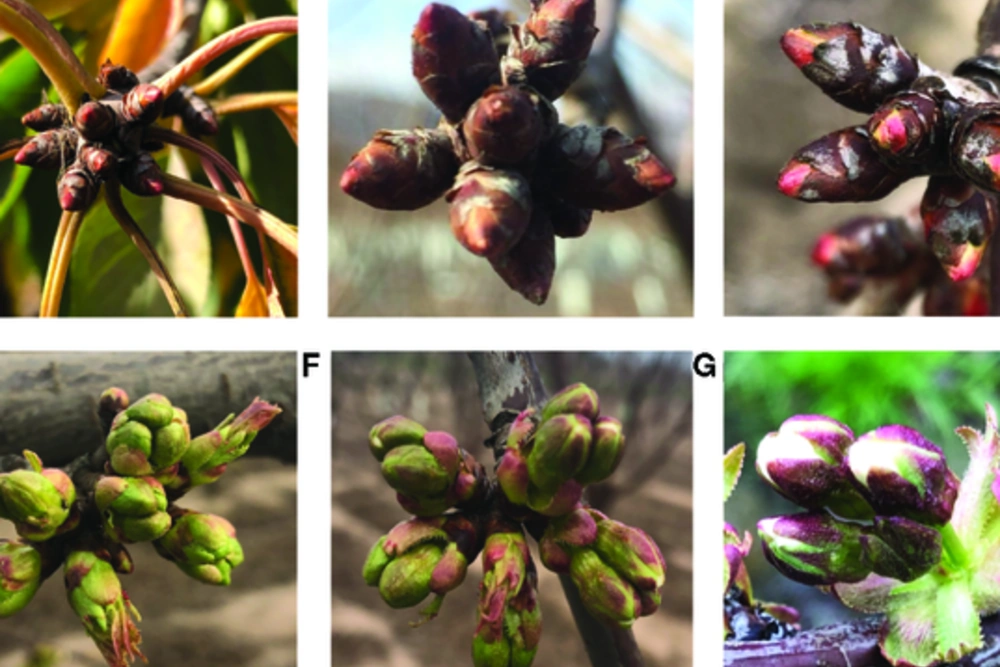
Image source: Rothkegel et al 2020
Andrea Giovannini
PhD in Agricultural, Environmental and Food Science and Technology - Arboriculture and Fruitculture, University of Bologna, IT
Cherry Times - All rights reserved