The article by Mehmet Zahid Malasli, published in Frontiers in Sustainable Food Systems in 2026, investigates the drying of sweet cherries using an indirect solar drying system, with particular attention to drying kinetics, energy consumption, thermophysical properties, and color quality. The main objective is to identify a technological solution capable of extending the shelf life of cherries beyond their harvest season, reducing post-harvest losses, and decreasing reliance on conventional energy sources.
Fresh cherries have a high moisture content, which makes them highly perishable and limits their storage stability. Drying reduces both moisture content and water activity, thereby extending shelf life while facilitating storage, transportation, and commercialization. However, because conventional drying processes can be energy-intensive, the use of solar energy represents a promising strategy for improving the sustainability of fruit preservation.
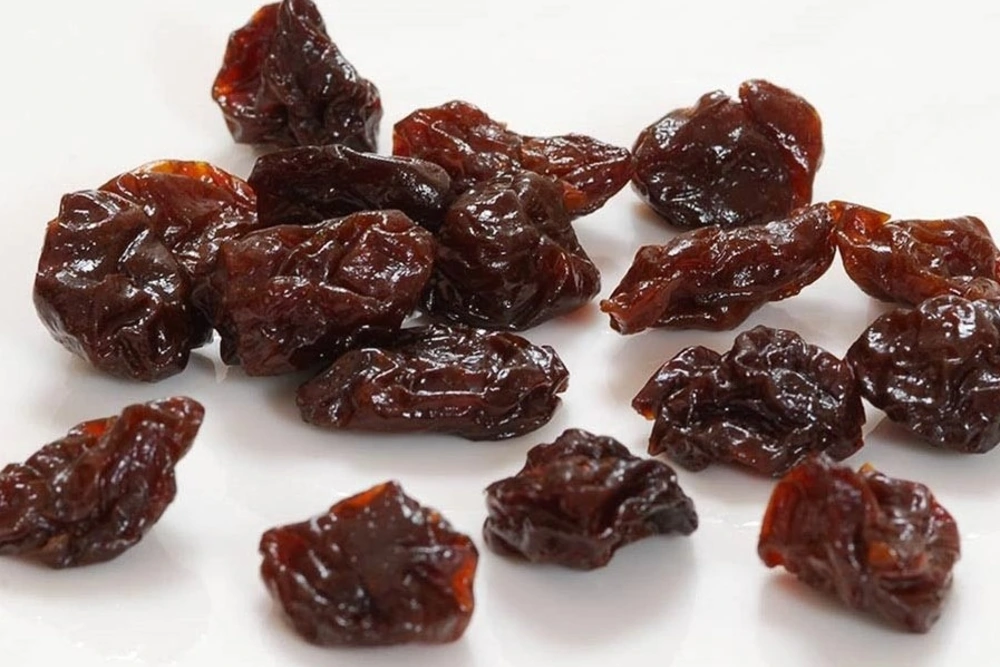
The study employed an indirect cabinet-type solar dryer equipped with three 50 W axial fans. Cherries of the 0900 Ziraat cultivar were pitted and subjected to five experimental conditions: passive drying without ventilation (P), active drying with one (F1), two (F2), or three fans (F3), and conventional open-air sun drying.
Several parameters were monitored, including moisture content, drying rate, effective moisture diffusivity, energy consumption, specific moisture extraction rate (SMER), specific energy consumption (SEC), and various thermophysical properties. Final product quality was also assessed using colorimetric parameters, including L*, a*, and b* coordinates and the browning index.
Drying results
The results demonstrate that airflow configuration significantly affects drying performance. The highest average moisture removal rate was obtained with F1, reaching 0.001398 g water/g dry matter·min, whereas open-air drying showed the lowest value, 0.000609. The shortest drying time was also achieved with F1, approximately 3,360 minutes, compared with 6,000 minutes for conventional sun drying.
Effective moisture diffusivity ranged from 9.62 × 10⁻⁹ to 1.43 × 10⁻⁸ m²/s. Increasing airflow, however, did not necessarily lead to greater overall efficiency. Active configurations required more energy than passive and open-air drying. F2 achieved the highest SMER, while F3 recorded the highest SEC, highlighting the trade-off between process intensification and energy demand.
Thermophysical analysis also revealed that F1 produced the highest average values for specific heat, thermal conductivity, thermal diffusivity, and density. From a quality perspective, naturally dried cherries generally retained a color closer to that of the fresh fruit. Nevertheless, F1 provided the most favorable technological compromise, substantially reducing drying time while maintaining relatively good color quality.
The authors therefore identify the indirect solar dryer equipped with a single fan as the preferred configuration. Future research should investigate the integration of photovoltaic power supply, thermal control systems, and pretreatments to further improve energy efficiency and preserve bioactive compounds. Industrial-scale validation is also required, as the current findings are based on a prototype system.
Technology sustainability
Overall, the study demonstrates that solar drying can convert a highly perishable fruit into a stable, storable product while simultaneously contributing to food-waste reduction, renewable-energy utilization, and greater sustainability across the food supply chain.
Source: Malasli MZ (2026) Evaluation of drying kinetics, energy consumption, thermo-physical characteristics, and color quality of sweet cherries dried in an active-passive indirect dryer. Front. Sustain. Food Syst. 10:1734302. doi: 10.3389/fsufs.2026.1734302
Image source: Gourmet Food World
Melissa Venturi
Ph.D. in Agricultural, Environmental, and Food Sciences and Technologies – Fruit Tree Physiology and Cultivation - Bologna, Italy
Cherry Times – All rights reserved