Michigan cherry growers are worried about cherry leaf spot
20 Feb 2025
Cherry leaf spot is a challenge for Michigan growers due to fungicide resistance and climatic conditions. MSU research has identified effective copper-based fungicides.
It is with deep sadness that I entrust to these brief lines the memory of my dear colleague Nicola Dallabetta, who passed away on 24 June last.
For many years he worked at the Agricultural Institute of San Michele all'Adige, now the E. Mach Foundation, and had recently embarked on a new adventure through collaboration with Agromillora. Despite this professional change, his contacts and collaboration with his colleagues at the Foundation remained the same as before, maintaining his friendship and his desire to experiment with new things such as the recently started trials on apple and cherry rootstocks.
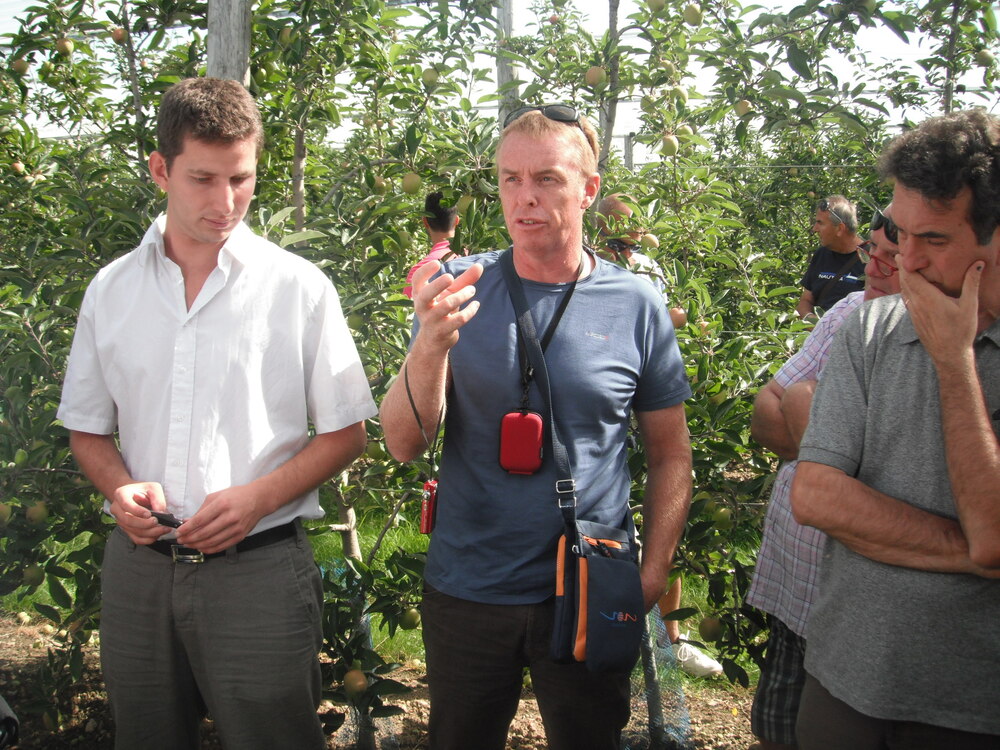
Those who knew him through work appreciated his technical expertise, his closeness to the world of production, and his professionalism, but also his interpersonal skills during study trips with colleagues from other research institutes.
I cherish the memory of the friendship and work we did together, and send my thoughts to his wife Elizabeth and daughters Rachel and Rebecca.
Farewell, Nicola.
Tommaso Pantezzi
Fondazione E.Mach
20 Feb 2025
Cherry leaf spot is a challenge for Michigan growers due to fungicide resistance and climatic conditions. MSU research has identified effective copper-based fungicides.
30 Apr 2023
Over the past decade, the global cherry industry has seen a steady increase in areas, production yields, production and international trade. The leading countries are Turkey, Chile, China and the United States.
24 Feb 2026
A 2025 US review examines the nutraceutical properties of sour cherry (Prunus cerasus L.), highlighting its rich polyphenol, anthocyanin and flavonoid content. Evidence supports antioxidant and anti-inflammatory effects, while gaps remain in bioavailability and processing impact.
24 Feb 2026
South Africa’s cherry industry is expanding fast: acreage increased from 185 to 819 hectares, low-chill varieties reshaped production and exports reached 37%. The Western Cape leads output as new strategic opportunities emerge in China and Asian markets worldwide ahead.