In Fresno County, California, this week’s storm has left farmers assessing the first signs of damage. Among those most concerned are fruit growers, as explained by Ryan Jacobsen, CEO of the Fresno County Farm Bureau.
Shortly after Tuesday’s storm, a helicopter was deployed over cherry orchards in Biola, west of Fresno. The goal was to dry the trees quickly and reduce the risk of fruit cracking.
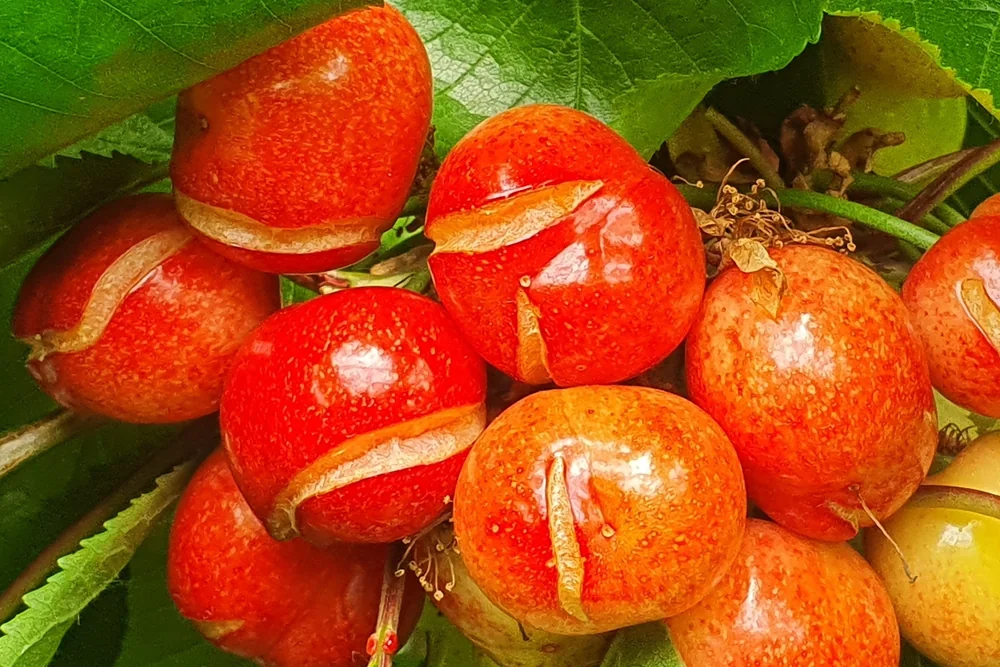
Cherries, a race against time to save the crop
For Stan Grosz, a grower in the area, the use of the aircraft was nothing new. Calling in a helicopter, he explained, is mainly intended to shake the trees and remove water that has accumulated around the stem.
This is precisely where moisture can become a problem: if water remains near the stem, cherries can crack, compromising both quality and commercial value. For this reason, Grosz decided to act immediately after the storm.
The grower emphasized how narrow the operating window is for cherries: the crop is harvested only once a year and must reach the market in the best possible condition. In his view, the timely intervention helped protect production.
Almond orchards hit by hail and wind
The situation was less favorable in some nearby fields. Jacobsen reported that damage was observed in an almond orchard in the area after the severe weather passed through. According to the CEO of the Fresno County Farm Bureau, signs of hail damage are visible, although the overall extent has yet to be determined. Possible wind damage must also be added to the assessment.
Drone footage showed several almond trees uprooted from the ground. Gusts of wind and hail appear to have been the most damaging factors for the affected orchards. Even farms that did not suffer obvious damage may need to take action in the following days. Jacobsen noted that crops such as almonds, grapevines and other productions can retain moisture after intense rainfall events.
In such cases, he explained, it often becomes necessary to apply a fungicide to prevent issues related to mold and fungal diseases.
A season marked by climate uncertainty
The severe weather created problems for some growers, but it did not bring only negative consequences. Jacobsen also pointed out that the storm helped generate significant snowfall, an element that could prove useful for summer agriculture.
For Fresno County farmers, the overall picture therefore remains complex: on the one hand, there is the immediate need to limit damage to cherries, almond orchards and other crops; on the other, there is the prospect that water stored as snow could support production during the warmer months.
Source: stories.agronometrics.com
Image source: Stefano Lugli
Cherry Times - All rights reserved