Recent research published by the Czech Academy of Agricultural Sciences looked at consumer attitudes towards the appearance and taste of cherries. To assess consumer attitudes in Serbia and Bosnia and Herzegovina (B&H) on the most important characteristics of cherry fruits, an online survey was conducted with 402 respondents.
53% of the respondents in Serbia and 47% in B&H participated in the survey, the majority of whom were women (54%). Consumers expressed their opinions on the most important external (fruit colour, fruit shape, fruit size, presence of the stalk on the fruit, length of the stalk and presence of fruit damage) and internal (fruit taste, fruit texture) characteristics of the fruit.
According to the results, attitudes towards fruit size, presence of the stalk and length of the stalk, and fruit firmness depended on the residence of the respondents. Both male and female respondents had similar attitudes towards the characteristics of the cherry, except for the taste of the fruit and the most important characteristics of the cherry. The age of the respondent influenced attitudes towards the size of the fruit, the presence of the stalk and the texture of the fruit.
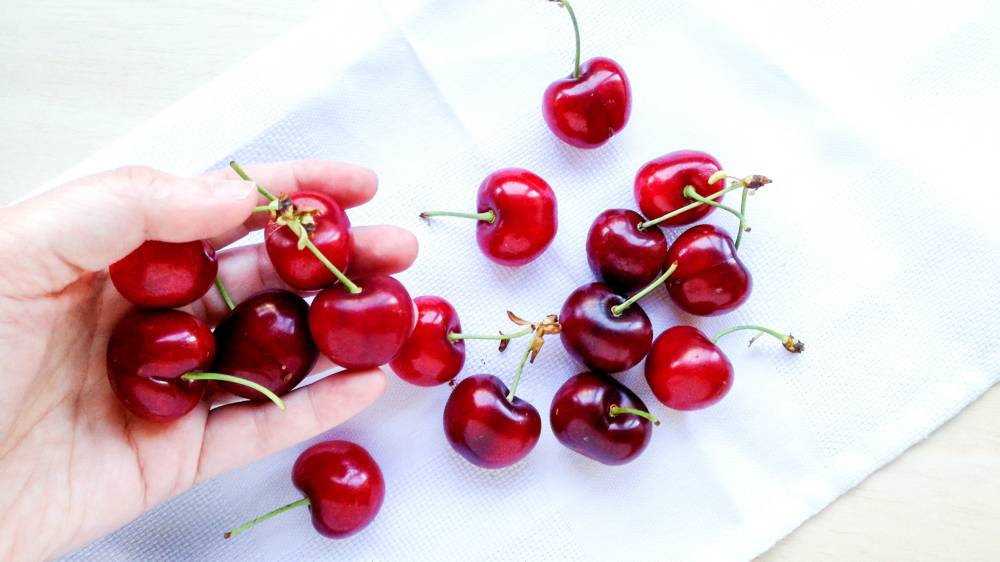
When choosing cherries, the most important characteristic for the respondents was the taste of the fruit (53.73%). The colour (15.42%) and the firmness of the fruit (13.18%). Fruit without damage was the most important characteristic for 10.45% of the respondents. Although the flavour of the fruit was stated as the most important characteristic of the cherry by both male (51%) and female (56%) respondents, male respondents emphasised the colour of the fruit (17%) and female respondents the firmness of the fruit (14.35%) as the second most important characteristic.
Based on the results of the survey of 402 respondents from B&H and Serbia, it can be concluded that when choosing a variety of cherries, consumers most often choose red or dark red fruit with a sweet taste and a medium or firm mesocarp.
Consumers indicate these characteristics as most important for their choice. Consumers choose large fruits (not exclusively the largest ones), with a stalk (where the length of the stalk does not matter).
The results obtained may be important as a basis for more detailed research, including a tasting panel, and may help growers and retailers to position themselves more effectively in these markets by highlighting the characteristics that are most important for the purchasing decision of local consumers.
Source: Czech Academy of Agricultural Sciences
Read full research
Photo: Olivia Watson - Unsplash
Cherry Times - All rights reserved