Cherry cultivation in Mendoza has become one of the most interesting alternatives for regional economies, thanks to its high profitability potential and strong prospects in export markets.
The province’s agroclimatic conditions – winters with sufficient chill hours, low relative humidity (which reduces disease pressure), high solar radiation (which improves fruit quality), and the possibility of implementing pressurized irrigation – enable the production of cherries with characteristics highly appreciated internationally.
However, it is an intensive crop that requires a high initial investment and strong dependence on agronomic management, where nutrition plays a central role.
Current production
Currently, production in the province of Mendoza covers an estimated area of between 1,800 and 2,200 hectares, mainly concentrated in the Uco Valley, Luján de Cuyo, and the eastern part of the province. In these areas, the combination of environment and management practices enables the production of high-quality fruit for both domestic and export markets.
Starting an operation requires significant investment in plants, infrastructure (training systems, irrigation, and protection systems), and initial setup. Once production begins, the main costs are concentrated on labor, as well as plant health, nutrition, and irrigation management—key factors for maintaining yield and quality.
Produce more… but above all, produce better
Today, the cherry sector is not defined by volume, but by quality. Access to the most profitable markets depends on producing fruit with the right size, firmness, color, and post-harvest condition.
And these characteristics are not random: they are the result of precise technical decisions made throughout the entire product lifecycle.
Each stage of cultivation represents an opportunity (or a risk). From bud break to fruit development, management must be precise and timely. However, there are two moments that make the difference:
· Post-harvest, the stage in which the potential for the following season is defined.
· Fruit growth, where commercial value is created.
One of the most common mistakes is to think about nutrition exclusively in terms of dosage. In cherries, the key is not how much to apply, but when and how to apply it. Nutritional effectiveness depends on supporting plant physiology.
Proper management
Proper post-harvest management allows reserves to be restored, stimulates root development, and ensures adequate flower differentiation. Ultimately, it represents the starting point for future yield.
During the season, the challenge is to maintain this potential by supporting each stage with the appropriate nutrients to maximize efficiency and quality.
This is combined with a production reality: many soils in Mendoza present limitations such as low organic matter content, structural problems, difficulties in nutrient fixation, and, in some cases, salinity. Therefore, simply applying fertilizers is not enough; it is necessary to improve the functioning of the soil-plant system.
Acting on soil biology by promoting root development and improving nutrient availability not only increases soil use efficiency but also enhances production stability and fruit quality.
An integrated approach for lasting results
The nutritional basis of the crop is linked to the desired yield, but efficiency mainly depends on the timing of application. Therefore, management should focus on supporting key physiological stages.
The most efficient systems are those that integrate nutrition, biostimulation, and soil management into a single strategy. These are not isolated interventions, but the construction of a coordinated system throughout the entire cycle.
• Post-harvest: a strategic phase in which reserves are replenished, the root system is activated, and floral differentiation occurs. Phosphorus, moderate levels of nitrogen, calcium, and boron are essential. This phase largely defines the productive potential of the following season.
• Bud break and pre-flowering: the goal is balanced vegetative development and high-quality flowering. Nitrogen and micronutrients such as boron and zinc are essential.
· Fruit set: the goal is to maximize fruit retention. Boron, calcium, and phosphorus play a central role.
• Fruit development: commercial attributes such as size, firmness, and color are defined. Potassium and calcium play a key role in this phase.
Cherry cultivation offers an extraordinary opportunity, but it requires precision in every decision. Because it is not just about production: it is about achieving superior quality fruit, being efficient in every intervention, and above all, producing with a clear, professional, and strategic vision.
Integrating strategy and management
Integrating strategy, management, and technology
The productive and economic potential of cherries in Mendoza is high, but the outcome depends directly on the quality of management.
In this context, strategic nutrition, understanding critical stages, and managing soil limitations are key factors for achieving consistent yields and export-quality fruit.
The integration of technologies that improve nutrient use efficiency, promote root development, and increase soil biological activity makes it possible to enhance crop response and reduce productivity losses.
In this sense, Simbios technologies align with these objectives, providing tools that support crop physiological processes and contribute to the efficiency of the soil-plant system.
Rather than isolated interventions, the challenge is to build integrated management schemes in which nutrition, soil, and technology work together to create more stable, efficient, and quality-oriented systems. Simbios supports the crop at every stage, contributing to results from the ground up.
Source: Simbios Argentina
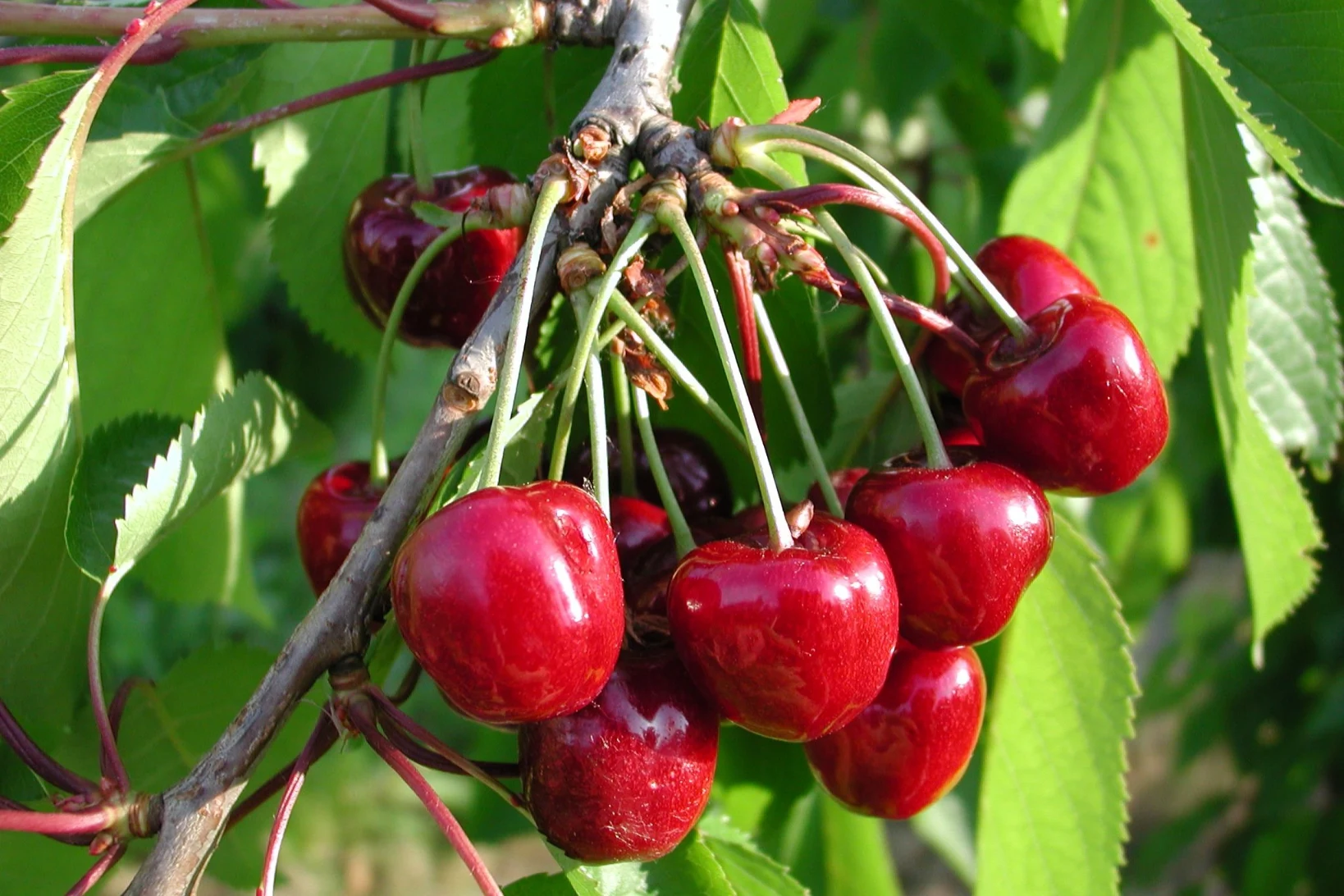
Image source: Stefano Lugli
Cherry Times - All rights reserved