As the first intervention of the season against San José Scale (Diaspidiotus perniciosus) in cherry orchards, it is necessary to carry out a preventive treatment, as eradicating this pest from orchards is very difficult and may take several seasons.
One of the many consequences of climate change is the variation in the timing of appearance, migrations, and intensity of attacks of various pests.
In the specific case of San José Scale, it is necessary to act early in the season with the aim of inhibiting the metamorphosis of the juvenile stages and the subsequent emergence of adults, thus achieving timely control and preventing the pest’s proliferation.
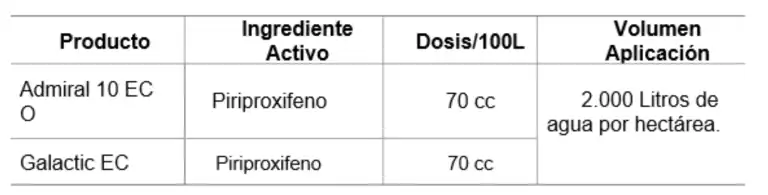
Late-winter treatment for Scale control
It is recommended to apply the treatment between July 25 and, at the latest, August 10.
The treatment must be carried out with a high spray volume, as this scale insect shelters in the wood: coverage must therefore be complete and uniform across the entire plant.
The application should be made on dry wood and with a rain-free period of at least 24 hours, since the control is mainly by contact.
Practical considerations
Ensure that the product coverage is excellent and even throughout the tree; the product must have good contact with the wood, where the insect hides.
In orchards with high pest pressure, it is recommended to go over the upper third of the canopy with a lance (pitón), where the highest infestation is generally concentrated.
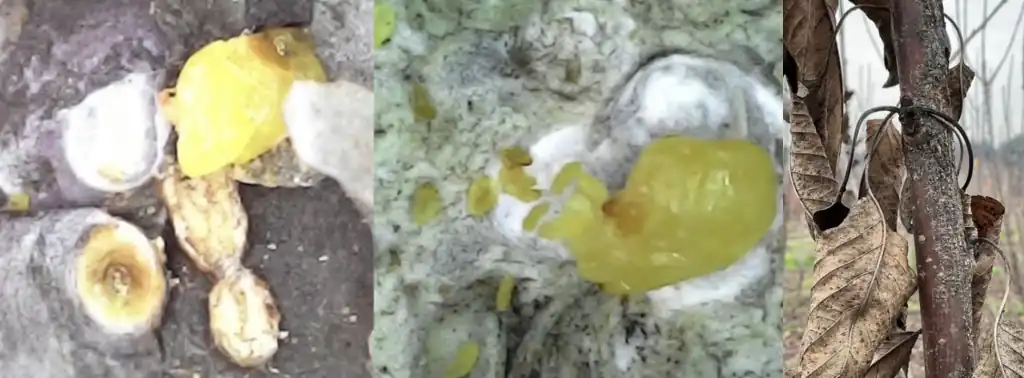 San José Scale (Diaspidiotus perniciosus)
Opening image credit: John A. Davidson, University Maryland
Patricio Morales
AgroAsesoria (Cile)
Cherry Times - All rights reserved