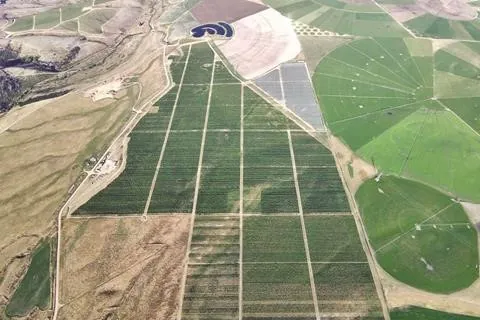
Cherry production is highly susceptible to weather extremes, especially around harvest time. Protected cropping system (PCS) are increasingly being adopted across Tasmania to reduce the impact of cracking, rain covering and UV protection.
However, the affect of these systems on growing conditions and fruit quality outcomes remains relatively unknown.
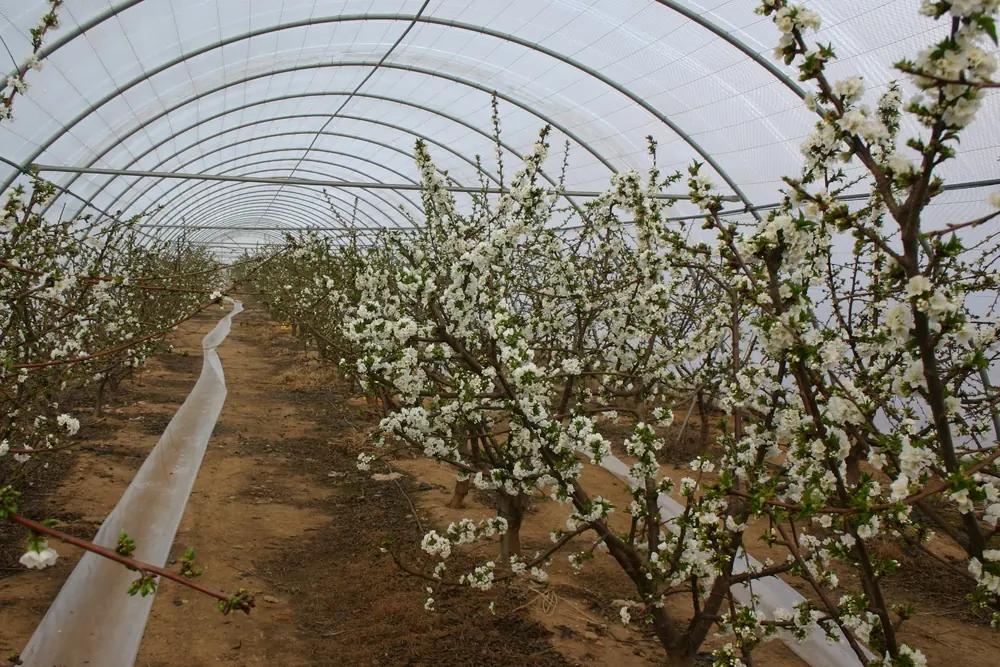
Replicated field trial: Effects of rain covers on microclimate, leaf physiology, and fruit quality in sweet cherry in Tasmania
Rain covers can reduce the amount of light reaching the canopy and modify growing conditions around the fruiting zone in cherry orchards. These changes may influence tree physiological responses with consequences for fruit quality.
However, there is limited understanding of how light, temperature, humidity and other microclimate conditions under rain covers affect leaf physiological responses and in turn fruit quality.
This replicated field trial investigates how rain covers influence the light environment, microclimate, leaf physiology and fruit quality and will be conducted over two growing seasons from 2025 to 2027 in a sweet cherry orchard in Northern Tasmania.
This research will involve the use of sensors developed by TIA's Ag-Tech Innovation Studio.
Cherry protected cropping trial
Research questions
How do rain covers alter the microclimate at the fruiting-zone height, including light, air temperature, relative humidity, vapour pressure deficit, and temperature?
How might altered leaf and fruit microclimate affect leaf physiology parameters, such as transpiration and photosynthesis?
How does altered leaf physiology correlate or inform consequences for key fruit quality attributes?
Grower trial: Comparing clear and opaque covers in Southern Tasmania
The decision to invest in clear or opaque rain covers comes with unknown risks and trade-offs. In theory, opaque covers may reduce the light availability for cherries, potentially influencing quality and harvest timing compared to clear or no covers.
However, opaque covers may have a longer working life the clear covers.
This grower trial will investigate effects on how light availability under clear and opaque covers to examine the opportunities and/or challenges to selecting opaque covers over clear covers for growing cherries in Southern Tasmania?
Case studies
The research team will collaborate with Tasmanian cherry producers to develop a series of case studies to identify management practices and recommendations for optimising cherry quality under rain covers.
Case studies will be based on grower experiences of using PCS, grower-led trials and focus group discussions. Other outputs will include videos, reference materials and orchard walks.
Source: www.utas.edu.au
Image source: Stefano Lugli
Cherry Times - All rights reserved