Plants constantly regulate their internal chemistry to grow, develop, and survive in often hostile environments.
One of the most important biochemical tools at their disposal is glycosylation, a process through which sugar molecules are attached to other compounds.
This modification can profoundly affect the stability, activity, transport, and accumulation of hormones and secondary metabolites, allowing plants to finely tune growth and respond effectively to environmental stresses such as drought or pathogen attack.
The enzymes responsible for this process are glycosyltransferases (GTs), among which UDP-glycosyltransferases (UGTs) represent the largest and most diverse group in the plant kingdom.
Characterization of UGT genes
UGTs are encoded by large gene families: many plant species possess well over one hundred UGT genes, highlighting their functional importance and remarkable diversity.
These genes act in a coordinated manner to regulate hormonal balance, secondary metabolism, detoxification mechanisms, and antioxidant responses.
Although UGTs have been widely studied in model plants and major crops, their role in sweet cherry had remained largely unexplored.
In this study, researchers carried out the first comprehensive genomic characterization of the UGT family in sweet cherry, identifying 235 PavUGT genes unevenly distributed across the species’ eight chromosomes.
Genomic and phylogenetic insights
Based on sequence analysis, these genes were grouped into 18 phylogenetic subfamilies, revealing both conserved features shared with other plant species and expansions specific to sweet cherry.
Comparative synteny analyses with Arabidopsis, strawberry, apple, peach, and pear further highlighted the presence of conserved genomic blocks as well as regions that have evolved in a lineage-specific manner during species diversification.
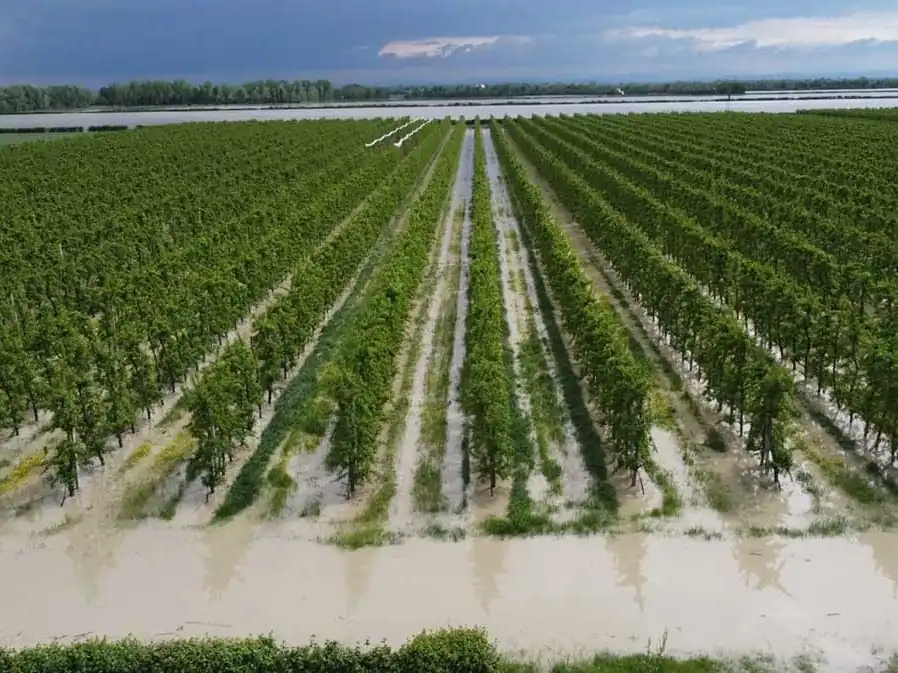
To clarify the functional role of these genes, the authors examined their expression profiles under waterlogging stress, a condition that drastically reduces oxygen availability to roots and poses a serious threat to fruit trees.
Transcriptomic analysis showed that many PavUGT genes respond strongly to flooding: 36 genes were significantly upregulated, while 13 were downregulated, indicating a central involvement of this gene family in stress-adaptation mechanisms.
Functional role of PavUGT10
Among the genes analyzed, PavUGT10 emerged as particularly interesting and was shown to be localized in the cell nucleus.
To verify its function, PavUGT10 was overexpressed in Arabidopsis plants.
After a prolonged period of dark submergence followed by a recovery phase, transgenic plants exhibited markedly higher survival rates (70–75%) compared with wild-type plants (25%).
This increased tolerance was associated with improvements in several physiological parameters: enhanced antioxidant enzyme activity, greater accumulation of proline (a protective molecule), reduced membrane damage, and lower accumulation of reactive oxygen species.
Conclusion and implications
Overall, these results indicate that PavUGT10 plays a significant role in improving plants’ ability to manage oxidative stress and recover after flooding conditions.
In conclusion, this work identifies UGTs as key players in sweet cherry development and stress resilience and highlights PavUGT10 as a promising candidate for genetic improvement of waterlogging tolerance.
Source: JOUR, Comprehensive analysis of sweet cherry UDP-glycosyltransferases and functional validation of PavUGT10 for improving submergence tolerance, Usman, Muhammad, Manzoor, Muhammad Aamir, Wang, Li, Sun, Wanxia, An, Xiaojuan, Sun, Zixing, Yu, Fei, Liu, Ruie, Zhang, Caixi, Plant Physiology and Biochemistry, 229, 110503, 2025, 2025/12/01/0981-9428 https://doi.org/10.1016/j.plaphy.2025.110503
Image source: Cab Massari
Melissa Venturi
University of Bologna
Cherry Times - All rights reserved