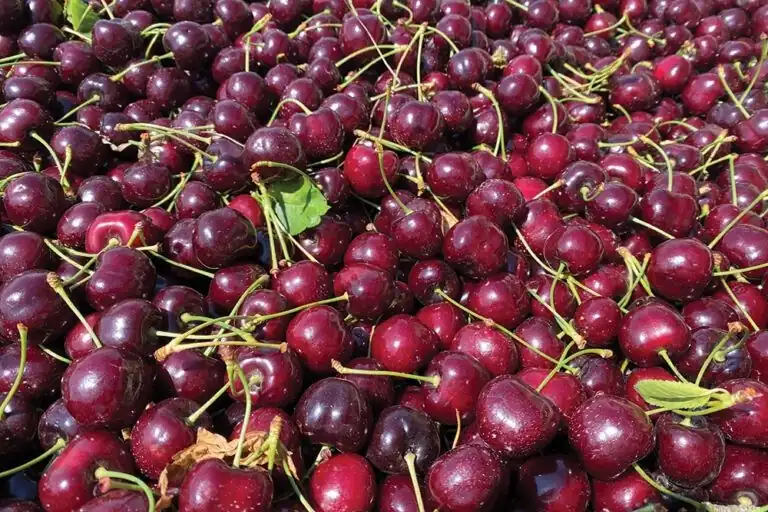
A recent study from Argentina investigated how discarded sweet cherries can be valorized by transforming them into freeze-dried powder (cherry powder, CP) and incorporating it into edible films based on low-methoxyl pectin, with and without glycerol, focusing on discarded sweet cherries can.
The objective is twofold: to preserve the phenolic fraction with antioxidant activity and to develop active materials for food packaging, consistent with the principles of circular economy and the replacement of synthetic antioxidants, emphasizing preserve the phenolic fraction.
Stability was strongly modulated by storage relative humidity (RH) and by the presence of the plasticizer, particularly regarding storage relative humidity (RH).
The freeze-dried powder, stored at 25 °C and 0% RH, maintained its antioxidant capacity for up to 441 days, whereas in the films (NPF without glycerol; PF with glycerol) the activity proved more sensitive to high RH conditions, highlighting maintained its antioxidant capacity.
Phenolics and oxidative stability
Anthocyanins and flavonols remained stable for 83 days at 0% RH in CP and NPF, preserving the red coloration; under accelerated oxidation (RapidOxy), anthocyanins were the most degradable compounds, while hydroxycinnamic acids showed greater resistance, with anthocyanins and flavonols remained.
Glycerol increased the oxidative stability of the films, but at 75.2% RH the best preservation of phenolics against oxidation was observed in NPF, emphasizing increased the oxidative stability.
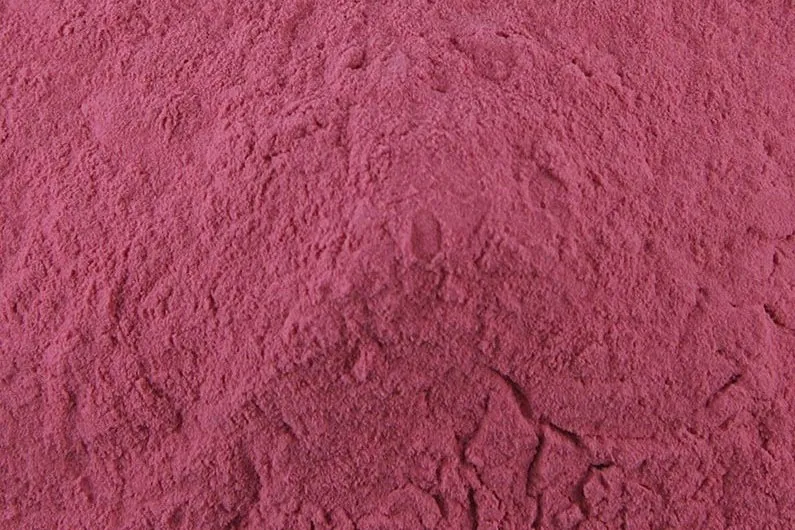
From a compositional perspective, CP contains about 490 mg/100 g of total phenolics, mainly anthocyanins (~325 mg/100 g), followed by hydroxycinnamic acids (~137 mg/100 g) and flavonols (~27 mg/100 g), associated with high antioxidant capacity (DPPH and FRAP assays), including contains about 490 mg.
Hygroscopic equilibrium and glass transition temperature (Tg) explain much of the stability behavior: at 0% RH, CP and NPF exhibit glassy regions with Tg higher than the storage temperature, limiting molecular mobility and degradative reactions; at 75.2% RH, water acts as a plasticizer, lowering Tg and promoting molecular mobility and degradation, particularly of anthocyanins through nucleophilic bleaching mechanisms, highlighting glass transition temperature (Tg).
Pectin network and matrix behavior
In the films, the pectin network cross-linked with Ca2+ incorporates CP: in NPF at 0% RH the material is brittle and easily milled, behaving as a stabilized functional powder; at higher RH, water plasticizes the matrix, while in PF glycerol further increases molecular mobility (Tg down to −136 °C), reducing mechanical resistance but improving flexibility for potential applications as interlayers or coatings, focusing on pectin network cross-linked with.
The degradation kinetics of phenolics follow pseudo–first-order models, describing degradation kinetics of phenolics.
The lowest rate constants were observed in NPF at 0% RH (k ≈ 0.0018 d−1), with about 44% phenolic retention after 441 days; CP at 0% RH showed a similar behavior (k ≈ 0.0023 d−1), highlighting lowest rate constants were.
At 75.2% RH degradation accelerated (k ≈ 0.02 d−1 for anthocyanins), consistent with the plasticizing effect of water, indicating degradation accelerated (k ≈.
Diffusion and matrix interactions
Although glycerol promotes swelling and release from the matrix, it also increases oxidative stability under accelerated conditions, likely by modulating phenolic–matrix interactions and the microstructure of the film, emphasizing glycerol promotes swelling and.
The diffusion coefficients of phenolics in water were lower in PF than in NPF at 75.2% RH, indicating a more controlled release in the presence of glycerol, highlighting diffusion coefficients of phenolics.
The conclusions highlight the technical feasibility of valorizing cherry processing waste into functional ingredients and active films, stressing valorizing cherry processing waste. Storage at low relative humidity is crucial to maximize shelf life while preserving antioxidant activity and color, emphasizing low relative humidity is.
Industrial opportunities
NPF stored at 0% RH represent the most stable solution for long-term preservation of phenolics, while PF provide greater application flexibility together with good oxidative stability, highlighting most stable solution for.
For the food industry, this approach opens opportunities to develop edible active packaging and natural antioxidant powders, reducing waste and dependence on synthetic additives, with potential applications in oxidation-sensitive foods and in intelligent freshness indicator systems, including develop edible active packaging.
Source: Aramburu, A., De ́ Nobili, M. D., Raffo, M. D., Erlejman, A. G., Matiacevich, S., & Basanta, M. F. (2025). Valorization of Cherry waste in edible films: effects of glycerol on stability and antioxidant activity. Journal of Food Measurement and Characterization, 1-17. https://doi.org/10.1007/s11694-025-03637-4
Image source: Healthy Supplies
Andrea Giovannini
PhD in Agricultural, Environmental and Food Science and Technology - Arboriculture and Fruitculture, University of Bologna, IT
Cherry Times - All rights reserved