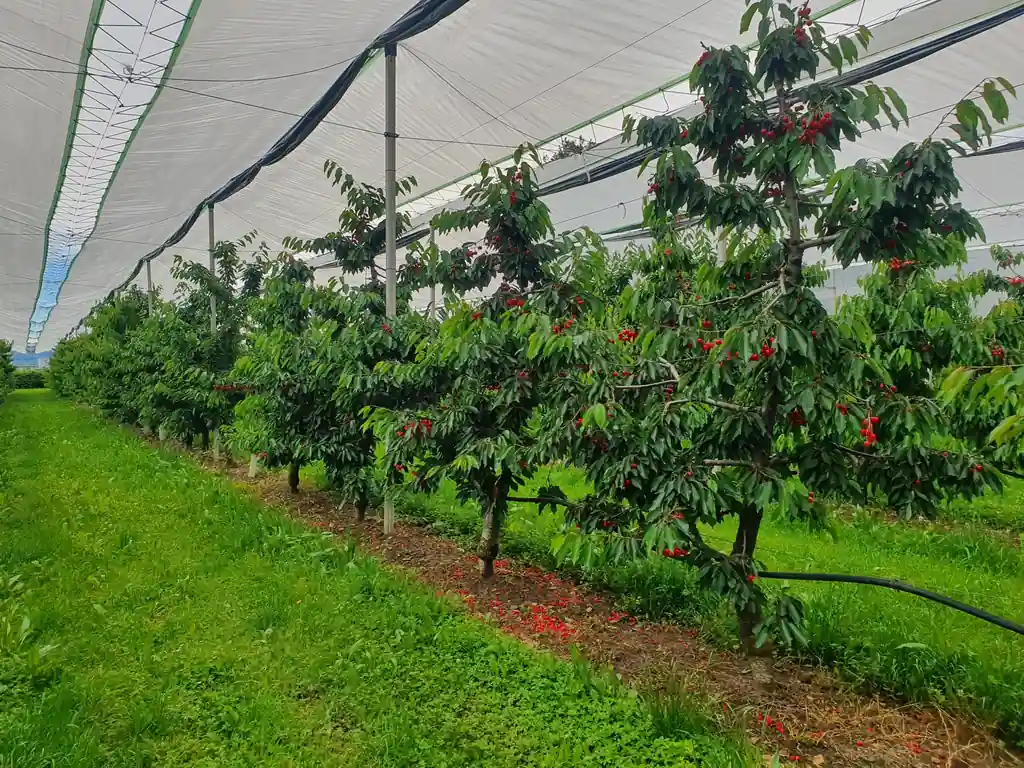
The 2026 season for cherries in Uzbekistan reflects a clear shift in direction: the sector is moving away from traditional extensive orchards and focusing instead on intensive plantations, modern varieties and technologies capable of raising quality standards. Even in a climate-affected year, the result is a smaller crop, but with larger fruit sizes and more attractive commercial parameters.
According to Erkinjon Inamov of EXIM Agro, a fresh produce exporter, harvesting began between late April and early May, around one week later than the previous season. Abnormally low temperatures recorded in April weighed on the campaign, slowing ripening and reducing available volumes.
Larger sizes and high Brix levels
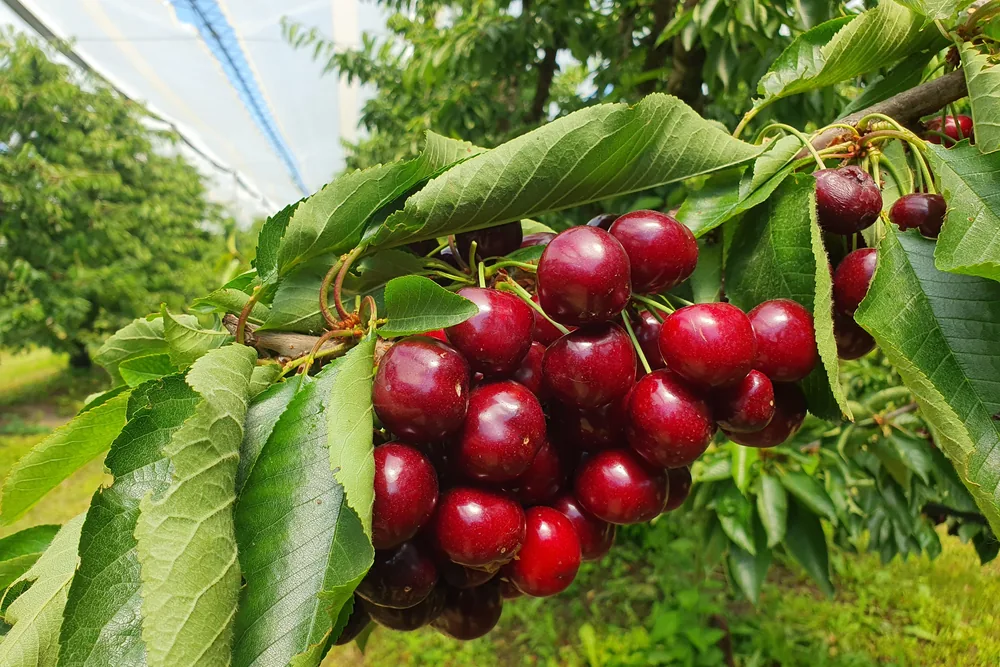
Despite the decline in production, the quality of Uzbek cherries in 2026 is described as particularly high. Average fruit size stands at 26+ mm, while many commercial orchards are successfully producing fruit of 28+ mm.
The quality leap is linked to the introduction of modern cultivars such as Kordia, Skeena and Regina, combined with more advanced growing techniques. The result is a larger cherry, with high Brix levels and characteristics suited to increasingly demanding markets.
Lower volumes, higher prices
Production in 2026 is down by between 20% and 40% compared with the previous season, with differences depending on the production areas. The export window has also shortened: this year it is estimated at just 25-35 days, with the season expected to end between 15 and 20 June.
Demand, however, remains strong. Most commercial volumes were contracted before the start of the harvest. In 2025, export prices ranged between 4.50 and 6.50 USD/kg; in 2026, the first small batches intended for the domestic market were sold at 8.50-9.00 USD/kg, while export prices stabilized between 6.50 and 7.40 USD/kg, driven in particular by Russian demand.
From Valovaya to international cultivars
The most widespread variety in Uzbekistan remains Bull’s Heart, known locally as “Valovaya”, which still forms the basis of most national production. It is appreciated for its flavor, good storability, high Brix levels and stable fruit size between 24 and 28 mm.
At the same time, growers are introducing internationally recognized commercial varieties in order to enter premium segments in Europe and the Middle East. These include Giant Red, Nimba, Skeena, Samba, Kordia, Regina, Sweet Ariana and Sweet Heart.
These cultivars meet the requirements of long-distance exports: greater firmness, resistance to cracking and better post-harvest performance. Nimba allows for ultra-early market entry, Skeena offers large, firm fruit with very high yields, Kordia combines crack resistance, taste and shelf life, while Regina stands out for its late ripening and excellent transportability.
Logistics and packaging make the difference
Producing premium cherries is only part of the challenge. To reach markets in optimal condition, rigorous logistics processes are required. Some Uzbek exporters supply retail-level cherries, including premium 30+ mm fruit, to Russia, the United Arab Emirates and Latvia.
The determining factor is cold chain management at every stage: from post-harvest hydro-cooling to refrigerated transport. Packaging also plays a central role, with the use of MAP bags to extend shelf life and telescopic cardboard boxes for the premium segment.
EXIM Agro was among the first companies to successfully export fresh cherries by land to the United Arab Emirates using refrigerated trucks, as early as 2024. Land routes remain strategic because they significantly reduce transport costs to the Middle East. In 2026, however, severe restrictions on transit routes in the Persian Gulf area are making exports possible mainly by air freight.
Russia remains the leading market, while the Middle East grows
The main destinations for Uzbek cherries are Russia, Kazakhstan and Kyrgyzstan. Russia absorbs more than half of exported volumes and prefers cherries sized 24-26 mm, provided they have good firmness.
The Middle East, particularly the United Arab Emirates, is instead showing rapid growth. Here, as in European markets, demand is focused on premium 28-30+ mm fruit, with high Brix levels, flawless appearance and modern MAP packaging. France, Germany and the Netherlands are also becoming more accessible for suppliers certified according to GlobalG.A.P. standards.
A more selective, but more profitable scenario
The 2026 season confirms that Uzbekistan can compete on quality even when volumes decline. Varietal development, cold chain discipline and the adoption of advanced packaging are pushing Uzbek cherries beyond the role of regional supply, toward higher value-added markets.
The next steps will be decisive: consolidating long-term contracts in the Middle East and Europe and expanding land routes once the situation in the Persian Gulf returns to normal. In that case, the advantage of lower logistics costs could translate into more competitive conditions for international buyers.
Source: www.freshplaza.com
Image source
Cherry Times - All rights reserved