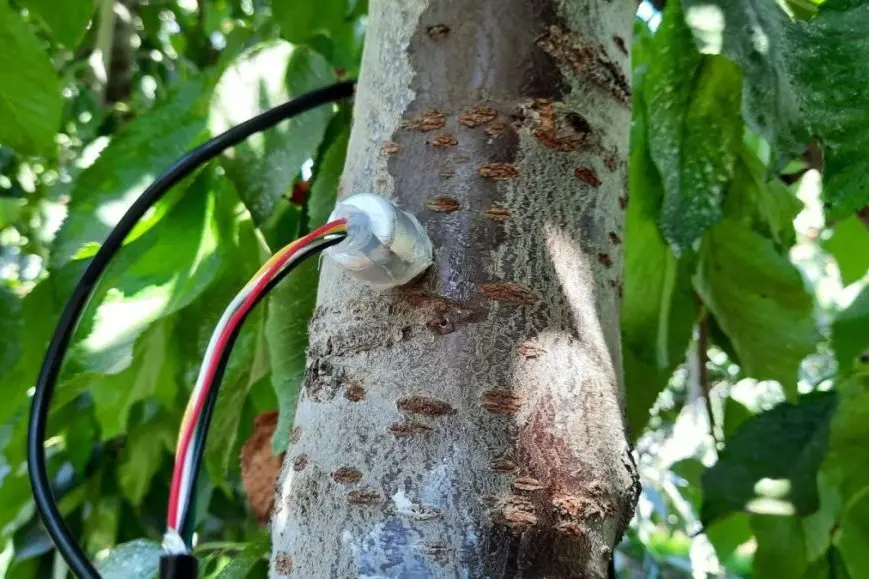
This year’s cherry season has been particularly difficult from the very beginning. Initially, fruit growers had to cope with a harsh winter and spring frosts, followed by a period of drought and, during the harvest, a heatwave. Although many companies managed to limit the damage, yields proved to be significantly lower than expected.
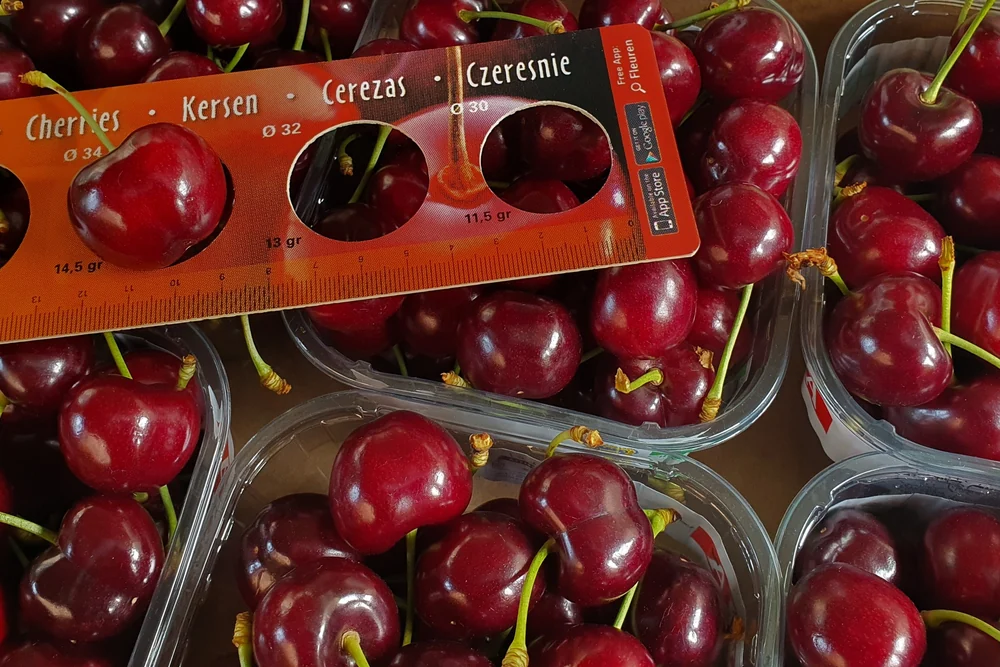
This year’s cherry season is among the most difficult ever
The low yields caused by adverse weather conditions coincided with a large influx of imported fruit
Despite the limited availability of domestic cherries, prices are not meeting the expectations of growers
Describing the difficulties currently facing the sector is Krzysztof Czarnecki, a grower from Bronisławka.
“We expected production to reach around 60-70% of last year’s record harvest. Today we know that reaching 50% would already be the best possible outcome. There are simply very few cherries, especially in orchards located at lower elevations,” says Krzysztof Czarnecki, a cherry grower from Bronisławka, interviewed by the editorial team.
The heat accelerated cherry ripening
The wave of high temperatures caused numerous varieties to begin ripening almost simultaneously.
“Even in well-managed cherry orchards, where the trees were in good condition and had large leaves, the high temperatures accelerated fruit ripening. In less suitable plots, especially on lighter soils, the season for the Regina and Staccato varieties has already ended,” explains the fruit grower.
According to the grower, the cherry harvest in unprotected orchards will continue for no more than another week and a half.
Despite the limited domestic supply, prices are not meeting the expectations of growers. The main problem is the large influx of imported fruit.
Huge quantities of imported cherries on the market
“The market situation is very difficult, and there is only one reason: excessive imports. Prices have fallen sharply, and even fruit of the highest quality is difficult to sell on satisfactory terms,” he stresses.
The grower decided to store the cherries in cold-storage facilities, hoping that the situation will improve once the season ends in the countries of Southern Europe.
“Most of the cherries have been placed in cold storage. I hope that once supplies from Southern Europe come to an end, it will be possible to sell Polish fruit on better terms. In the past, our cherries have already been exported to Hungary after the local season ended,” he adds.
Krzysztof Czarnecki points out that an exceptionally large quantity of imported cherries is present in wholesale markets and shops.
When I visited the Bronisze market
“When I visited the Bronisze market, I was shocked by the amount of imported fruit. Every stand had two pallets of cherries. It was difficult to imagine that all that produce could find buyers. Meanwhile, there are very few Polish cherries,” the grower observes.
There are also some doubts regarding the labelling of the fruit.
“I suspect that not all cherries sold as Polish actually come from Poland. Anyone familiar with the varieties and the methods used for marketing fruit is able to notice the differences,” he explains.
Direct contact with consumers: the company invites visitors to pick their own fruit
Despite the difficult season, Krzysztof Czarnecki’s company is focusing on selling fruit of the highest quality and on direct contact with consumers.
“We organise pick-your-own days. Anyone can come, pick the cherries themselves and see how they are grown. Fruit freshly picked from the tree tastes completely different. You only need to book in advance, and we will be happy to welcome visitors,” the grower concludes.
Source: www.sadyogrody.pl
Image source: Stefano Lugli
Aneta Gwara-Tarczyńska
SadyOgrody
Cherry Times - All rights reserved