SmartCherry is a sub-project developed within OpenAgri, funded by the Horizon Europe program. The goal of SmartCherry is to provide a digital solution for small cherry farms, supporting crop protection and agronomic management while reducing environmental impact and improving profit margins.
The innovative idea was born from a simple question: what if the smartphone could become an agronomic tool to help farmers and technicians grow better, with objective information, in a more sustainable way and at lower costs?
Agrobit is the lead partner and tech provider of the project. Also involved are CIA Toscana as end user and three pilot farms within the Lari PGI cherry district (PI): Az. Agr. Impronta, Az. Agricola Luca Zaupa, and Az. Agricola Mastrociliegia.
Project Goals
The main focus of the project is to make precision agriculture accessible to small and medium-sized farms, overcoming the economic and technological barriers that have so far limited its adoption. The goal is to validate a smartphone-based decision support system that allows cherry growers, especially in rural and PGI areas, to improve agronomic management through smart yet easy-to-use tools.
Specifically, the project identifies the following key objectives:
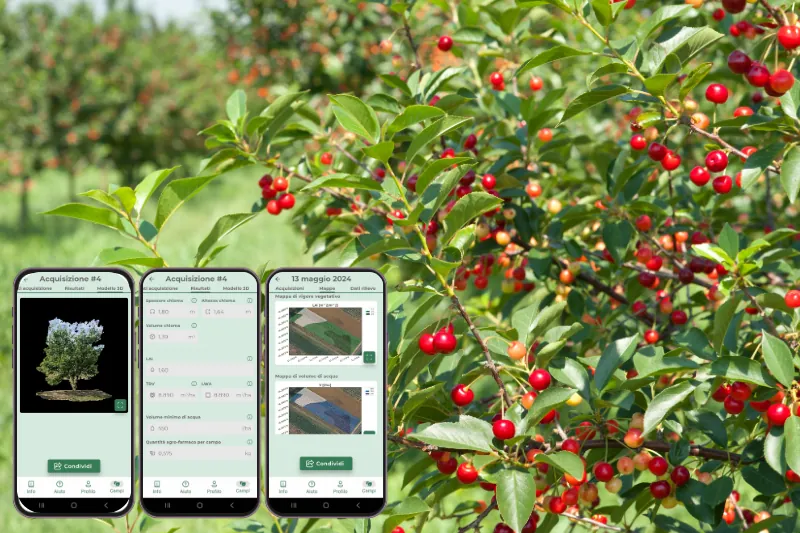
Reduce input use, particularly water and pesticides, thanks to targeted recommendations generated by the iAgro app. Using the smartphone camera, biometric data on the canopy can be collected (such as vigor indices, volume, and 3D models) and integrated with weather data (daily temperature, rainfall, humidity).
The combination of these inputs will result in alert messages for the farmer or agronomist, for example warning about pathogen or insect pressure, or adverse weather conditions (frosts).
Support traceability and compliance with PGI regulations through in-app reports. Accurate and transparent documentation of agronomic practices is now essential. These reports will follow standard formats, facilitating compliance with certification requirements and communication with control bodies.
Automated reporting will simplify bureaucracy and strengthen product reliability across the supply chain.
Offline Functionality and Synchronization
Ensure offline operability, necessary and useful in rural areas with poor connectivity. This limitation often hinders the adoption of digital tools. To address this, the application was designed with a dual architecture: a cloud-based version and a mixed edge/cloud version, capable of functioning offline.
Data collected by the iAgro app is processed directly on the device, allowing farmers to access information and recommendations in real time, even without a network. Synchronization with cloud services occurs automatically when the connection is restored, ensuring continuity and reliability under any environmental conditions.
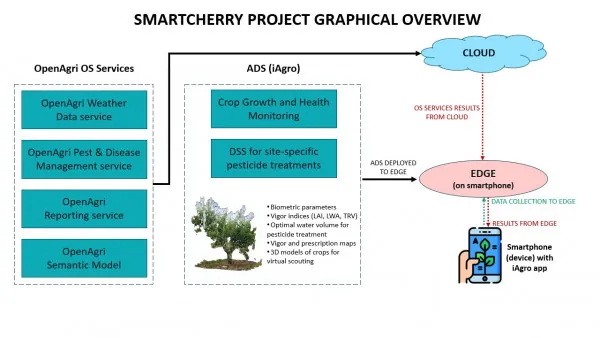 Fig.1: Cloud/edge architecture of the iAgro app enhanced with OpenAgri services.
Lari PGI Cherry
The Lari PGI Cherry identifies a specific geographical production area within the municipalities of Casciano Terme-Lari, Terricciola and Crespina-Lorenzana. About 50% of Tuscany’s cherry production comes from this area, with 40 growers covering 70 hectares.
These are mainly small farms, often with less than 10 hectares, facing growing challenges.
Farmers must meet increasingly strict standards for quality, traceability, and sustainability. In addition, cherry growers are often excluded from technological innovation due to the lack of dedicated tools and software.
Most digital solutions and precision agriculture tools are developed for dominant crops in Italy, such as cereals and vineyards. It is also important to note that Italian farms have an average size of only 10 hectares, resulting in limited investment capacity, which is currently required for digital transition.
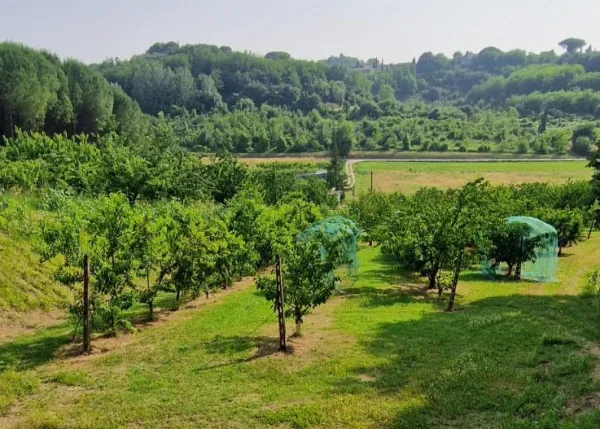 Fig.2: Cherry orchards in the Lari PGI (Pisa, Italy).
Why Choose iAgro
iAgro is a simple, accessible, and effective digital solution. Already tested on other tree crops, including grapevine and olive, the app can turn the smartphone into a precision farming tool.
The app uses the smartphone camera to scan trees in 3D and generate so-called digital twins. The 3D plant model is key to automatically obtaining biometric data, vigor indices, and canopy volume.
The core of the project is the integration of the existing app with services to improve the use of weather data (both forecast and historical), predictive models for diseases and resource management, and automated reporting.
The predictive models for cherry trees focus mainly on three issues identified by growers (Fig.2): brown rot (Monilia spp.), spotted-wing drosophila (Drosophila suzukii), and frost damage.
In general, predictive models are based on the observation of aggregated weather data, especially humidity and temperature parameters, which are constantly monitored. The predictive model will send alerts to the farmer’s smartphone, enabling timely intervention and informed decision-making.
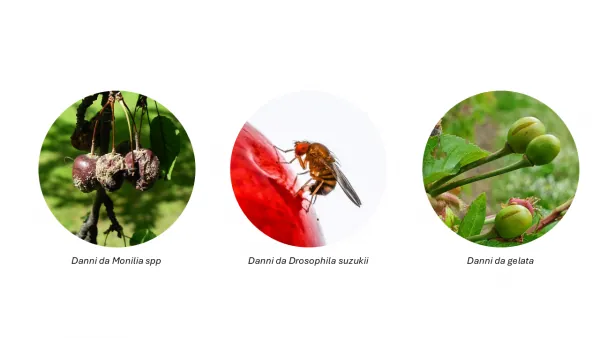 Fig.3: Predictive models integrated into the iAgro app for cherry crop protection.
SmartCherry represents a concrete vision for the future of small-scale agriculture. An approach that addresses the real needs of cherry growers, combining ease of use, sustainability, and innovation.
Thanks to the modularity of the iAgro app and its integration with OpenAgri services, the system can reduce environmental impact, improve farm profitability, and facilitate access to quality certifications.
Its scalable and open-source nature makes it replicable for other tree crops and adaptable to different geographic contexts, serving as a model for the digital transition of European agriculture.
Image source: Agribit
Luana Centorame
Agribit
Cherry Times - All rights reserved