Uzbekistan aims to strengthen the role of sweet cherry as a strategic agricultural product, leveraging international cooperation and knowledge transfer. The Government of Uzbekistan and FAO are scaling up activities dedicated to value chain development under the new FAO-China South-South Cooperation project, linked to the One Country One Priority Product initiative.
The process marked an important milestone in Namangan, where a regional workshop dedicated to the OCOP initiative for Europe and Central Asia was held from 18 to 20 May 2026. The event brought together around 65 participants, including government officials, representatives from 10 OCOP countries in the region, farmers, private sector actors, researchers, and value chain experts from China and FAO.
Uzbekistan among the OCOP demonstration countries
Today, eleven countries in Europe and Central Asia are part of the OCOP initiative, which is designed to help Member States enhance the value of their special agricultural products. Within this framework, Uzbekistan has been selected as one of the 15 global OCOP demonstration countries, representing Europe and Central Asia in the South-South Cooperation project funded by the Government of the People’s Republic of China through the Ministry of Agriculture and Rural Affairs.
Under the coordination of Uzbekistan’s Ministry of Agriculture, the project aims to address the entire sweet cherry value chain: production, post-harvest management, processing, marketing, and access to international markets.
Annual production of 180,000 tonnes
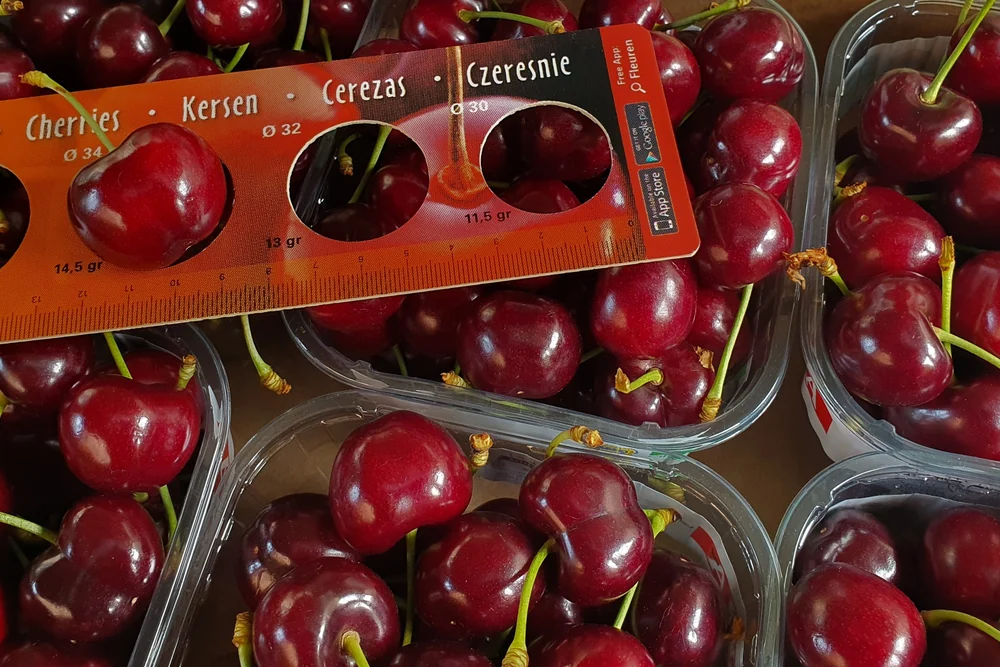
Uzbekistan produces up to 180,000 tonnes of sweet cherries per year. The country benefits from favourable climatic conditions, relatively low production costs, and an already structured network of transport and cold storage facilities. These elements strengthen its competitiveness on foreign markets and make cherries a significant driver of rural income and economic growth.
A central role is played by small family farms, which account for almost 70% of national fruit and vegetable production. These farms support much of the country’s sweet cherry cultivation, with women playing a significant role in both production and processing. The economic impact therefore translates directly into greater resilience and inclusion for rural communities.
Innovation, traceability, and loss reduction
According to Mirshod Kurbonov, First Deputy Director of the Agency for Governance Efficiency under the President of the Republic of Uzbekistan, sweet cherry is one of the country’s highest-potential fruit and vegetable products. The OCOP initiative is seen as an opportunity to combine knowledge, innovation, and partnerships, with the aim of improving production practices, reducing post-harvest losses, and increasing the value generated along the supply chain.
Nuriddin Kushnazarov, Advisor to the Minister of Agriculture of Uzbekistan, also highlighted the growth of OCOP, which has now become a global platform involving more than 90 countries. For Uzbekistan, the support provided through FAO-China cooperation represents an opportunity to turn the progress already achieved into even more concrete results.
The contribution of Chinese experts
During the workshop, participants reviewed OCOP progress in the region, with technical sessions dedicated to sustainable production systems, the adoption of innovative technologies, and market development.
Chinese experts shared practical experiences and advanced solutions. Chuang Liu, Chief Scientist at the Chinese Academy of Sciences, presented the Geographical Indications for Environment and Sustainability methodology and illustrated the role of a new ground station in Fergana, designed to improve product traceability and environmental sustainability.
Jiawei Wang, Chief Expert on sweet cherry at the Shandong Institute of Pomology, presented innovations in sustainable cultivation, preservation, processing, and standardised seedling production systems.
A regional network for special agricultural products
The discussion also involved other OCOP countries in the region, including Azerbaijan, Georgia, Kazakhstan, Kyrgyzstan, the Republic of Moldova, Serbia, Tajikistan, and Türkiye. The exchange of experiences made it possible to share practices and models applicable to the development of different special agricultural product value chains.
According to Sherzod Umarov, Assistant FAO Representative in Uzbekistan, Uzbekistan’s selection as an OCOP demonstration country for Central Asia confirms the country’s potential in building competitive and sustainable fruit and vegetable value chains. The focus on sweet cherry, in particular, fosters collaboration among farmers, research institutions, private companies, and public authorities.
From orchard to logistics: the field visit
Part of the programme took place directly in Namangan province, with technical visits along the value chain. Participants observed a sweet cherry orchard in the village of Varzak, in Chust district, and an advanced logistics company in Turakurgan district.
The visit offered concrete examples of sustainable production, logistics systems, and post-harvest management, all decisive factors in maintaining the quality, shelf life, and commercial value of sweet cherries destined for markets.
A model for Europe and Central Asia
For Yurdi Yasmi, Director of FAO’s Plant Production and Protection Division, Uzbekistan’s experience as a demonstration country can become a reference point for other States in the region that are working to enhance the value of their own special agricultural products.
Hua Yang, Director of FAO’s South-South and Triangular Cooperation Division, emphasised the importance of joint work to ensure visible, concrete, and replicable results, benefiting farmers and rural communities across Europe and Central Asia.
The Namangan workshop therefore confirms the central role of Uzbek sweet cherry as a lever for agricultural development, exports, and innovation. The challenge now will be to turn technical cooperation and knowledge exchange into operational tools capable of making the value chain more sustainable, competitive, and inclusive.
Source: www.uzdaily.uz
Image source: Stefano Lugli
Cherry Times - All rights reserved