Washington State University is diving into its extensive history of cherry breeding to better understand the genetics underlying new, tasty fruits that benefit consumers and growers.
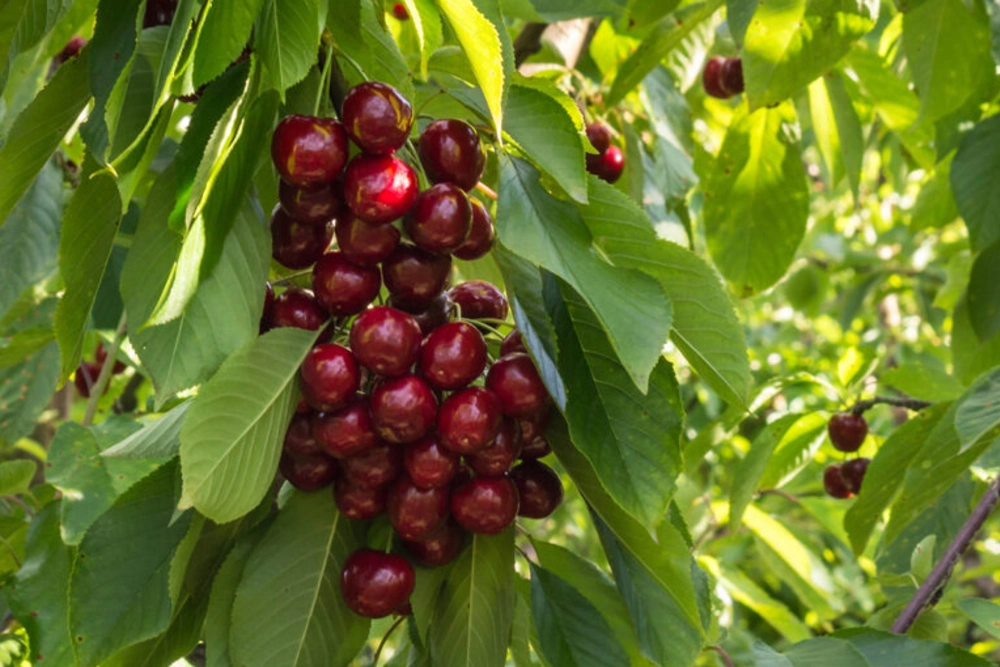 Former WSU cherry breeder Thomas Toyama frequently used Stella cherries due to their ability to self-pollinate. Photo from Adobe Stock/Patrik Stedrak.
Paper published in Fruit Research, WSU scientists used records kept by longtime sweet cherry breeder Thomas Toyama to break down the precise heritage of cherry breeds he cultivated over the course of his prolific career.
“Dr. Toyama created some really cool germplasm that continue to be used at WSU and globally,” said Cameron Peace, corresponding author on the paper and professor in WSU’s Department of Horticulture. “Since he already did the work, it makes sense for us to investigate and honor that genetic legacy.”
The researchers also hope to use Toyama’s work to develop even better sweet cherry varieties. “We can use this information to identify where particular genetic factors come from,” Peace said.
Genetic heritage
For example, a breeder may want to produce a bigger cherry. They can look at two varieties that already produce sizable fruit. In the past, a breeder might try to match them together and see if they produce a successful tree, Peace said. Now they can trace the history of those two varieties to see if the bigger fruit trait comes from the same ancestor. If it does, then it’s less likely to produce an even larger fruit.
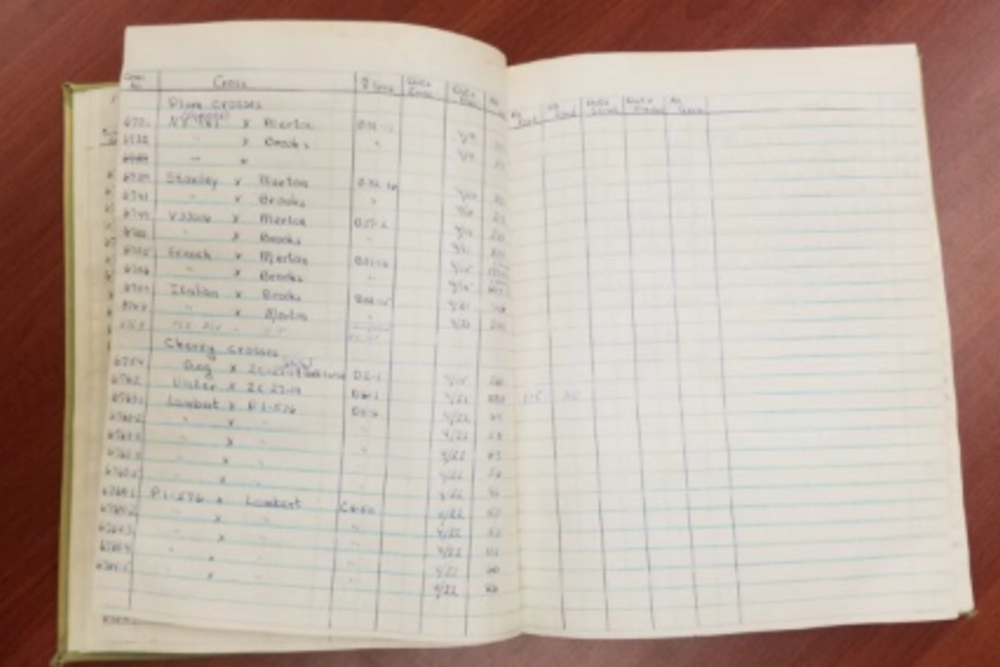 Toyama took meticulous hand-written notes of his work to maintain the genetic heritage of each of his attempts to breed a better cherry. Photo courtesy Cameron Peace.
“However, if the two cultivars are genetically different in terms of fruit size, the results could be even better if you put them together,” Peace said. “We need to know where the genetic factors came from, and this work helps us trace that lineage.”
Toyama, WSU’s cherry breeder from 1963-1985, led a program that ultimately released 11 cultivars, or cherry breeds. Chelan is probably the best known in the Pacific Northwest, but others include Tieton, Kiona, Glacier, Benton, and Selah.
Historic sources
While studying Toyama’s hand-written records, Peace and his study coauthors found that most of Toyama’s cultivars came from two basic historic sources. The first was Stella, a sweet cherry breed that was commonly used because it can self-fertilize to produce fruit.
The other common source was one of two French cultivars known for producing fruit earlier in the season. Because both of those traits are desirable for growers, Toyama used them in several combinations.
“It’s exciting to see researchers using resources from WSU’s past to benefit modern growers and consumers,” said Raj Khosla, Cashup Davis Family Endowed Dean of WSU’s College of Agricultural, Human, and Natural Resource Sciences. “I’m looking forward to seeing how this data will be used to create new breeds of cherries that taste delicious and have extended growing seasons.”
Modern breeding
WSU’s current cherry breeder, Per McCord, said the new paper is helpful for a variety of reasons. First, it shows that, even with advanced technology, best practices are fairly similar even decades later.
“My increased use of my own cultivar selections, or those of my immediate predecessors, mirrors what Dr. Toyama was doing,” said McCord, who is based out of WSU’s Irrigated Agriculture Research and Extension Center in Prosser, Wash. “This reinforces that I am on the right track with my own breeding work.”
Cherry consumers and growers still consistently want larger cherries and a longer season of availability, in addition to disease resistance. These are all traits that McCord breeds for today. “Dr. Toyama was certainly successful in developing germplasm with large fruit,” McCord said. “The current WSU program makes use of large-fruited offspring of Selah for breeding.”
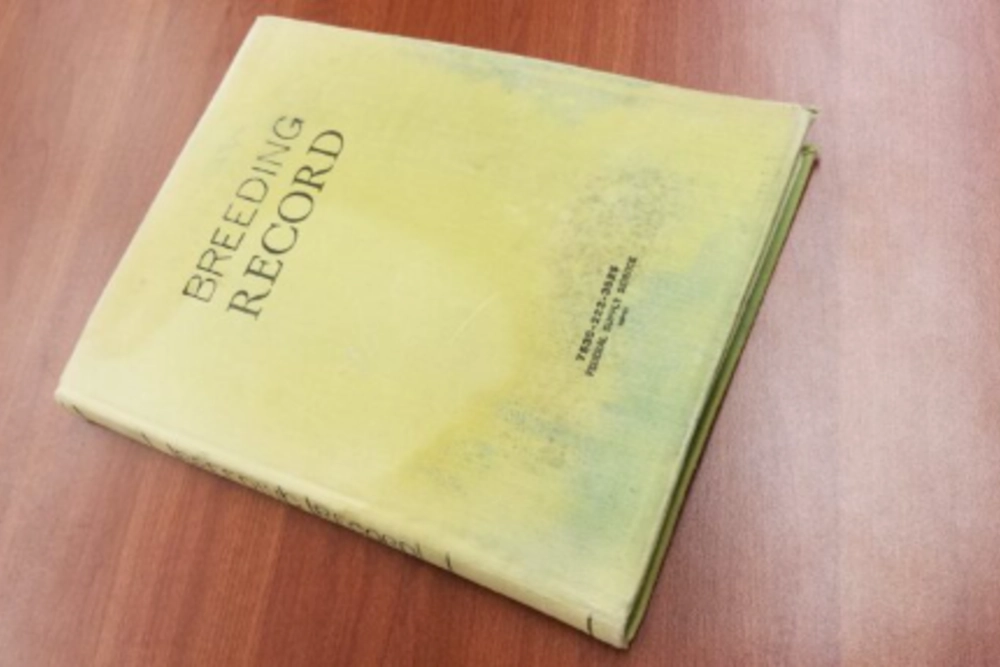 Toyama’s notebook containing years of scientific research data. Photo courtesy Cameron Peace.
Breeding records
Using Toyama’s records, Peace’s graduate student Duygu Caymaz added up just how much work it took to create those 11 cultivars. It involved using 103 unique parents to create:
- 241 cherry families
- At least 5,182 germinated seeds
- 88,000-plus pollinated flowers
“Most breeding programs have papers and an idea of what was done in the past,” Peace said. “But not really a deep dive like this, with such specific numbers. I’m glad that Duygu was so interested in looking through Dr. Toyama’s records.”
Peace hopes to digitize Toyama’s notebook to make the work accessible to current breeders. “There is likely additional information in the metadata that could be useful for breeding work today,” McCord said. “I’m excited to see what cherry breeders can find and use to breed better fruit.”
Source: news.cahnrs.wsu.edu
Opening image source: Stefano Lugli
Cherry Times - All rights reserved