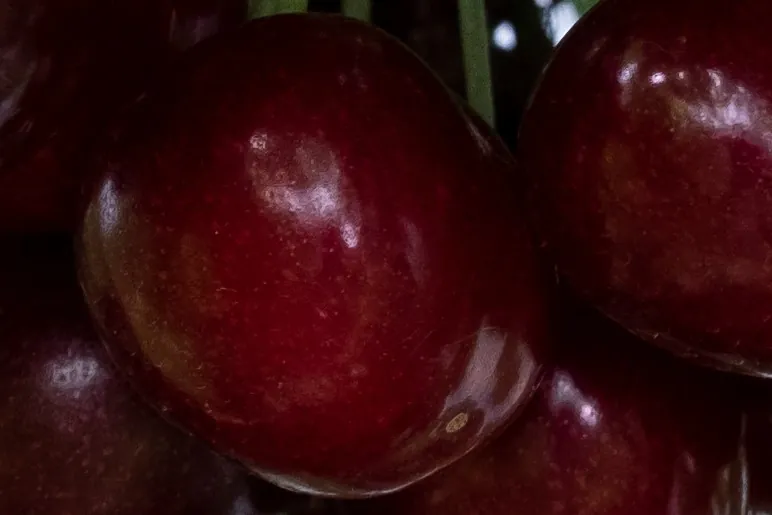
For decades, sour cherry cultivars have been classified into two major groups, “morello” and “amarelle”, primarily according to the intensity of flesh pigmentation.
This distinction, widely adopted in both cultivar descriptions and nursery practice, has long suggested a close relationship between fruit color and the genetic origin of cultivars. However, a recent study conducted on 27 Hungarian and internationally important sour cherry cultivars demonstrates that this relationship is far less direct than traditionally assumed, showing that fruit pigmentation is mainly governed by gene expression mechanisms rather than by close genetic relatedness.
The study combined ten simple sequence repeat markers (SSR) with S-RNase locus genotyping, which is associated with gametophytic self-incompatibility, to develop a highly discriminating system for germplasm characterization.
Genetic characterization
Overall, 78 SSR alleles and 17 S-RNase alleles were identified, resulting in an extremely low probability that two unrelated individuals would share the same multilocus profile. These findings confirm the high effectiveness of the marker panel for cultivar identification, genetic authentication, and support of breeding programs.
Phylogenetic analyses, genetic network reconstruction, population structure analysis, and principal coordinate analysis consistently identified five well-defined genetic groups. However, these clusters primarily reflected breeding history, pedigree relationships, and the geographical origin of the cultivars rather than fruit color.
Cultivars with high anthocyanin concentrations and those with much lighter pigmentation were frequently assigned to the same genetic groups, demonstrating that the traditional color-based classification does not reliably reflect overall genetic relationships.
To investigate the biological mechanisms underlying this apparent discrepancy, the researchers examined the expression of genes involved in anthocyanin biosynthesis by comparing two genotypes with markedly contrasting pigmentation: the selection VN-1, characterized by very dark fruits, and the cultivar ‘Pipacs 1’, which produces light-red fruits.
Gene expression
Gene expression analysis throughout fruit ripening revealed profoundly different regulatory patterns. In VN-1, the major genes involved in the flavonoid biosynthetic pathway showed strong late-stage activation, accompanied by a marked upregulation of the transcription factor MYB10, a well-known regulator of anthocyanin accumulation.
In contrast, ‘Pipacs 1’ exhibited much weaker late induction together with higher early expression of other genes involved in flavonoid metabolism, suggesting distinct transcriptional regulation and metabolic pathway flux.
These findings indicate that differences in fruit color depend primarily on the intensity and timing of activation of the regulatory genes controlling anthocyanin biosynthesis. In other words, genetically closely related cultivars may develop markedly different pigmentation patterns, whereas genetically distant cultivars may converge toward similar fruit color phenotypes through different transcriptional regulatory programs.
From an applied perspective, the study provides valuable insights for germplasm management and sour cherry breeding programs. The selection of new genotypes with specific pigmentation traits should increasingly focus on functional and regulatory markers, such as MYB10, rather than relying solely on pedigree relationships.
This approach will facilitate the development of more efficient breeding strategies aimed at enhancing both the visual appeal and the nutraceutical quality of sour cherry fruit.
Source: Hegedűs, A., Pfeiffer, P., Tóth, E. G., & Halász, J. (2026). Genetic Relatedness Is Uncoupled from Fruit Color in Sour Cherry: Evidence from SSR, S-RNase, and Expression Profiling. Plants, 15(7), 1069. https://doi.org/10.3390/plants15071069
Image source: Stefano Lugli
Andrea Giovannini
PhD in Agricultural, Environmental and Food Science and Technology - Arboriculture and Fruitculture, University of Bologna, IT
Italian Berry – All rights reserved