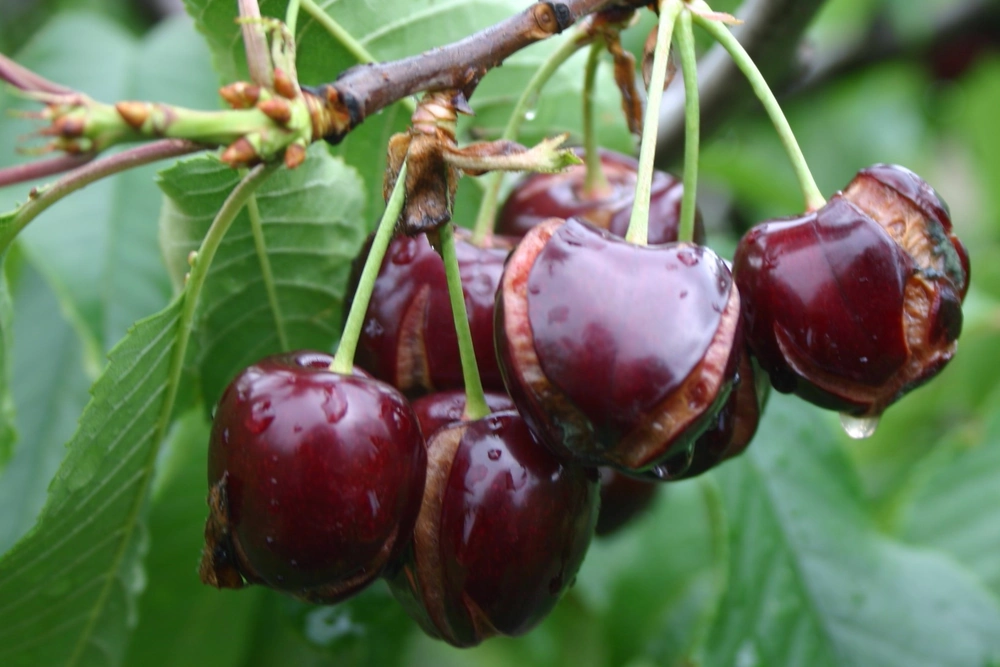
Rain exposes a vulnerability that develops in cherries as they ripen. To understand cracking, we need to follow the fruit’s growth, the changes in its skin, and what happens when water reaches a weakened area. Current knowledge places the start of the damage at a local level and links its spread to a loss of tissue cohesion. This perspective helps explain why apparently similar fruit can respond differently to the same exposure to water.
Fruit growth and cuticle formation
As the cherry grows, its surface area must increase along with the volume of its flesh. Its growth follows a double-sigmoid curve: after an initial period of active growth, pit hardening coincides with a slowdown in the increase in fruit size; later, cell expansion in the mesocarp drives the final growth phase. During this third phase, the surface begins expanding rapidly again, but the formation of the outer covering can no longer keep pace (Knoche et al., 2004; Alkio et al., 2012).
This covering is the cuticle, a matrix of cutin and waxes deposited on the epidermis. Its formation is concentrated in the early stages and declines before the final expansion phase. As a result, a quantity of material that increases only slightly must cover an increasingly large surface: the amount of cuticle per unit of surface area decreases, and strain builds up.
[...]
Want to know more? The full article is reserved for subscribers to the Cherry Times newsletter! Sign up for free to receive each new exclusive in-depth article directly in your inbox and stay up-to-date with quality advice and analysis. Don't miss this unique opportunity!
A Chinese study developed photodynamic films using chlorogenic acid to extend the shelf life of cherries. This biodegradable, eco-friendly packaging reduces decay and maintains fruit quality. A promising alternative to synthetic preservatives in food storage.
Jealous Fruits forecasts an excellent 2025 cherry season in British Columbia: harvest begins in July with premium varieties like Regina, Sovereign, and Kordia. A 30–35% increase in late-season production is expected thanks to ideal growing conditions throughout the season.
Rain can trigger cherry cracking when water reaches microscopic fissures in the cuticle. Learn how fruit growth, cell walls, pectins, calcium and genetic differences contribute to the onset and spread of damage as cherries mature, and why similar fruits may respond differently.
A Serbian study on Diaporthe eres shows how branch age affects lesion size and dieback in wild cherry. Older branches develop larger areas of necrosis, while tolerant trees generally show less extensive lesions and less frequent branch dieback, highlighting host tolerance.