At the University of Chile, a study was conducted to evaluate the effectiveness of various chemical agents used to stimulate bud break in sweet cherry trees, with particular emphasis on the timing of application during the winter dormancy period. This topic is especially relevant in the context of climate change adaptation, as rising temperatures are reducing the accumulation of winter chill required for the proper physiological development of deciduous fruit trees.
Sweet cherry trees depend on a specific number of chilling hours to ensure uniform bud break, consistent flowering, and adequate fruit set. When these requirements are not met, significant production issues arise, including uneven bud development and reduced yields.
To mitigate these effects, agronomic research has explored the use of chemical compounds capable of inducing or advancing the resumption of vegetative growth. The study therefore aims not only to assess the effectiveness of different bud break promoters, but also to investigate the critical role of application timing.
The experiment
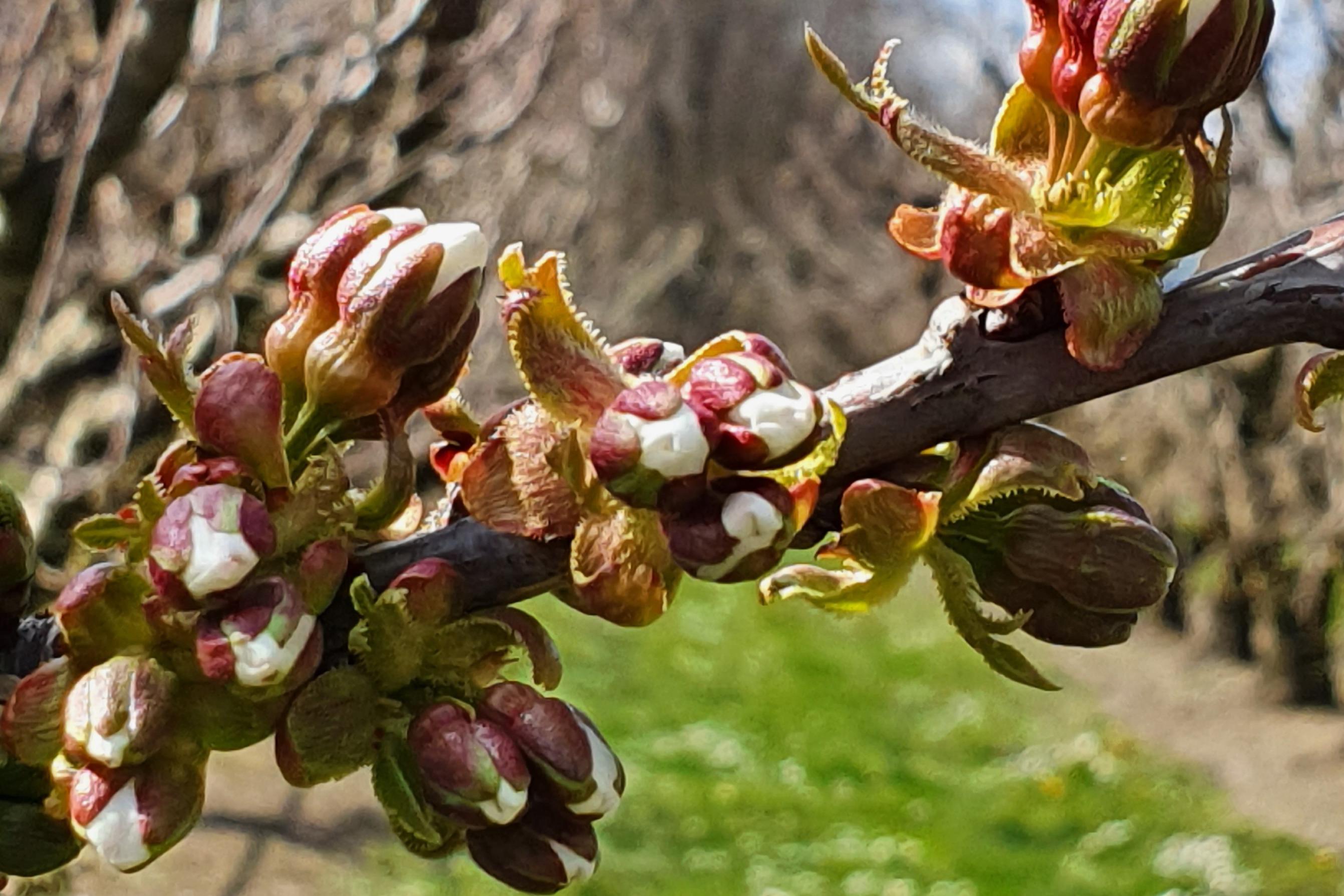
The experiment was carried out on ‘Santina’ cultivar in the Maule region of Chile during the 2023 growing season. Several treatments were tested: hydrogen cyanamide applied alone or combined with mineral oil, thidiazuron with mineral oil, Erger® combined with calcium nitrate, and potassium nitrate, along with an untreated control group.
A key methodological aspect of the study is the comparison between two application timings: an early treatment applied 45 days before the estimated bud break, and a later one applied 30 days before. This design allows for the evaluation of how timing influences both the speed and uniformity of the bud break process.
Observations were conducted both in field conditions and under controlled environments, enabling a detailed analysis of bud development dynamics. The results highlight significant differences among treatments.
The results
Hydrogen cyanamide proved particularly effective in advancing bud break: when applied early, it allowed 50% of buds to open within approximately 12 days, while later application concentrated the process into a shorter period of around 8 days. However, this compound also showed potential drawbacks, including phytotoxic effects at more advanced developmental stages.
Thidiazuron, on the other hand, stood out for its ability to promote uniform bud break throughout the tree canopy, regardless of application timing. Moreover, when applied later, it enhanced fruit set, reaching high values in the weeks following full bloom.
Other treatments, such as those based on natural bioregulators or nutrient salts, showed more variable outcomes, indicating that their effectiveness depends on the interaction between the product and application conditions.
Overall conclusions
Overall, the study demonstrates that managing bud break in sweet cherry cannot rely solely on the choice of chemical agent, but must also integrate the timing of application. Timing plays a crucial role in modulating plant physiological responses and maximizing productive outcomes.
In conclusion, the research provides valuable insights for adapting agriculture to climate change, showing that the targeted use of chemical agents, combined with proper agronomic planning, can help stabilize production and improve the quality of fruit crops.
Source: Flores Canelo, S. (2025).Efectividad de agentes químicos promotores de la brotación aplicados en dos épocas durante la latencia invernal de cerezos. Disponible en https://repositorio.uchile.cl/handle/2250/208083
Image source: Stefano Lugli
Melissa Venturi
PhD in Agricultural, Environmental and Food Sciences – General Arboriculture and Tree Crops, University of Bologna, Italy
Cherry Times - All rights reserved