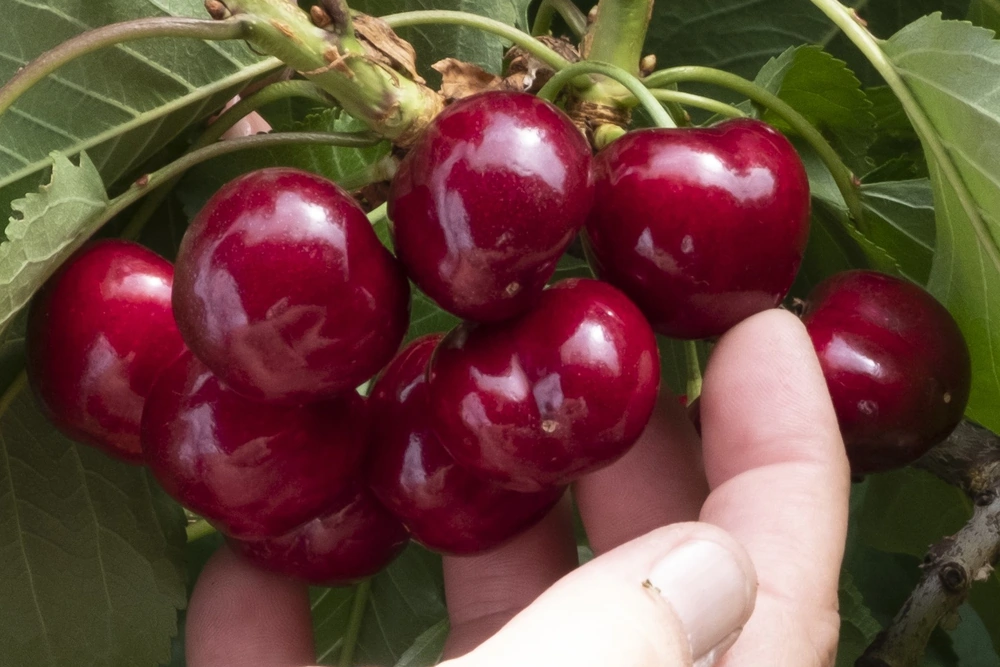
According to the recommendations of ANA Chile®, the key points are: avoiding soft fruits caused by tree overload; softening of the shoulders or "alligator skin" by harvesting with a color above 3.8; and fruit softening caused by the use of plastic materials after the straw-colored stage.
The cherry harvest period in Chile has already started, and one of the new varieties introduced in the country’s fields, Areko, is now awaiting harvest at the right time to meet quality standards and achieve its best value in the Chinese market, its main destination.
This cultivar, originating from Germany, is the result of a cross between Kordia and Regina and stands out for combining the best characteristics of its parents, such as Kordia’s quality and a tree with good and consistent production and a growth habit similar to Regina.
According to information provided by ANA Chile®, the keys to achieving an optimal harvest with the required quality standards are: avoiding soft fruits due to tree overload, preventing softening in the peduncular zone or "lizard skin" by harvesting with a color above 3.8, Finally, avoid softening of the fruit due to the use of plastic after the straw-yellow colour of the fruit.
For this reason, they recommend starting the harvest at color 3.5 (the maximum harvest color for Regina, not Kordia). In this sense, they suggest harvesting the largest volume with colors between 3.5 and 3.8 to achieve optimal post-harvest conditions, avoiding picking fruits with darker colors beyond the recommended range.
Read the full document here
Source: Redagrícola
Image: SL Fruit Service
Cherry Times - All rights reserved