Laimburg, a splendid location in South Tyrol, is renowned for its famous agri-food research institute. Situated a few kilometers from Bolzano, it is easily accessible from the Brenner Motorway. Surrounded by lush vineyards and orchards, Laimburg offers a picturesque landscape and a rich agricultural tradition.
The Laimburg Research Center
The prestigious Laimburg research center is known for its innovation and development of cutting-edge technologies in the agricultural sector. Specializing in crop studies, sustainable resource management, and food quality, the center supports local agriculture through applied research and collaborations with local companies.
With a multidisciplinary approach, it aims to improve agricultural productivity and promote sustainable practices, significantly contributing to the advancement of the regional agri-food sector.

The INSTINCT Project: An Innovation in Precision Agriculture
The Laimburg research institute has launched the INSTINCT project, a cutting-edge initiative in the field of precision agriculture. INSTINCT focuses on using advanced technologies to optimize crop management and improve agricultural practices.
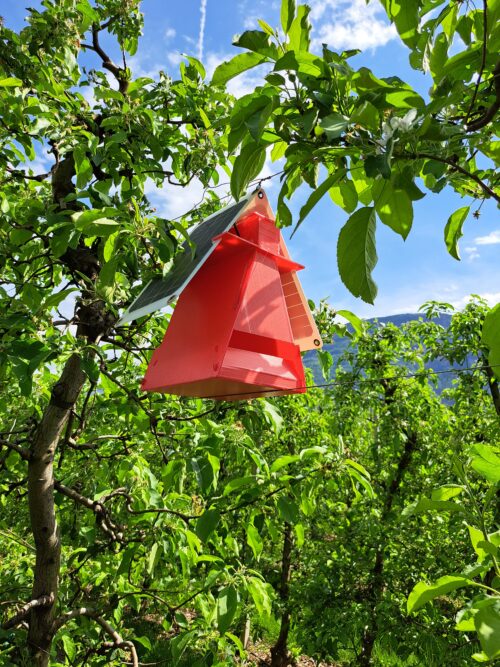
A key objective of the project is the integration of intelligent sensors and monitoring systems to collect real-time data on plant and soil conditions. This technology allows, for example, the remote monitoring of harmful insects such as the spotted wing drosophila and the apple fruit fly, avoiding the manual inspection of each individual fruit.
AI in Defense of Agriculture
The use of intelligent sensors allows for precise data collection, reducing the use of synthetic insecticides and minimizing the environmental impact of agriculture. This approach increases productivity and reduces the use of resources such as water and pesticides, contributing to more sustainable agricultural management.
Collaborations and Synergies
The INSTINCT project is co-funded by the European Union and implemented in collaboration with the University of Bolzano, Eurac, and innovative companies like Genoa-based FOS S.p.A. It also involves local agricultural companies as pilot partners to test and refine the developed technologies.
Thanks to these collaborations, the Laimburg research institute aims to create a replicable model of precision agriculture that can be adopted in other regions. In summary, INSTINCT represents a synergy between technology and agriculture, promoting more efficient and sustainable agricultural management.
Source: Milano Città Stato
Image: Milano Città Stato
Cherry Times - All rights reserved