The favorable climatic and edaphic-climatic conditions in Chile for producing high-quality fruit must be considered, and the opportunity to offer our consumers an excellent product must be seized. On the other hand, the contribution that UPL generates, with its wide range of products in its portfolio, has made it number one in the cherry market, enabling it to offer solutions not only in terms of protection but also in biostimulation and growth.
In this context, the NPP line, Natural Plant Protection, plays a fundamental role, offering essential products that take production and quality to a higher level.
This line includes Biozyme TF, a natural growth regulator, which is part of the "Calibre Solution" strategy. Together with Dropper 5% SC, a growth regulator based on cytokinins, it creates an important synergy that explains the consistent results achieved with its use.
The third component of this Calibre Solution is Biofrut, a growth regulator containing 12% gibberellins, plus plant extracts, which have a direct effect not only on yield but also on the quality and condition of the fruits.
During the fruit development period, many genes are activated within the plant, signaling the endogenous synthesis of three necessary hormones for the success of this process: auxins, gibberellins, and cytokinins. Biozyme TF is a growth regulator based on natural extracts and nutritional elements, which stimulates plants to naturally and evenly produce the hormones needed for proper fruit development.
When applied during full bloom, it induces a greater gene expression signaling the production of auxins, which occurs right after pollination.
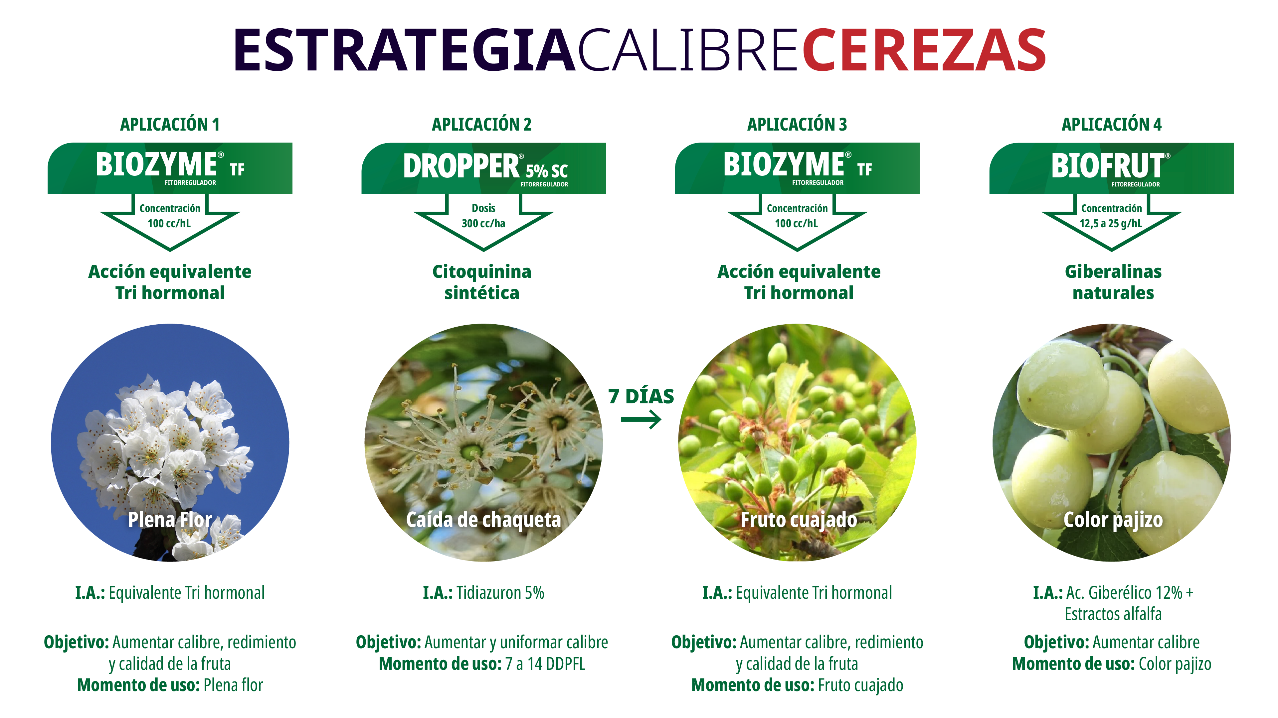
Once auxins are naturally synthesized within the plant, and in greater quantities due to the effect of Biozyme TF, they signal the stimulation of gibberellin production. The combined action of these hormones, in a certain balance, promotes fruit formation and set.
Once the fruit begins to grow, the second application of Biozyme TF stimulates the plant to express a greater number of genes related to cytokinin synthesis, which work to accelerate and optimize cell division until the fruit reaches full growth.
Its formulation does not contain synthetic hormones, but it stimulates the plants to increase the internal production of natural hormones. This is why its incorporation is indispensable for balancing and integrating the necessary action of growth regulators within a program to increase the size and condition of the fruits.
Source: Mundoagro
Image: Mundoagro
Cherry Times - All rights reserved