

Proceedings of the 9th ISHS International Cherry Symposium published

13 Dec 2024
1991

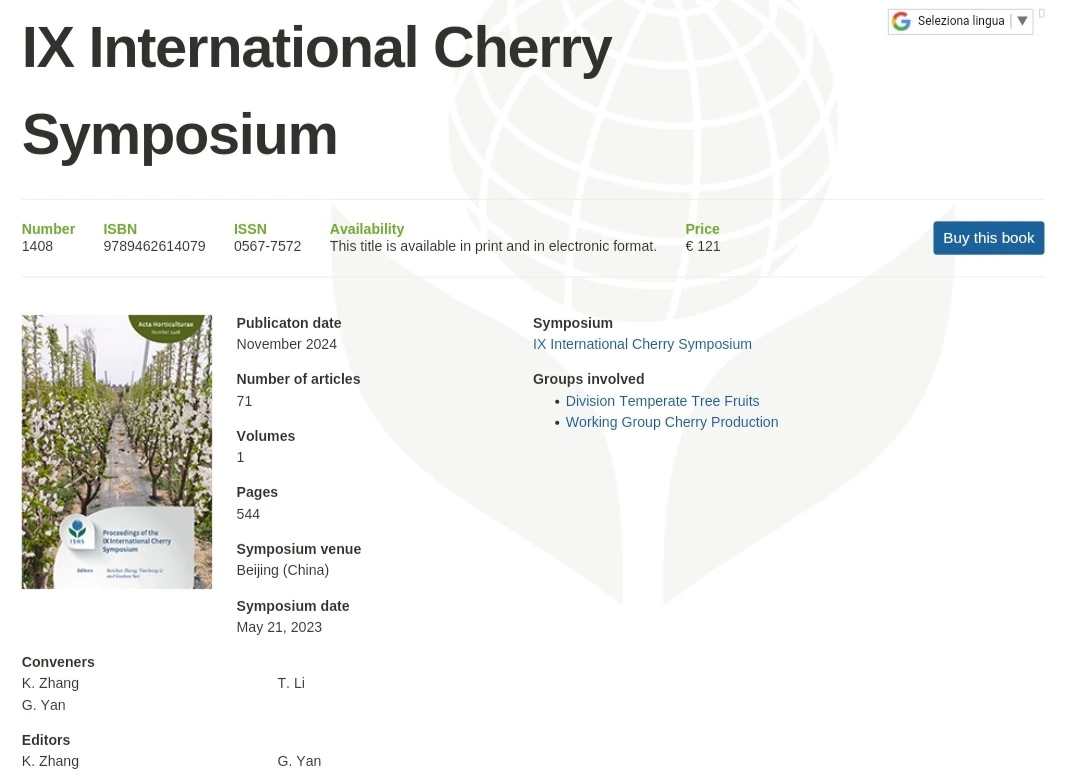
As preparations are in full swing for the 10th edition of the ISHS International Cherry Symposium, which will take place in Richland, WA, USA, from June 1 to June 5, 2025 (for more details click here https://www.xishscherrysymposium.com/), we inform our readers that the proceedings of the 9th ISHS International Cherry Symposium, held in China in 2023, have been published.

To view the abstracts of the presentations or purchase the volume in print or as an ebook, you can visit the ISHS website at this address https://www.actahort.org/books/1408/. Happy reading!


Cherry Times - All rights reserved

What to read next

Controlling San José Scale with new chemicals: a possible solution?

Crop protection

03 Jun 2024

A US study evaluated the efficacy of two San Jose mealybug defence programmes in black cherry using Sivanto Prime 200SL and flupyradifuron 300SL. Due to the slow onset of action of the treatments, the results did not show significant data.

OPTIMISTII: the green solution to Drosophila suzukii in European cherry orchards

Crop protection

20 Oct 2025

The OPTIMISTII project, led by INRAE, offers an innovative biological approach to tackle Drosophila suzukii in European cherry orchards by combining male sterilization techniques to reduce pest reproduction and minimize the use of chemical pesticides in fruit production.

In evidenza

Australian cherry volumes are expected to fall by 15%

Production

15 Sep 2026

Australian cherry production is forecast to fall 15% in 2026/27, to 17,000 metric tons after a winter with fewer chill hours. Exports are expected at 4,000 MT, while dry conditions and high irrigation costs could add pressure for growers in Victoria and New South Wales.

A laboratory leaf disc assay to predict sweet cherry susceptibility to bacterial canker

Crop protection

15 Sep 2026

A three-year survey of 222 orchards in O’Higgins, Chile, validates a rapid Leaf Disc Assay to identify sweet cherry cultivars with lower susceptibility to bacterial canker caused by Pseudomonas syringae, supporting faster and more sustainable breeding decisions today.

Tag Popolari