The emergence of new sweet cherry diseases represents a growing challenge for production, especially in a context of high varietal specialization and international exchange of plant material.
Within this framework, a recent report has documented for the first time the presence of Agrobacterium larrymoorei as the causal agent of crown gall on sweet cherry (Prunus avium) in South Korea, providing experimental evidence of considerable technical relevance.
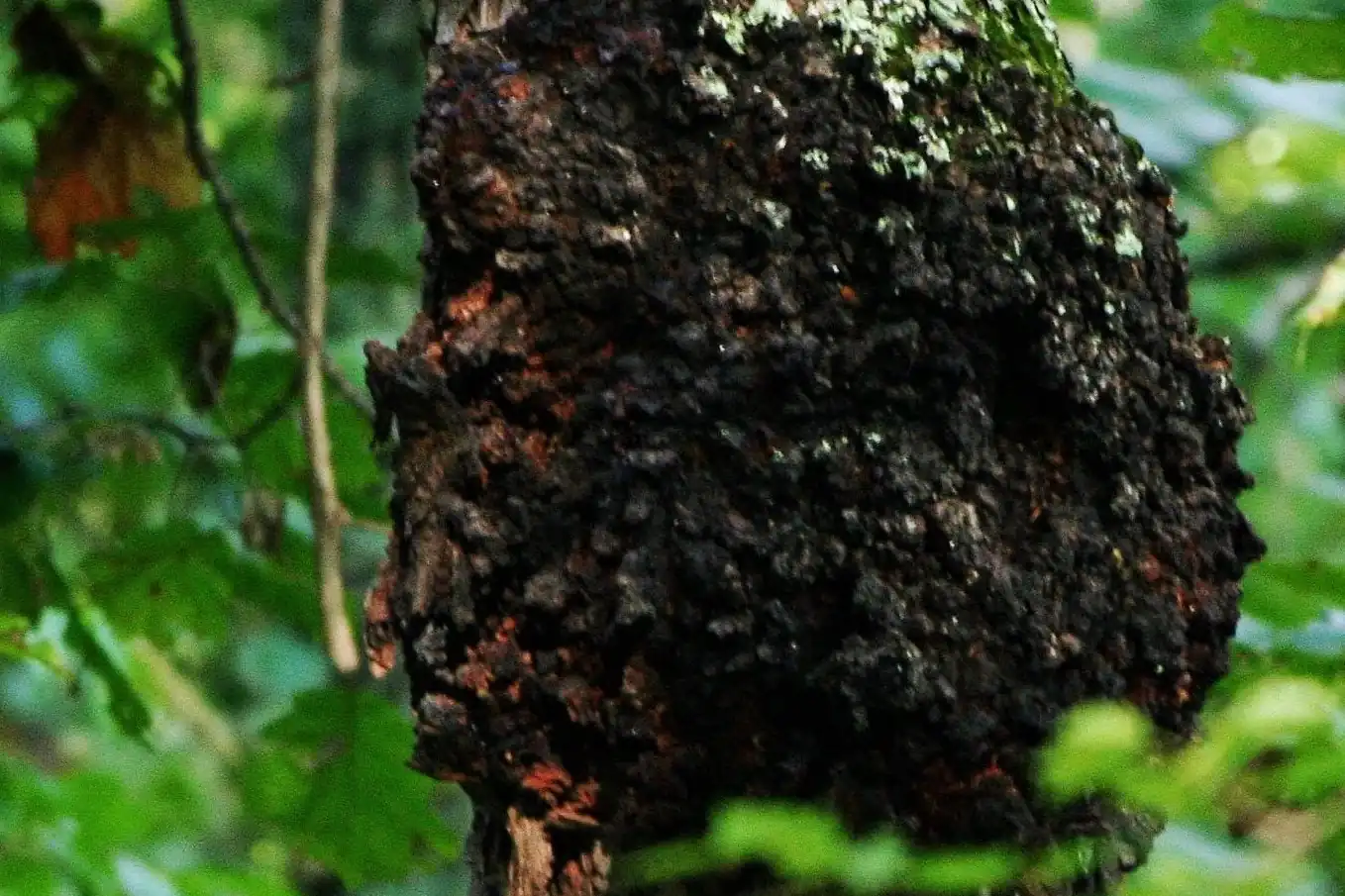
The investigation originated from the observation, in October 2024, of symptoms consistent with crown gall in a four-year-old commercial sweet cherry orchard, with an estimated incidence of around 10% of the trees.
The described symptoms: galls of variable size located at the crown, branch dieback, and leaf wilting, are consistent with those already known for infections caused by tumorigenic agrobacteria.
Identification of the pathogen
However, the novelty lies in the specific identification of the species involved. Using a classical approach based on culture isolation, morphological characterization of colonies, biochemical tests, and pathogenicity assays, the researchers selected five representative isolates.
Confirmation of their tumorigenic nature was obtained through diagnostic PCR targeting the virulence gene virD2, followed by verification of Koch’s postulates on tomato plants used as a model host.
Furthermore, multilocus phylogenetic analysis conducted on three housekeeping genes (atpD, recA, and rpoB) allowed the isolates to be placed with high reliability within the clade of A. larrymoorei.
The high degree of homology with reference strains and the production of nopaline-type opines, confirmed using specific biosensors, further strengthened this identification.
Operational implications
From an operational perspective, the detection of A. larrymoorei on sweet cherry expands the spectrum of pathogens to be considered in the diagnosis of crown gall, a disease often generically attributed to other Agrobacterium species.
This has important practical implications, since accurate identification of the causal agent is the basis for effective prevention strategies, particularly in the management of propagation material, the choice of rootstocks, and nursery practices.
In addition, the presence of nopaline-producing strains suggests a specific plant–pathogen interaction that may influence bacterial competitiveness in the soil and the persistence of the inoculum.
Future directions and conclusions
The results obtained provide an essential knowledge base for the development of monitoring and control protocols for cherry crown gall, not only in South Korea but potentially also in other production areas.
More broadly, the study highlights the need for technicians to integrate advanced molecular diagnostic methods into phytosanitary monitoring activities in order to promptly detect new pathogens or novel host-pathogen associations.
In conclusion, this first report of Agrobacterium larrymoorei as the causal agent of crown gall on sweet cherry in South Korea sends a warning signal to the cherry production sector, which will need to strengthen prevention and management strategies for this disease in light of a more complex pathogenic biodiversity than previously considered.
Source: Choi, O., Lee, Y., Lee, J., Kim, D., Ha, J., Kim, T., Lee, Y., Faqua, C., & Kim, J. (2025). First report of crown gall on sweet cherry trees caused by Agrobacterium larrymoorei in South Korea. Plant Disease, (ja). https://doi.org/10.1094/PDIS-07-25-1460-PDN
Image source: Joanna R. Protz, GKH Scavenger Hunt
Andrea Giovannini
PhD in Agricultural, Environmental and Food Science and Technology - Arboriculture and Fruitculture, University of Bologna, IT
Cherry Times - All rights reserved