There is something deeply Italian in the cherry supply chain: the extraordinary ability to portray itself as excellence while the world moves forward and we stand still.
This is especially true in the South, and in Apulia in particular; elsewhere, modern orchards are planted, varieties are replaced, rootstocks are studied, and orchards are designed as if they were quality factories. Here in Apulia, instead, the cherry tree continues to be treated like a historical monument: it is admired, defended in words, but heaven forbid anyone actually touches it.
The contradiction is there for everyone to see. Italian nurseries sell plants in Chile, Spain, Greece, Turkey, and even in Trentino new varieties are planted, protected and managed with modern systems. There, they become export cherries, with size, crunchiness and shelf life designed to last for weeks on the market.
A supply chain issue
At this point, the question becomes inevitable: why are other countries able to invest in shelf life, logistics and storability, while here in the South we are not?
It is not a matter of climate, nor of know-how. And it is not even a matter of genetics. It is, quite simply, a supply chain issue. Elsewhere, cherries are an industrial project. Decisions are made on what type of fruit to produce, for which market, and with what commercial lifespan. Covered orchards are designed, staggered harvests are planned, and varieties compatible with global logistics are selected.
Here in Apulia, which I remind you accounts for over 80% of national production, cherries too often remain an agricultural matter. If it rains, it is a problem because they split; if there is strong wind, it is a problem because of blemishes; if the market demands continuity, it is a problem because there is no suitable product. And so the system moves in a schizophrenic way: nurseries innovate, growers resist, traders—after investing millions of euros in machinery and sorting lines—are left stuck, everyone running on their own, while the supply chain stands still.
Reliable cherries
Meanwhile, the market is changing. Retailers no longer buy only good cherries: they buy reliable cherries. They want volume, consistency and durability. They want fruit that can travel, stay on shelves and reach the consumer intact.
Other countries understood this years ago. They have invested in longer shelf-life varieties, in protective covers, in high-density orchards, and in cold chain logistics. Meanwhile, we are still debating whether it is worth changing varieties.
And yet, it would be enough to look around to understand that the real risk is not innovation. The risk is standing still while others build the market of the future.
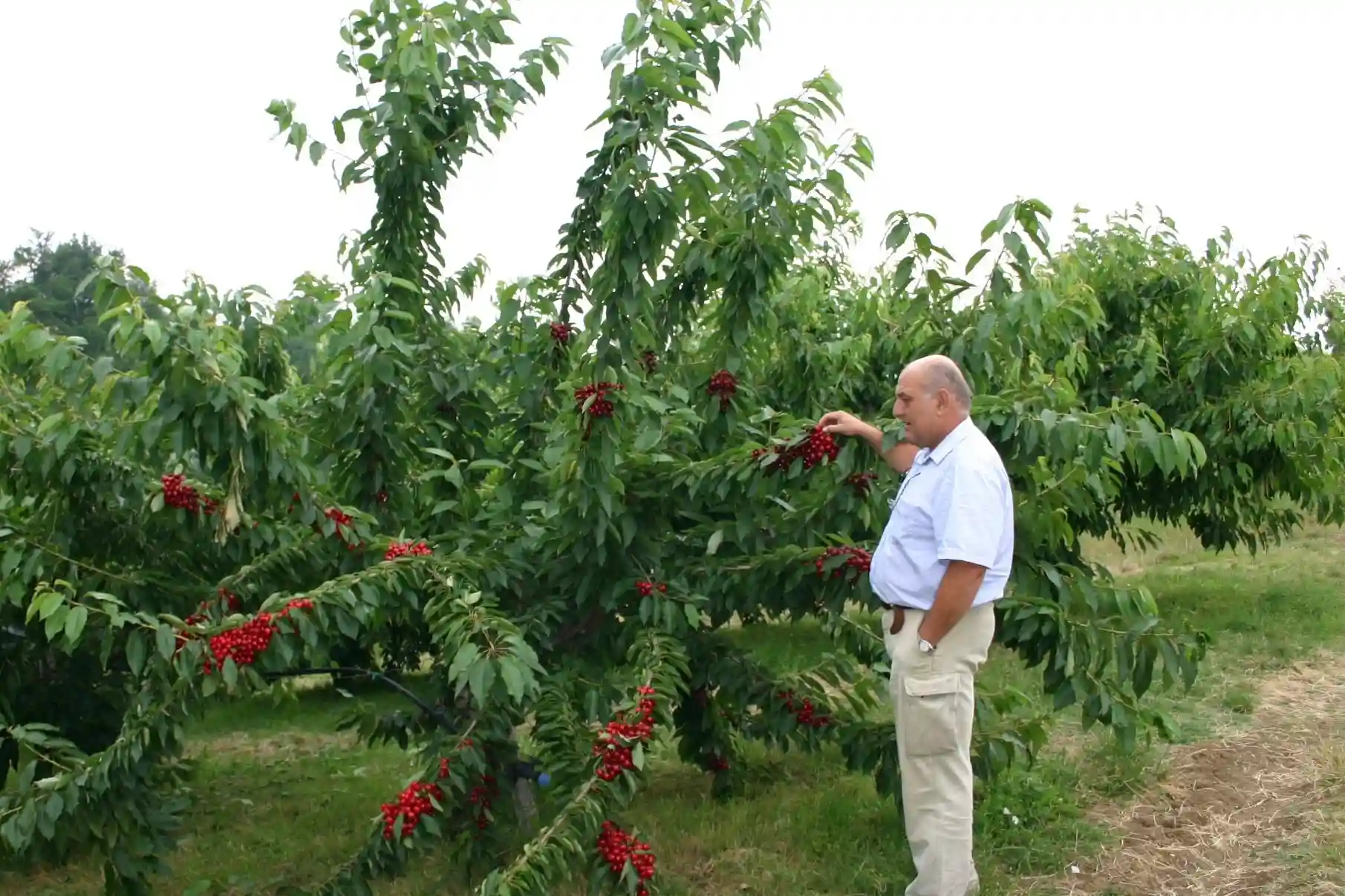
Image source: Stefano Lugli
Donato Fanelli
Publisher Foglie
Cherry Times - All rights reserved