The Protected Geographical Indication (PGI) for the cherry of Calatayud and Aranda has received new and significant support: the Provincial Council of Zaragoza (DPZ) has formalized its technical collaboration to support the brand recognition process.
The decision was made official during the latest plenary session of the DPZ, following a joint motion presented by PSOE, En Común-IU, and CHA. The aim is to promote the creation of the PGI as a tool for the commercial and cultural enhancement of a historic cherry production dating back to the 19th century.
A path shared by institutions and producers
The support from the DPZ adds to that already expressed by other institutions: the Agriculture Committee of the Congress of Deputies has approved a non-legislative proposal recognizing the specificity and quality of the cherry from Calatayud and Aranda.
The Cortes of Aragón and the regional government have also voiced their support, offering technical and political expertise to facilitate the process.
However, the official recognition of the PGI may not arrive before 2026, despite the broad consensus gathered. Since 2018, the process has been carried forward by public and private entities, coordinated by the Association for the Promotion of Cherries of the Community of Calatayud and the Aranda region.
A supply chain of 80 producers and 1,630 hectares
During the recent general assembly, the association officially approved the use of the PGI label to identify its production. The initial budget foreseen is 60,000 euros.
The organization brings together around 80 producers cultivating a total of 1,630 hectares.
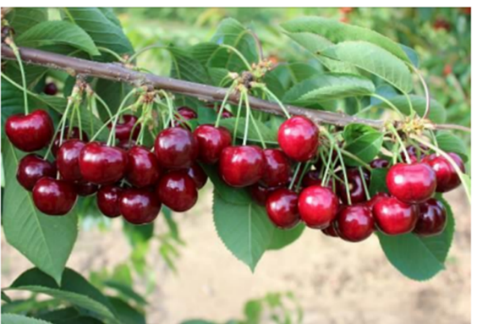
The cherry varieties involved in the initiative include Burlat, Lapins, Prime Giant, Stacatto, Sweet Heart, Early Beggie, Napoleón, Rainier, and Blanca de Provenza. All are characterized by firm and crunchy flesh, a symbol of quality and territorial identity.
Outlook for the future of local cherry farming
The push for PGI status is not only a market issue: it also represents a strategic lever to combat depopulation and recover agricultural land.
Official recognition would give further momentum to a sector that embodies tradition, innovation, and sustainability.
The path toward PGI status for the cherry of Calatayud and Aranda is becoming increasingly concrete, thanks to a united front of institutions and producers determined to protect and promote the excellence of a fruit that is an integral part of the local landscape and economy.
Source: eleconomista-es
Image source: Activa Design
Cherry Times – All rights reserved