Effective calcium management requires a deeper understanding than the simple application of products.
Understanding how it accumulates, how it is distributed and, above all, how it becomes functional within the fruit makes it possible to make more precise and consistent decisions.
In the modern cherry sector, where markets demand firm fruit with long post-harvest shelf life and excellent quality on arrival, calcium (Ca) has become one of the most crucial mineral elements for final fruit quality.
In almost twenty years of work in orchards in Chile and the United States, and after being considered a secondary nutrient in fertilization programs a couple of decades ago, it has become a determining factor for post-harvest quality.
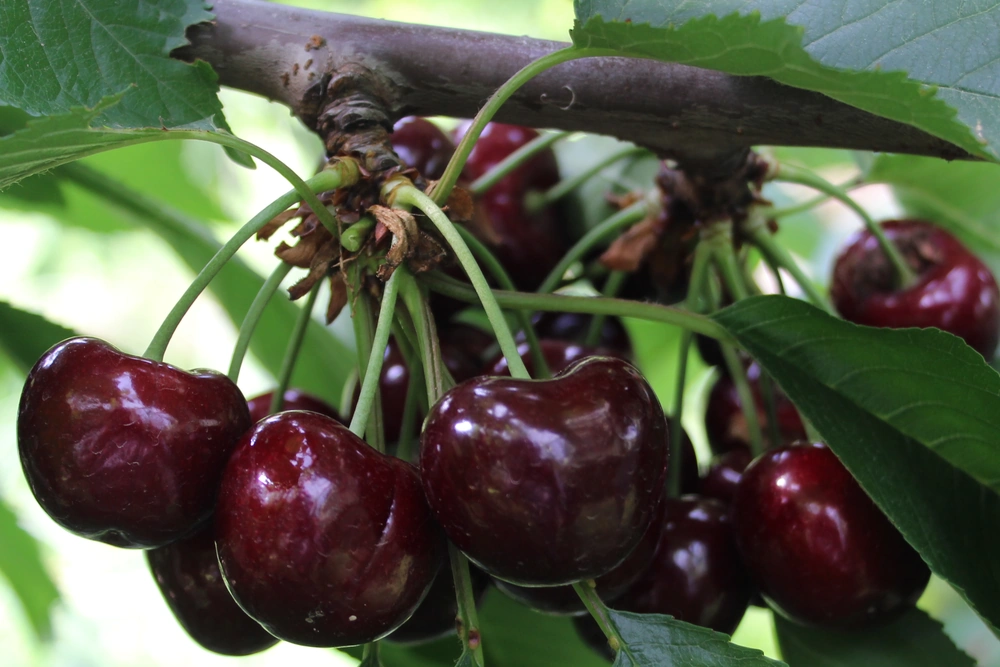
In a production scenario in which much of the fruit must travel for more than 30 days to reach distant markets, its role can no longer be understood solely from a nutritional perspective, but as a strategic component. I have been able to verify that relatively small differences in the calcium content and functionality in fruit translate into significantly different results at destination, especially in terms of firmness, stem dehydration and susceptibility to damage.
Main functions of calcium
From a physiological point of view, calcium plays a fundamental structural role.
Its main function is to stabilize the cell wall by forming bonds with pectins, generating a more rigid and resistant network.
This phenomenon explains why fruit with a higher content of this element tends to show greater resistance to softening and mechanical damage.
Winkler et al. (2020) described this relationship in detail, also highlighting its effect on the integrity of cell membranes and the maintenance of compartmentalization.
Similarly, more recent studies have shown that calcium reduces cell wall swelling, improving cell-to-cell cohesion and reducing the tendency to develop microcracks (Schumann et al., 2022), an aspect that is particularly relevant for tolerance to post-harvest stress.
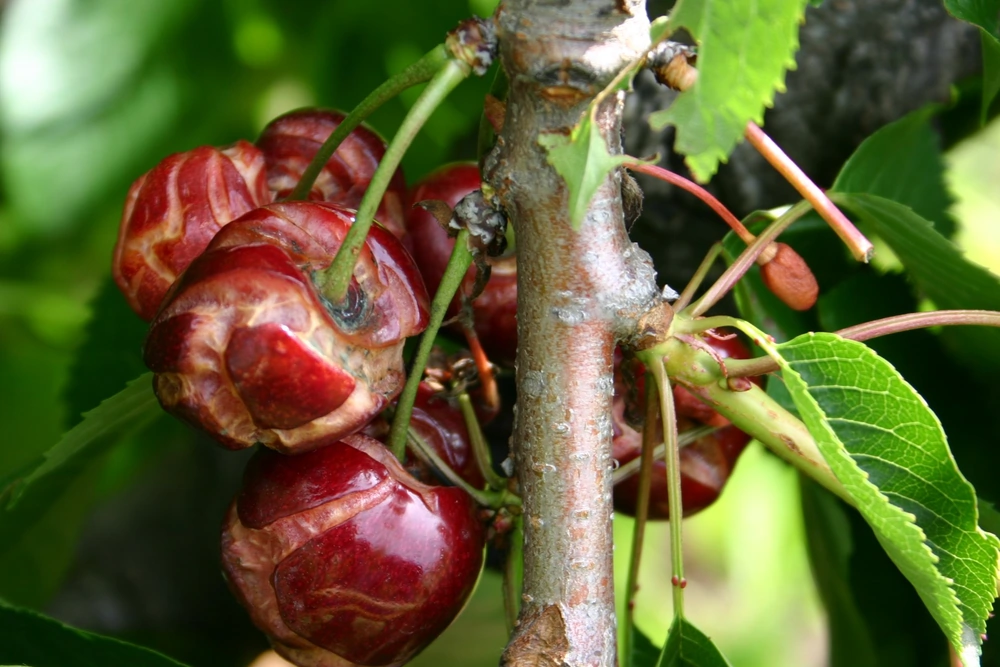
In practical terms, this translates into a direct effect on fruit firmness during storage.
Calcium modulates the activity of enzymes associated with cell wall degradation, such as pectin methylesterase and β-galactosidase, slowing down the softening process (Valero et al., 2017).
It does not stop the process, but it modifies its speed, allowing the fruit to better maintain its condition over time.
In turn, it has been associated with a lower respiration rate, reduced oxidative damage and greater stability of antioxidant compounds, helping to delay senescence (Wang et al., 2014).
In commercial terms, this translates into fruit that “keeps better during transport” rather than fruit that simply “looks better”.
However, one of the least understood aspects of calcium management is that its effect depends not only on the total amount present in the fruit, but also on its functionality.
Three levels to align
Based on field experience and in line with the available scientific evidence, it is useful to understand calcium behavior through a more integrated approach, which I have conceptualized as a three-level model: accumulation, distribution and functionality.
The first level is determined by the system’s ability to supply calcium to the fruit.
Factors such as calcium availability in the soil, competition with other organs and other cations (K+ and Mg++), transpiration flow and xylem functionality all come into play.
The literature clearly indicates that this is a limited process, especially in the later stages of development, when the fruit may lose an effective connection with xylem flow (Winkler & Knoche, 2019).
In practical terms, this explains why many well-designed calcium supplementation programs do not necessarily achieve high levels in fruit analyses.
The second level is distribution. Calcium is not distributed uniformly within the fruit, and its specific location largely determines its effectiveness. Areas with lower concentrations tend to be more susceptible to damage.
This point is particularly relevant because it introduces a degree of variability that is often not detected in conventional analyses, but becomes evident in the final condition of the fruit.
The third level, and probably the most decisive one, is functionality. Not all the calcium present is necessarily active at a physiological level. Its ability to interact with the cell wall, stabilize membranes and take part in regulatory processes depends on its chemical state and its integration into the tissue structure.
From a practical point of view, this is the level that truly defines the impact on firmness, resistance to damage and post-harvest shelf life.
This model helps explain why, in many cases, increasing the dose does not result in proportional improvements in quality.
If accumulation is limited, distribution is heterogeneous or functionality is low, the final effect will necessarily be limited. Conversely, when these three levels are aligned, calcium becomes an extremely effective tool.
The need for an integrated approach
In the post-harvest phase, the application of calcium during the hydrocooling process with calcium hypochlorite has proven to be one of the most direct strategies for influencing calcium levels, particularly surface accumulation and, to some extent, functionality.
Studies have shown an increase in calcium content in fruit and an improvement in firmness (Wang et al., 2014).
However, its effect remains conditioned by penetration capacity and the risk of phytotoxicity, especially in the stem.
In the field, this balance is essential: insufficient doses generate marginal effects, while excessive amounts can seriously compromise commercial appearance.

All this reinforces the idea that calcium should not be managed as an isolated intervention, but as part of an integrated system.
The combination of pre-harvest and post-harvest strategies allows for a more consistent influence on the three levels of the model.
Factors such as vegetative-productive balance, water management and the leaf-to-fruit ratio are just as important, if not even more important, than the dose or formulation applied.
One of the most frequent mistakes in the sector is trying to compensate in the post-harvest phase for what was not achieved earlier. In this sense, calcium does not correct unbalanced systems, but improves well-managed ones.
Its true value emerges when it is integrated into a consistent strategy, in which every agronomic decision contributes to improving not only the quantity, but also the quality and functionality of calcium in the fruit.
Ultimately, the role of calcium in post-harvest cherry production is undeniable, but its effective management requires a deeper understanding than the simple application of products.
Understanding how it accumulates, how it is distributed and, above all, how it becomes functional within the fruit makes it possible to make more precise and consistent decisions.
This is probably the step the sector needs to take in order to continue progressing in terms of quality in an increasingly demanding market.
Andrés Puvogel
Agricultural Engineer
International Consultant in Fruit Production
Source: Mundoagro
Image source: Stefano Lugli
Cherry Times - All rights reserved