Interest in plant-based proteins continues to grow rapidly, driven by the increasing adoption of plant-based diets and the demand for sustainable, hypoallergenic, and functional ingredients. In this context, pea protein represents a promising matrix due to its high nutritional value, good digestibility, and interesting technological properties. However, its use in complex food systems still requires improvements in certain functional characteristics, particularly solubility, emulsifying capacity, and stability during digestion. A recent study investigated the effects of adding sour cherry concentrate on the functional and digestive properties of pea protein-based emulsions, highlighting interesting prospects for the development of new functional foods.
The study used diluted sour cherry concentrates as a source of phenolic compounds, characterized by a total phenolic content of 1156.59 mg GAE/100 mL. Chlorogenic acid was identified as the predominant compound, followed by peonidin-3-O-glucoside and cyanidin-3,5-O-diglucoside. The interaction between different concentrations of sour cherry phenolics and pea protein was evaluated both in aqueous solutions and in oil-in-water emulsions containing 25% and 50% MCT oil.
The addition of sour cherry resulted in a marked increase in pea protein solubility, rising from approximately 261 mg BSA/g protein in the control to nearly 690 mg BSA/g at the optimal concentration of 0.4 mg GAE/mL. This effect was attributed to interactions between polyphenols and proteins, capable of modifying the conformation and surface charge of pea globular proteins. However, excessively high phenolic concentrations showed a less favorable effect, suggesting the existence of a threshold beyond which protein aggregation phenomena become predominant.
Foaming properties
A different behavior was observed for foaming properties. The addition of sour cherry concentrate generally reduced both foam capacity and foam stability compared with pure pea protein. According to the researchers, protein–polyphenol complexes limit the conformational flexibility of proteins at the air–water interface, hindering the formation of stable viscoelastic films. Although some concentrations showed slight positive variations, the overall results indicate that sour cherry phenolics are not particularly suitable for applications where foaming functionality is a key requirement.
Far more promising, however, were the effects observed on emulsions. Formulations containing 50% oil exhibited higher emulsifying capacity and stability than those containing 25% oil, with the treatment containing 0.2 mg GAE/mL phenolics delivering the best overall performance. This formulation showed higher emulsifying capacity, smaller particle size, and more negative zeta potential values, indicating greater electrostatic repulsion between lipid droplets and therefore improved colloidal stability. Conversely, excessively high phenolic concentrations reduced emulsion stability, once again highlighting the importance of achieving the correct balance between proteins and sour cherry concentrate.
Emulsions containing sour cherry also showed increased protein bioavailability during simulated in vitro gastrointestinal digestion, especially during the intestinal phase. At the same time, total phenolic content and antioxidant capacity increased throughout digestion, with formulations containing higher sour cherry concentrations maintaining the greatest biological activity up to the intestinal stage.
Functional food
Overall, the study demonstrates that the incorporation of phenolics from sour cherry concentrate can improve the technological and nutritional properties of pea protein-based emulsions, provided that concentrations are carefully optimized. These findings open new perspectives for the formulation of beverages and emulsions with high nutraceutical value, offering promising applications in the functional food sector.
Source: Erskine, E., Ozkan, G., Günal-Köroğlu, D., & Capanoglu, E. (2026). Functional and digestive properties of pea protein–sour cherry concentrate complexes: effects on solubility, foaming, emulsifying, and antioxidant capacity. Journal of Food Measurement and Characterization, 1-15. https://doi.org/10.1007/s11694-025-03883-6
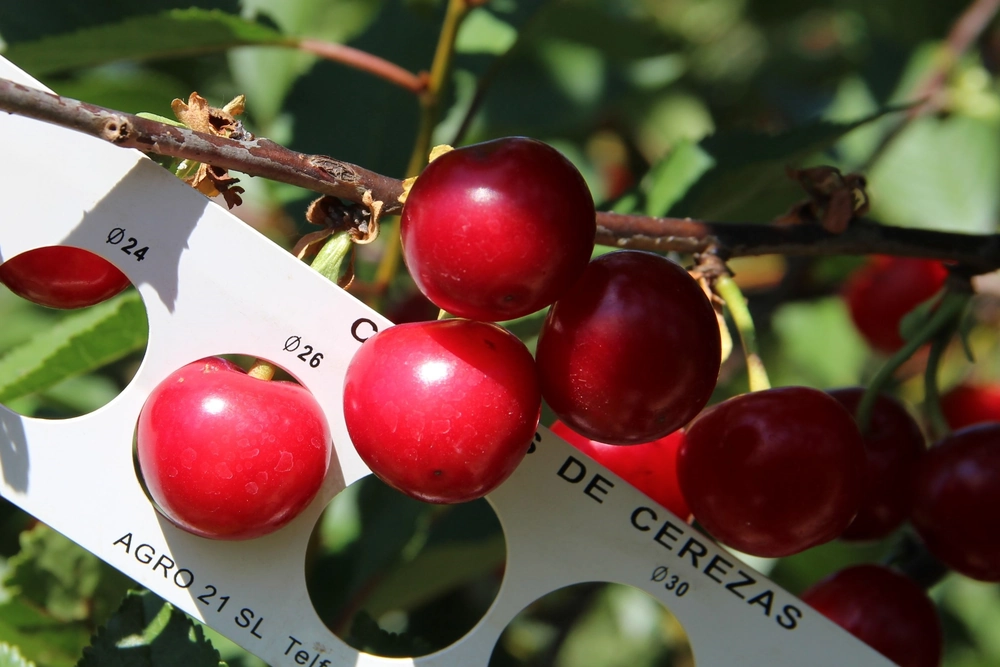
Image source: Stefano Lugli
Andrea Giovannini
PhD in Agricultural, Environmental and Food Science and Technology - Arboriculture and Fruitculture, University of Bologna, IT
Cherry Times - All rights reserved