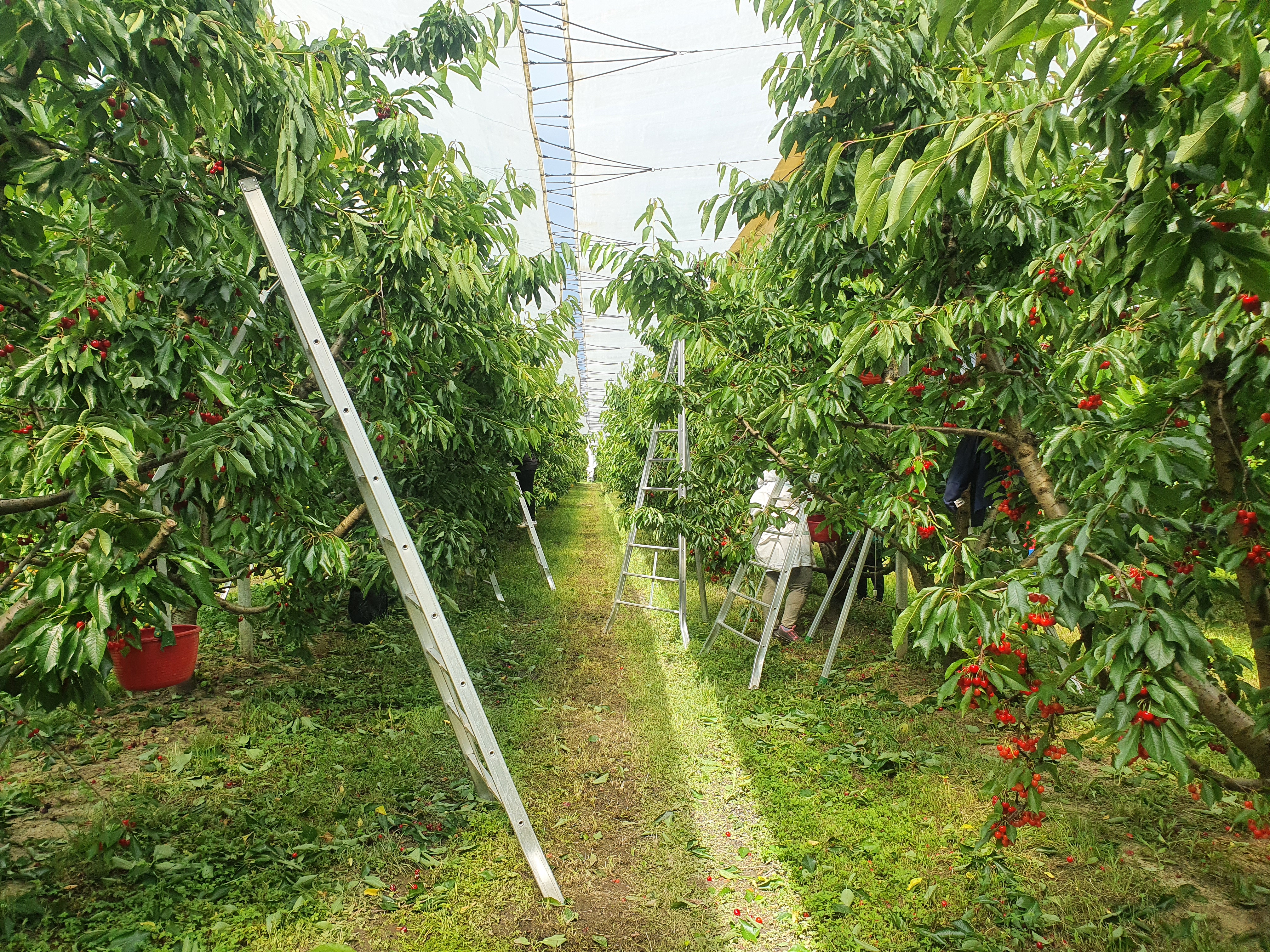
Heavy rainfall represents one of the most insidious threats to the cherry sector: when water penetrates the skin, cherries split and become unmarketable.
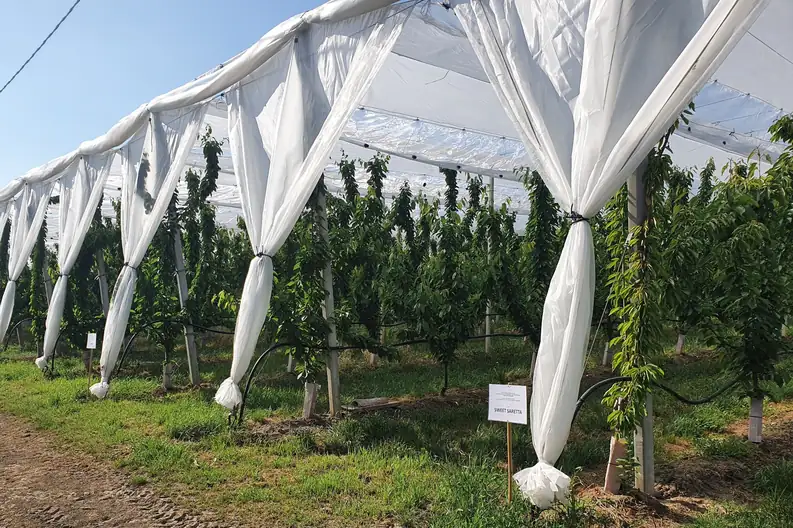
To counter this growing risk, several summer fruit producers in New Zealand and Australia are experimenting with rain covers.
But protecting the crop is not the only variable at play: these structures significantly alter the orchard microclimate, with effects on final fruit quality that are still under investigation.
Rain covers: protection, but with side effects
According to Plant & Food Research, covers help preserve production from rainfall and, in many cases, promote an increase in cherry size.
However, they retain heat and increase relative humidity beneath plastic tunnels, creating environmental conditions that differ from those in uncovered orchards.
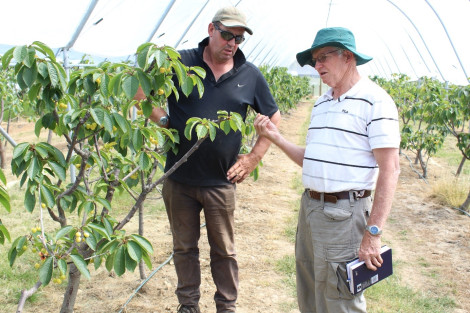
Claire Scofield, researcher in the fruit physiology team at the Bioeconomy Science Institute, notes that initial findings collected in Australia, together with growers’ feedback, outline a complex scenario: “Covers protect the crop and improve fruit size, but they may reduce flesh firmness. Both covered and uncovered orchards show advantages and drawbacks.”
Cherry firmness is not a minor detail: it is one of the key parameters for export to premium overseas markets. Consumers favor firm fruit capable of withstanding long-distance transport without losing quality.
The role of microclimate between New Zealand and Tasmania
The research project is being conducted on both sides of the Tasman Sea, with a small trial in Central Otago (New Zealand) and more extensive trials in orchards in Tasmania, Australia.
In experimental plots under plastic tunnels, differentiated temperature and humidity conditions were created and monitored using sensors that recorded data every ten minutes from September to February.
The goal is to gain a precise understanding of how microclimatic variations affect fruit texture. A crucial issue concerns the relationship between relative humidity and firmness: is there a direct link? And to what extent does a more humid environment influence the quality parameters required by international trade?
Calcium and natural hormones: levers for quality
At the same time, the research is analyzing the role of calcium, an element already used by growers at specific stages of the season to strengthen the fruit’s cell walls.
Just as it contributes to the strength of human bones, calcium supports the structural integrity of cherries. Scofield is verifying whether high humidity conditions may reduce calcium uptake by plants and whether supplemental applications can compensate for potential negative effects.
In addition, the team is studying the use of naturally occurring plant hormones as a further tool to improve quality. So far, nearly 4,000 cherries have been analyzed, measuring their firmness to assess the combined impact of microclimate, nutritional treatments and other agronomic practices.
Towards a more resilient cherry industry
In a climate scenario characterized by increasingly unpredictable and costly weather events for farming operations, this research aims to provide solid scientific foundations for new orchard management strategies.
The ambition is clear: to offer cherry growers concrete tools to adapt to climate change, safeguard cherry quality and maximize the value of each production season. For a sector strongly oriented toward export markets, the challenge is not only to produce more, but to produce better — even in the rain.
Source: fruchthandel.de
Image source: Stefano Lugli
Cherry Times - All rights reserved