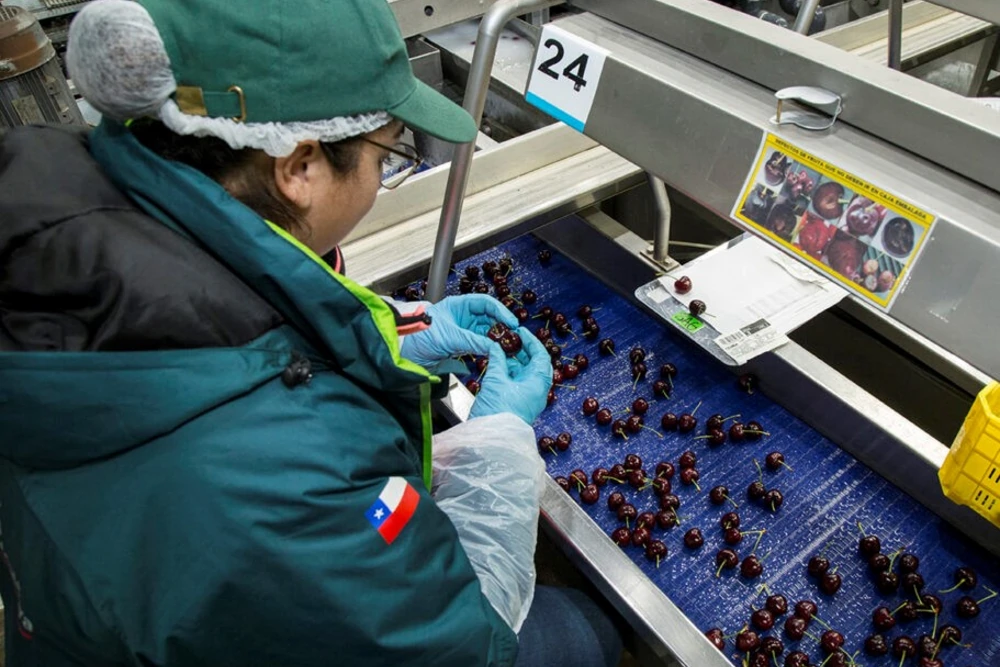
The growing need to automate decision-making processes in agriculture has driven research toward the use of advanced computer vision techniques. Within this context lies the task of classifying the ripeness stages of cherries, a problem of significant economic and qualitative importance. Accurately determining the optimal harvest time makes it possible to improve final product quality, reduce waste, and optimize the production chain.
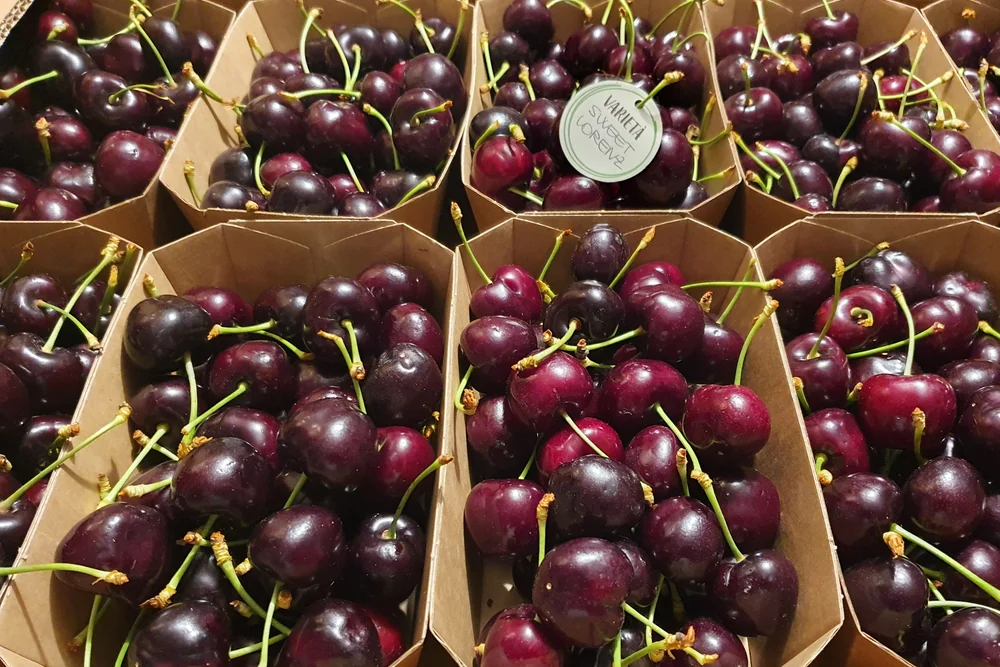
Ripeness stages
Traditional methods, mainly based on visual inspection, are subjective and difficult to scale, whereas automated systems can be considered more reliable due to their standardized nature. At Firat University (Turkey), a study was conducted with the aim of comparing the performance of different models in estimating cherry ripeness. The research was based on a dataset of 3000 cherry images collected under controlled conditions and divided into five distinct ripeness stages.
Particular attention was paid to image acquisition conditions, as they represent a crucial step in minimizing variations caused by lighting and environmental factors. Before analysis, the data underwent a pre-processing phase that included segmentation of the region of interest, resizing, and normalization of pixel values, ensuring uniformity and compatibility with the applied models. For visual feature extraction, a transfer learning approach was adopted using a pre-trained convolutional neural network.
Machine learning models
Subsequently, various machine learning algorithms were employed, including linear models (such as logistic regression and linear discriminant analysis), margin-based methods (Support Vector Machines), ensemble approaches (Random Forest and Extra Trees), boosting techniques (XGBoost, LightGBM, and CatBoost), and distance-based methods (K-Nearest Neighbors). Model performance was evaluated using cross-validation, showing that several models already achieved good accuracy levels—around 93%—in their baseline configurations.
However, the introduction of systematic hyperparameter optimization led to a significant improvement in overall performance. In particular, Support Vector Machines emerged as the most effective model, achieving accuracy above 95%. Other algorithms, including logistic regression and boosting methods, also delivered competitive results, maintaining accuracy levels between approximately 92% and 94%. In contrast, K-Nearest Neighbors showed lower performance and limited improvement after optimization.
Decision-support systems
Overall, the study demonstrates that integrating deep learning techniques for feature extraction with machine learning algorithms for classification provides an effective solution to the problem of cherry ripeness assessment. The high performance achieved suggests the potential for implementing automated decision-support systems in agriculture, improving quality control and production management.
Looking ahead, expanding the dataset and employing more advanced models could lead to further improvements, paving the way for real-time and large-scale applications.
Source: Doğan, N., Özyurt, F., & Özgen, İ. (2026). Classification of cherry maturity stages using machine learning methods. International Journal of Agriculture Environment and Food Sciences, 10(1), 1-13. https://doi.org/10.31015/jaefs.2026.1.1
Image source: Stefano Lugli
Melissa Venturi
Ph.D. in Agricultural, Environmental, and Food Sciences and Technologies – Fruit Tree Physiology and Cultivation - Bologna, Italy
Cherry Times - All rights reserved