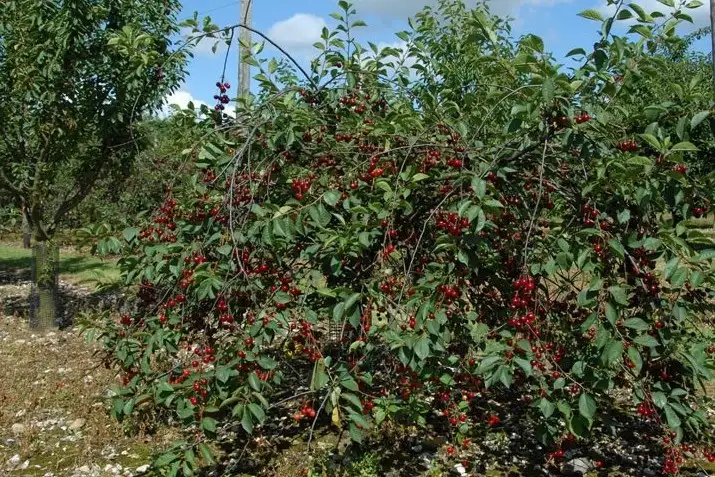
Pruning is a fundamental practice in sweet cherry orchard management, capable of influencing both productivity and fruit quality traits. A recent study conducted on different cultivar–rootstock combinations analyzed the effects of pruning carried out at different times (dormant and growing seasons) and with different operational approaches, providing technical insights to improve the management of intensive sweet cherry production systems in Moldova.
The results highlight that canopy maintenance pruning, whether performed during the dormant period or the growing season, generally leads to lower yields compared to more targeted interventions aimed at renewing fruiting wood through the progressive thinning of 3–5-year-old branches. In particular, in the cultivars ‘Valerii Cikalov’ and ‘Record’, grafted on Prunus mahaleb, this approach resulted in yield increases of up to 8.9%, emphasizing the importance of rejuvenating the fruiting structure to sustain high production levels over time. The selective removal of older wood improves light penetration within the canopy and stimulates the formation of new, more physiologically active fruiting organs.
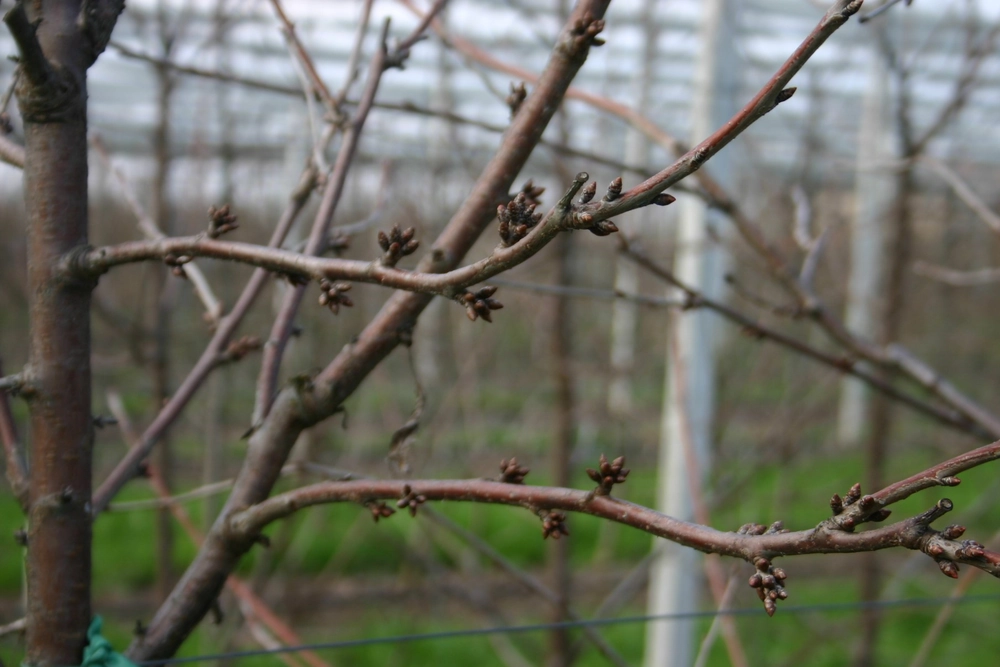
In the case of the cultivars ‘Skeena’ and ‘Stella’, grafted on the moderately vigorous clonal rootstock MaxMa 14, the study shows that the timing of pruning plays an even more critical role than the type of cuts performed. Pruning carried out during the growing season, particularly in the post-harvest period and early autumn, produced the best results in both quantitative and qualitative terms.
The highest average yields were recorded in trees pruned during the first decade of September, reaching up to 13.7 t/ha for ‘Skeena’ and 12.85 t/ha for ‘Stella’, with peak productions exceeding 19–20 t/ha in favorable years. These outcomes are associated with more efficient flower induction and improved accumulation of reserves in perennial organs, promoted by interventions that do not interfere with the most critical phases of the phenological cycle.
Effects on yield and fruit size
Pruning also significantly influenced fruit size. Operations carried out during the growing season increased the proportion of cherries with a diameter greater than 28 mm, with gains ranging from 15.8% to 34.2% compared to dormant pruning. At the same time, a marked reduction in the proportion of small fruits (< 24 mm) was observed, decreasing to values between 4.4% and 9.1%, without negatively affecting total yield. This demonstrates that canopy management during the active growth phase allows optimization of source–sink relationships, improving the allocation of photoassimilates to developing fruits and enhancing overall size uniformity.
In conclusion, the findings indicate that a rational pruning strategy, based on the periodic renewal of fruiting wood and the execution of interventions during the late growing season, represents an effective approach to simultaneously improve yield and fruit quality in sweet cherry. The adoption of these practices can not only increase fruit size but also enhance the resilience of Moldovan orchards, aligning production systems with the demands of modern fruit growing.
Source: Balan, V., Bîlici, I., Șarban, V., & Russu, S. (2025). Yield and quality of cherry fruits (Prunus avium L.) depending on tree formation and pruning. Annals of the University of Craiova, Biology, Horticulture, Food products processing technology, Environmental engineering, 30(66). https://doi.org/10.52846/bihpt.v30i66.211
Image source: Stefano Lugli
Andrea Giovannini
PhD in Agricultural, Environmental and Food Science and Technology - Arboriculture and Fruitculture, University of Bologna, IT
Cherry Times - Tutti i diritti riservati