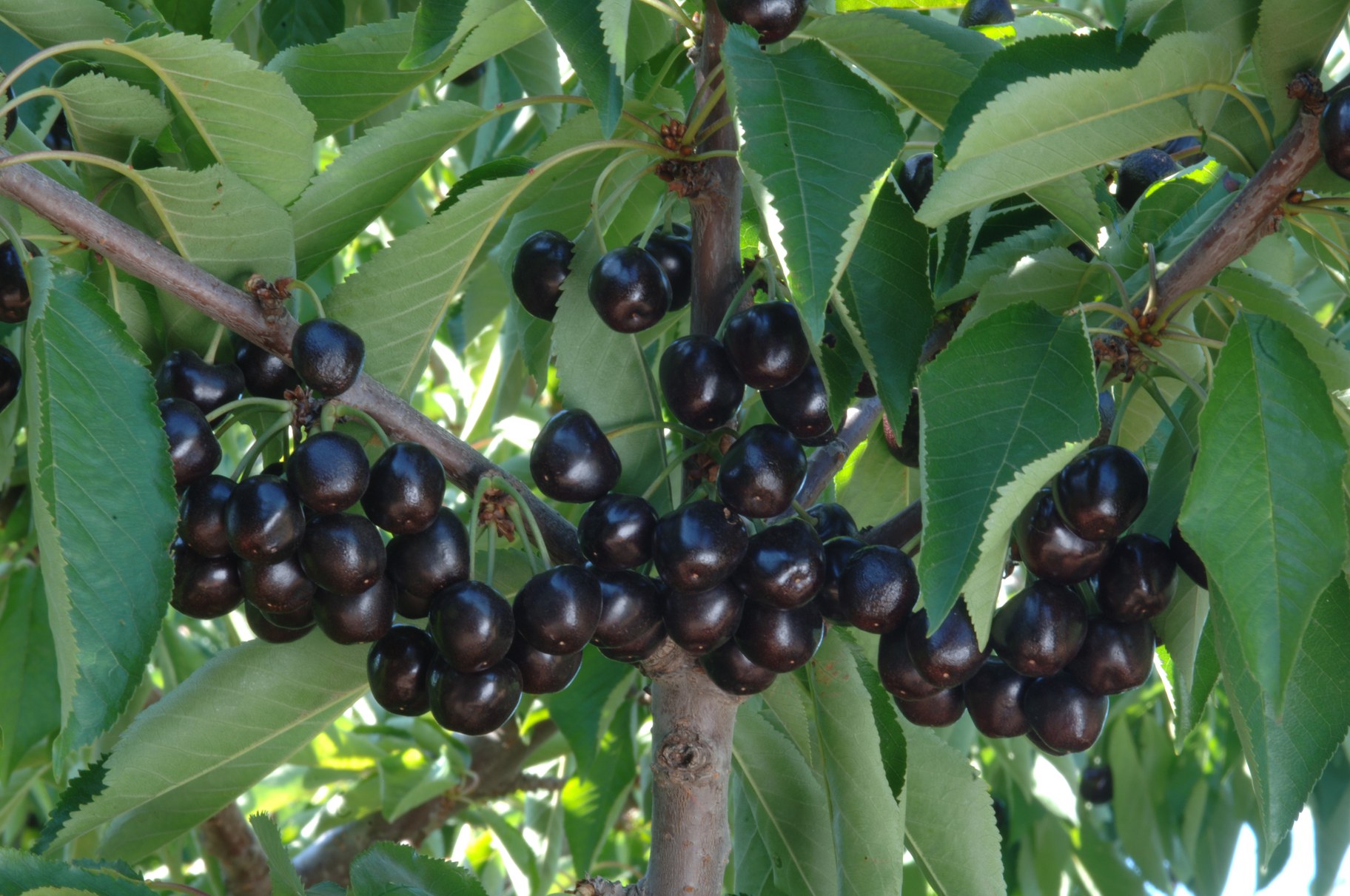
The management of Drosophila suzukii, one of the most damaging insect pests affecting sweet cherry production worldwide, continues to represent a major challenge in sweet cherry orchards.
The ability of this dipteran to lay eggs directly into ripening fruit, thanks to its serrated ovipositor, causes substantial economic and qualitative losses. In this context, a recent study conducted in California investigated the role of two fruit quality parameters: sugar content (Brix) and exocarp firmness, in determining the susceptibility of several sweet cherry cultivars to D. suzukii infestation under field conditions.
The research focused on four commercially important cultivars: ‘Bing’, ‘Brooks’, ‘Black Tartarian’, and ‘Rainier’, monitored throughout the entire ripening period in orchards not treated with insecticides.
Unlike previous laboratory studies performed on harvested fruit, the evaluations were conducted directly in the field, following the physiological evolution of the fruit during ripening. This approach allowed a more realistic assessment of the relationship between fruit quality traits and infestation dynamics.
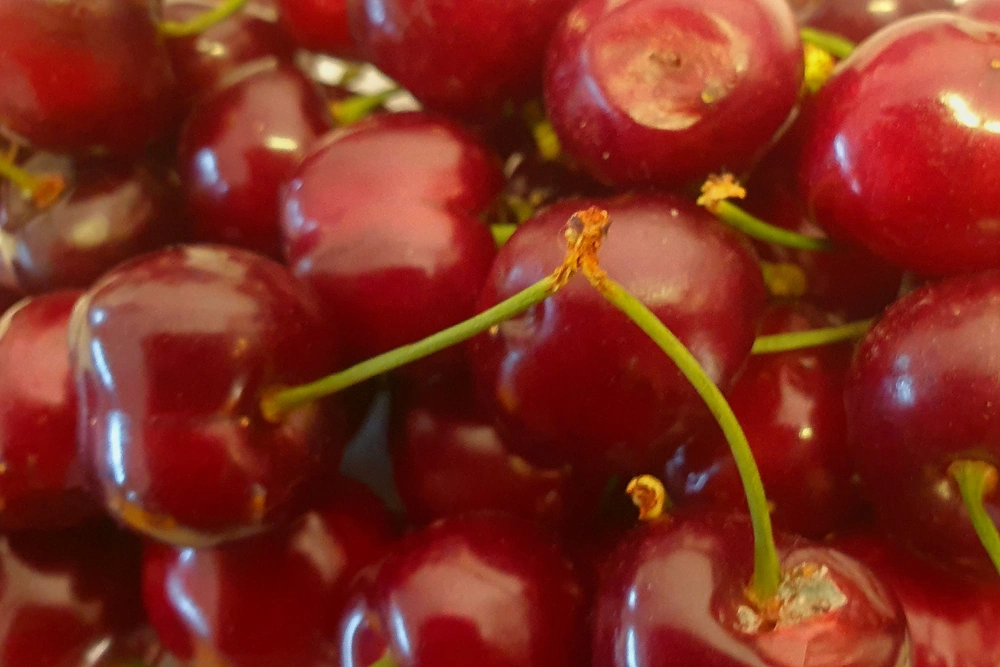
The results revealed a positive relationship between Brix values and infestation probability. As sugar content increased, both oviposition frequency and the number of larvae and pupae detected within the fruit also increased.
This trend was observed across all cultivars examined, suggesting that sugar accumulation may represent either an important attractant signal or an indicator of host suitability for D. suzukii females. These findings confirm previous hypotheses reported for sweet cherries and other small fruits, reinforcing the idea that advanced ripening stages coincide with increased vulnerability to pest attack.
Fruit firmness
At the same time, fruit firmness exerted the opposite effect: fruit with softer exocarp tissues proved to be more susceptible to oviposition. Reduced penetration resistance facilitates egg insertion by females, thereby increasing infestation risk. The effect of skin firmness remained consistent across the different years of monitoring, indicating that this parameter could represent a reliable indicator of phytosanitary risk during fruit maturation.
Differences among cultivars were also observed. Although the relationships between Brix, firmness, and infestation were generally similar, the ‘Rainier’ cultivar exhibited extremely low infestation levels compared with red-skinned cultivars, despite showing comparable Brix values and firmness. Researchers hypothesized that the yellow fruit color may have exerted a deterrent effect on D. suzukii, suggesting that visual traits may also influence host-selection behavior in this insect.
From an applied perspective, the findings provide valuable insights for integrated pest management strategies. Fruit firmness could potentially be used as a predictive parameter for infestation risk, allowing growers to adjust monitoring activities or intervention timing according to cultivar susceptibility and ripening stage. Furthermore, the selection of cultivars characterized by firmer exocarp tissues or less attractive color traits may represent a potential strategy to reduce pest pressure.
Sustainable management
Finally, susceptibility to Drosophila suzukii does not depend on a single factor, but rather on a complex combination of physiological and morphological fruit characteristics, including sugar content, firmness, color, and exocarp integrity. This multifactorial interaction will require further investigation in order to develop effective and sustainable management strategies for sweet cherry production.
Source: Buck, N., Gress, B. E., & Zalom, F. G. (2026). Field assessment of brix and firmness affecting Drosophila suzukii (Diptera: Drosophilidae) infestation in California sweet cherry cultivars. Journal of Economic Entomology, toaf367. https://doi.org/10.1093/jee/toaf367
Image source: Stefano Lugli
Andrea Giovannini
PhD in Agricultural, Environmental and Food Science and Technology - Arboriculture and Fruitculture, University of Bologna, IT
Cherry Times - All rights reserved