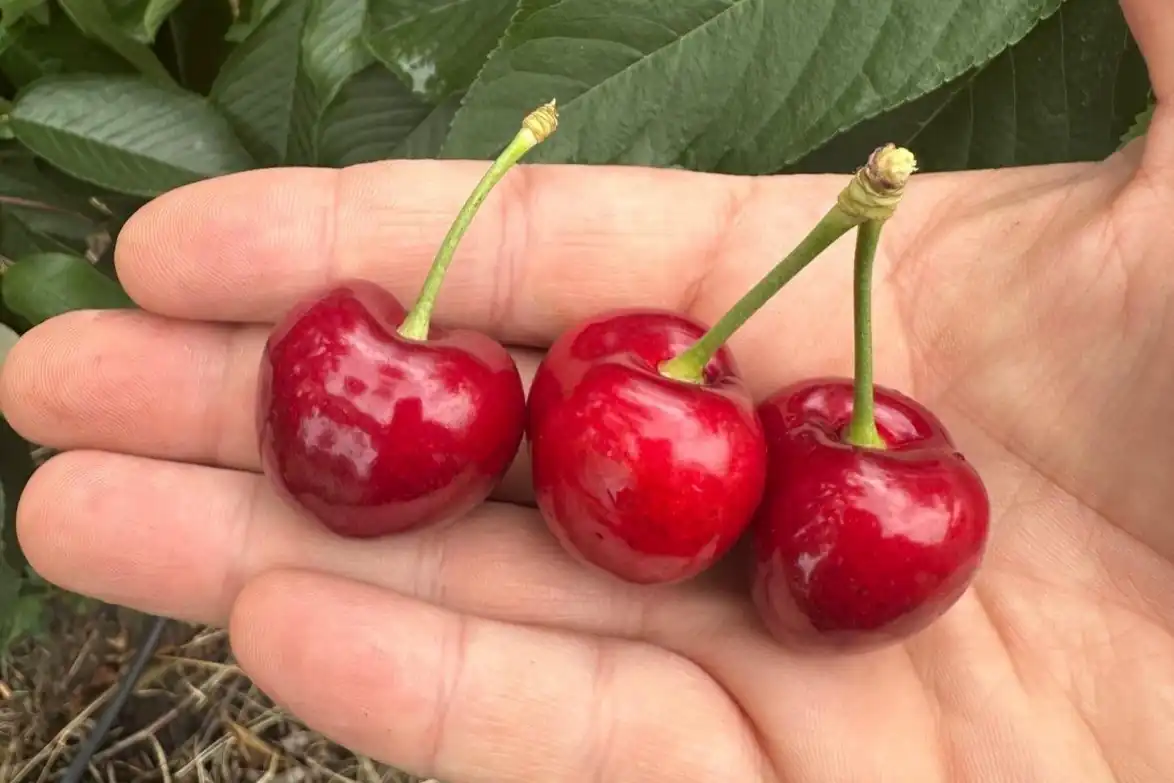
This is demonstrated by an Italian study conducted on Sweet Saretta, which highlights the effects of shading nets on microclimate, plant water status, and the physiological dynamics underlying fruit growth.
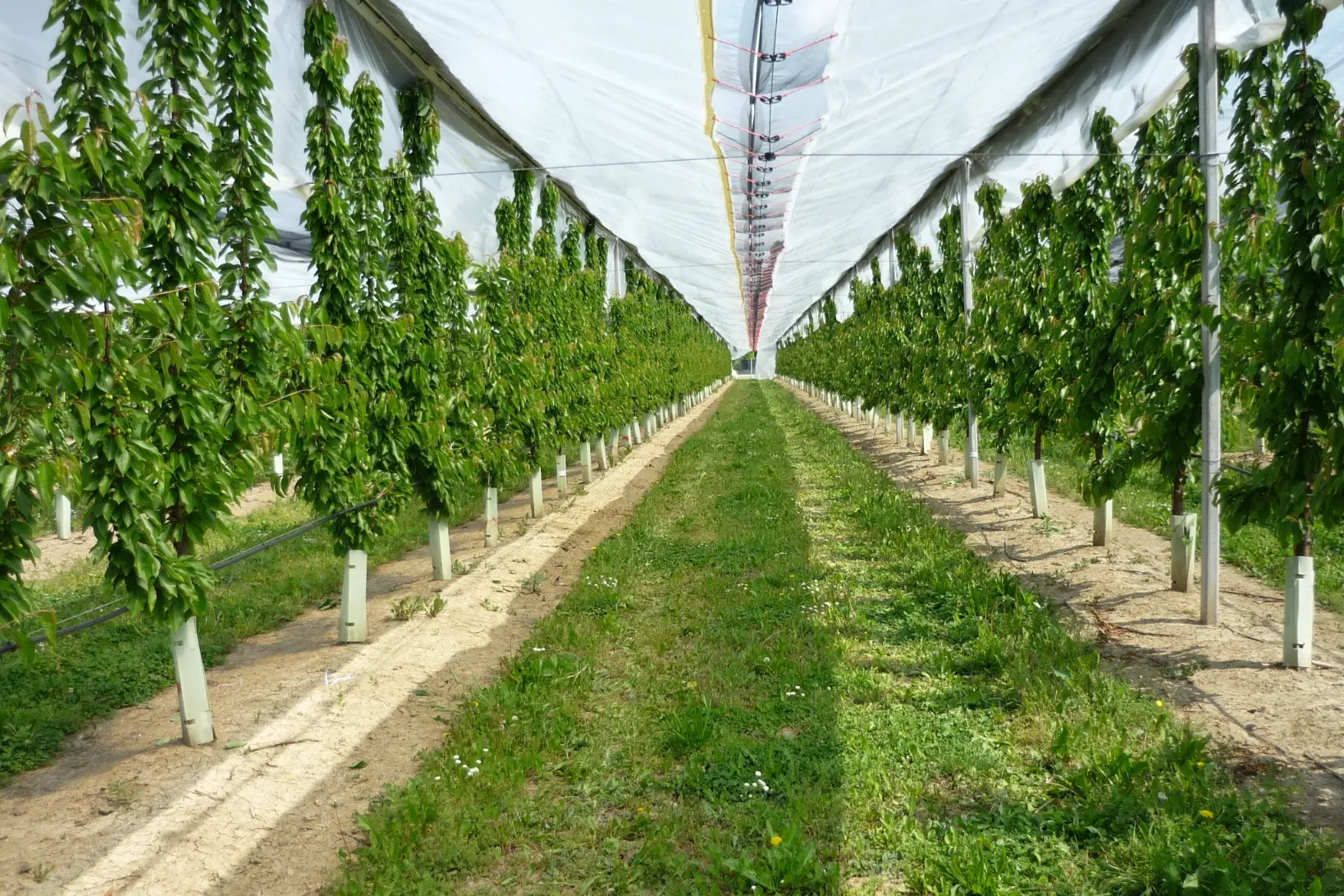
In sweet cherry cultivation, the topic of covers is mainly associated with crop protection, particularly against rain and fruit cracking. However, their effect goes beyond physical defense. By modifying radiation, relative humidity, and atmospheric evaporative demand, nets can directly influence the plant’s water status and the processes regulating fruit growth.
This is confirmed by an entirely Italian research study published in Environmental and Experimental Botany, conducted in 2024 in Cadriano, in the province of Bologna. The study compared sweet cherry trees of the Sweet Saretta variety, grafted onto Gisela 6 rootstock, grown under full light conditions and under 20% black shading nets. The aim was not only to assess the final outcome on fruit growth, but also to investigate the physiological processes driving it.
The topic is particularly relevant in the Italian context. In northern production areas, covering systems are now an integral part of specialized cherry growing, while in southern regions their adoption remains more fragmented and less systematically structured. For this reason, understanding whether covers act merely as physical protection or as a physiological lever is far from a secondary question.
Effects on microclimate
As reported, the net primarily modifies the canopy microenvironment. The most significant result concerns the vapor pressure deficit (VPD) of the air, which is reduced by an average of 19% under the net. This may seem like a secondary detail, but it is crucial to understanding what happens in both the plant and the fruit. VPD measures the evaporative demand of the atmosphere: the higher it is, the stronger the driving force for water loss from the plant and fruit. Reducing it essentially means easing one of the most critical environmental pressures at the physiological level.
It is therefore not surprising that, under cover, researchers from the University of Bologna and the Edmund Mach Foundation observed an improved tree water status, with less negative stem water potential values, as well as higher stomatal conductance and net photosynthesis.
This finding is important because it challenges an overly simplistic interpretation of shading. In this case, at least under the experimental conditions considered, the slight reduction in radiation does not impair canopy function, but rather helps maintain it more efficiently. Placed in an environment with lower evaporative demand, the plant retains a more active and efficient physiology for longer.
Mechanisms of fruit growth
The most interesting aspect, however, lies elsewhere. Rather than stopping at final fruit size, the study traces back to the processes determining it, breaking down fruit growth into the flows that sustain it: on one side, fruit transpiration, i.e. the amount of water lost to the atmosphere; on the other, the inputs transported through xylem and phloem. The former is associated with the transfer of water and mineral solutes, while the latter transports water, sugars, and photoassimilates. In other words, the cover is not limited to a protective role, but extends its influence to the physiological balance of fruit growth.
Fruit transpiration, as expected, closely follows VPD: when the air “demands” more, the fruit loses more water. Under cover, this loss is reduced, especially during the central hours of the day and in the later stages of development. The xylem, on the other hand, plays a more significant role when the fruit is still actively supporting cell division and expansion and needs to compensate for water loss. Its contribution then decreases, in line with what is already known for sweet cherry.
Conversely, the phloem gains importance as development progresses, becoming decisive when growth is mainly driven by assimilate import rather than simple water supply. It is precisely in this phase that the study records an increase in phloem flow under the net, consistent with the higher photosynthetic capacity of the plants.
Where the advantage emerges
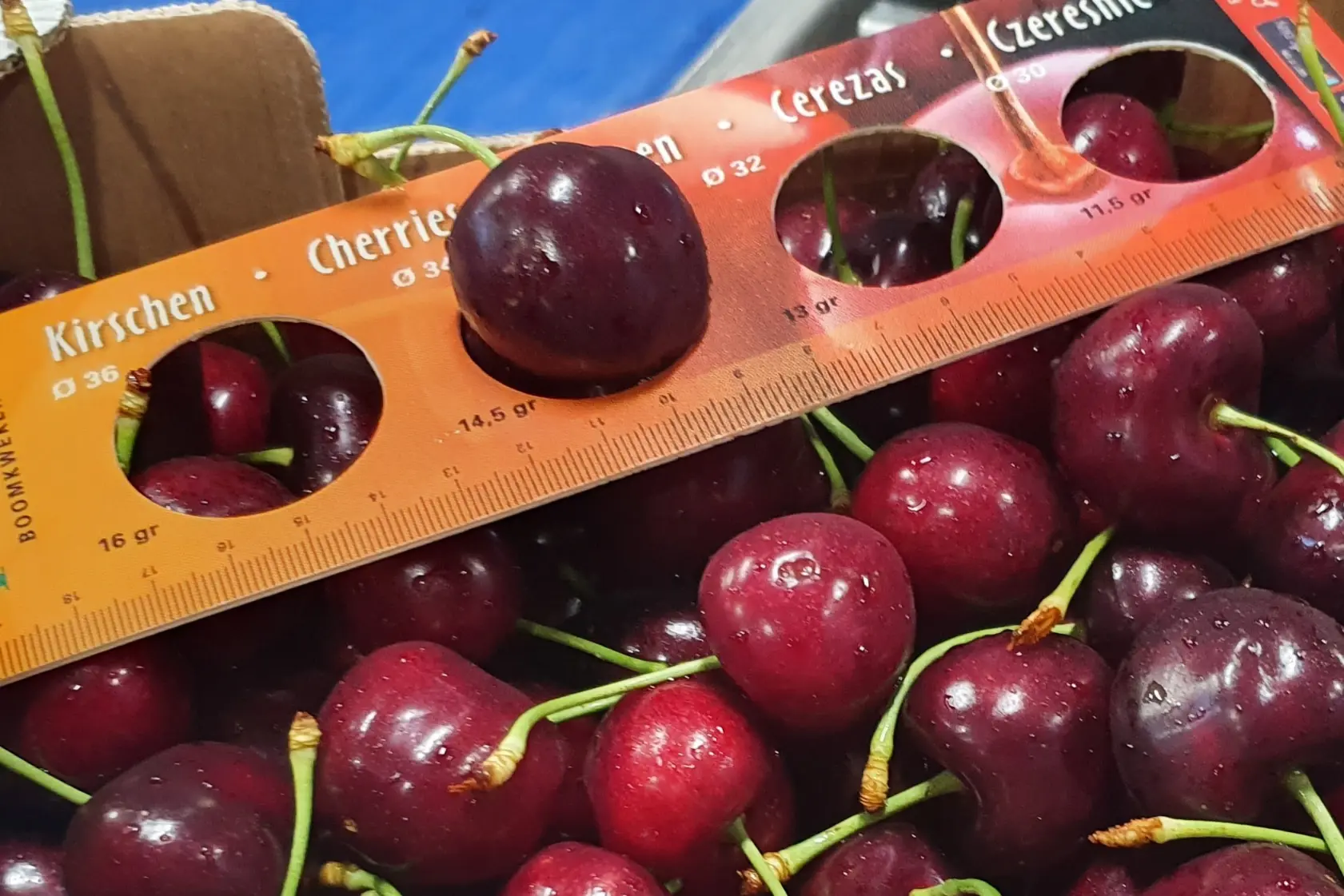
If one were to look only at the final result, the message would seem almost trivial: under nets, fruits grow larger and show greater weight in the second part of the cycle compared to the control. However, the real strength of the study lies in providing a more nuanced interpretation of this advantage. It is not a continuous, uniform effect or a general improvement in growth throughout the entire cycle, but rather a response that becomes clearly defined only at a specific stage of development. The benefit emerges particularly when the fruit enters the stage where the phloem plays a dominant role in its nutrition.
In other words, covers do not simply accelerate growth; they modify its conditions. They reduce the dissipative component linked to transpiration, improve the tree’s water status and, during the phase in which the fruit requires an increasing supply of assimilates, promote a more efficient physiological context and a better water balance.
Limits and perspectives
Naturally, the study does not provide a ready-to-use formula. The trial was conducted on a specific scion-rootstock combination, with a 20% shading net, in a defined pedoclimatic environment and over a single growing season. It would therefore be inappropriate to generalize these results, especially in southern growing areas where radiation conditions, vegetative-productive balance, and farm management strategies may differ significantly. The authors themselves urge caution, noting that net material and shading level, as well as variety and rootstock vigor, can alter the system response.
One key takeaway remains, and it is perhaps the most useful from a practical standpoint: in sweet cherry, modifying the microclimate does not simply mean shielding the orchard, but rather intervening in the physiological mechanisms of the plant that regulate the balance between water loss, vascular transport, and assimilate accumulation. This is where covers begin to shift from being simple protective structures to becoming a physiological management technology.
Ilaria De Marinis, © fruitjournal.com
Image source: Stefano Lugli
Cherry Times - All rights reserved