The export of Chilean cherries to China continues to represent the core of the South American country's fruit industry, accounting for between 90% and 91% of total shipments. However, the 2025–2026 season is marked by two major changes: downward pressure on prices and the entry of Spain as a new competitor following the opening of the Chinese market.
The season started strongly thanks to the intensive use of the “Cherry Express” logistics system, a specialized maritime service that allows fresh cherries to be transported from the ports of Valparaíso and San Antonio to China in just 22–23 days. The first shipments of the season departed in mid-November 2025, even ahead of the usual timelines.
This logistics model, based on refrigerated vessels, has been crucial to ensuring product freshness during peak demand periods, especially around the Chinese New Year. In addition, maritime transport is approximately 60% cheaper than air freight, helping to improve the competitiveness of Chilean products.
Forecasts indicate a record production of 655,000 tonnes in the 2025–2026 season, of which over 90% will be destined for the Chinese market, further strengthening dependence on this Asian country.
Falling prices
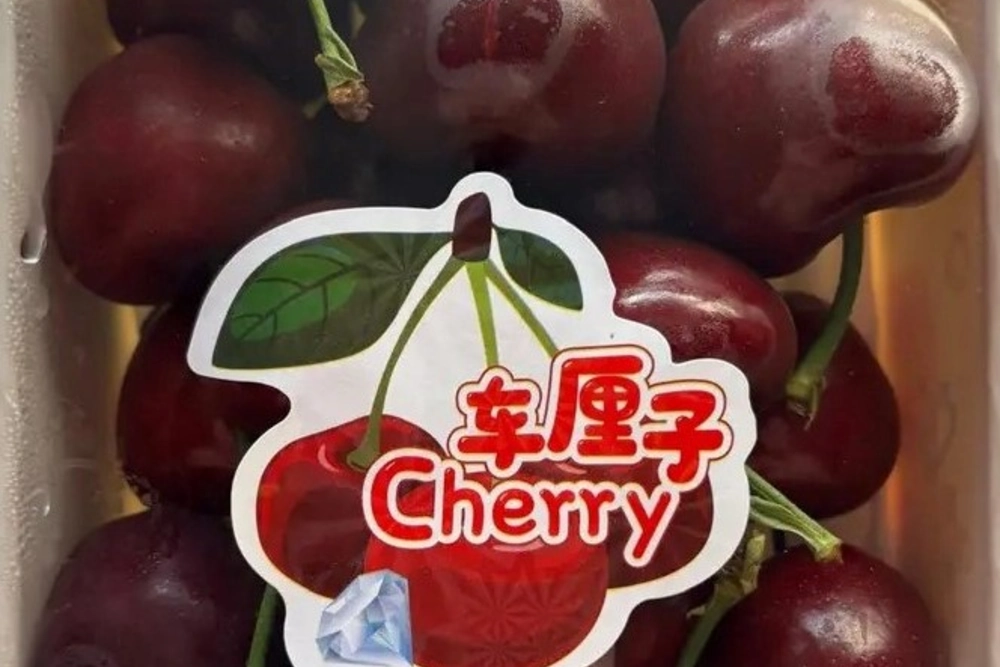
Despite the momentum in shipments, the Chinese market is experiencing a significant drop in prices, according to ECNS.cn (China News Service). At the beginning of 2026, the value of Chilean cherries in China fell by more than 30% year-on-year, driven by increased supply and improved logistics efficiency.
In wholesale markets such as Baida Zhougudui in Anhui province, JJ-size cherries are sold between 100 and 130 yuan per 2.5 kg box, well below the 160–180 yuan recorded the previous year. The early arrival of shipments, which began at the end of November, almost a month earlier than usual, further contributed to this downward pressure. Despite this, demand remains strong. In cities such as Hefei, some supermarkets sell more than 100 boxes per day, with occasional shortages during holiday periods.
This new scenario is reshaping the product positioning, shifting it from a luxury good to a more accessible fruit. At the same time, consumers are beginning to prioritize quality over exclusivity, forcing exporters to adapt sizes, formats, and standards.
Spain in China
In this context, Spain has taken a key strategic step with the opening of the Chinese market to its cherries, formalized in December 2024 after years of phytosanitary negotiations. This authorization allows producing regions such as Aragon to access a high-value destination.
Although Spanish volumes (around 40,000 tonnes exported) are still far from Chilean levels, their entry introduces new competition, particularly in the high-quality segment.
Chile maintains clear advantages in terms of volume, logistics, and brand recognition in China, especially during the Chinese New Year. However, the Spanish presence contributes to diversifying supply and raising market standards.
Consumption
Meanwhile, the European market continues to show positive development. In 2024, cherry consumption in the European Union reached 629,000 tonnes, up 4.5% compared to the previous year, for a market value of 2.5 billion dollars.
Italy, Poland, and Spain lead consumption, accounting for 43% of the total, while countries such as Greece, Germany, and France also play a significant role. In per capita terms, Bulgaria and Greece stand out as the highest consumers.
The global cherry sector is undergoing a major transformation. Chile continues to dominate the Chinese market but must face the challenge of oversupply and falling prices. At the same time, new players such as Spain are beginning to position themselves in higher-value segments.
The combination of logistical advances, changes in consumption, and growing competition outlines a more complex scenario, where quality, diversification, and efficiency will be key to maintaining competitiveness in the coming years.
Alba Campos
Valencia Fruits
Image source: Cherry Times
Cherry Times - All rights reserved