22 September 2026
Aguilar, thesis student at the Austral University of Chile (UACh). Dr. Lee Meisel, Director of the Institute of Nutrition and Food Technology (INTA), and Dr. Carolina Contreras, postharvest physiologist (UACh)
Source: Mundoagro
 Source: Smartcgerry
For the Chilean cherry industry, long shipments from Chile to Asian markets, driven mainly by the commercial window of the Chinese New Year, represent a crucial challenge from a storage perspective.
During these weeks in transit, multifactorial physiological stress causes serious problems affecting the visual and structural quality of the fruit.
This is reflected not only in stem dehydration or weight loss, but also in changes to key internal parameters such as firmness, acidity and Brix.
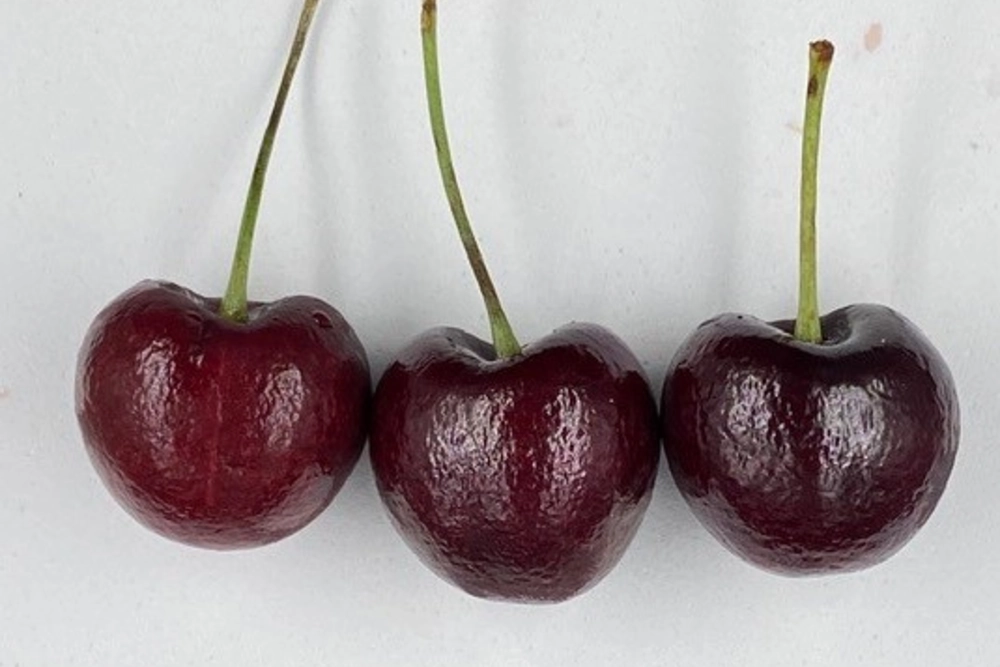
It is within this particularly challenging context that the incidence of “lizard skin” (orange peel disorder) has gained increasing importance in recent seasons.
Considering that this cosmetic defect is linked to an internal osmotic imbalance, a fundamental technical question arises for the industry: given the antioxidant power of melatonin, can this elicitor have a tangible effect in counteracting the development of this disorder?
From sleep regulation to plant protection
Although melatonin is commonly associated with sleep regulation in humans, in the plant kingdom it acts as a powerful antioxidant, present from germination through to senescence (Arnao and Hernández-Ruiz, 2015).
Its main function is to eliminate reactive oxygen species (ROS), molecules that accelerate cellular deterioration and are mainly produced as a result of the various forms of stress to which plants are exposed during their development (Reiter et al., 2015).
In cherries, this protective effect has been associated with lower weight loss, reduced respiration and better preservation of certain quality parameters during cold storage.
[...]
Want to know more? The full article is reserved for subscribers to the Cherry Times newsletter! Sign up for free to receive each new exclusive in-depth article directly in your inbox and stay up-to-date with quality advice and analysis. Don't miss this unique opportunity!
Sign up for free to the Cherry Times newsletter
Cherry Times - All rights reserved