A team of researchers in Aragón has developed a cherry tree capable of growing all year round, without stopping in winter. A discovery that could revolutionise the future of fruit growing in an increasingly warmer world.
A cherry tree that defies the seasons
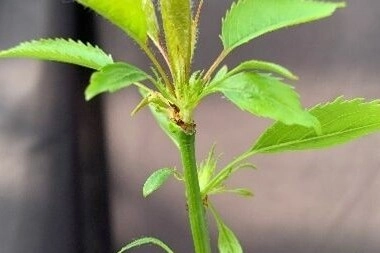
No winter dormancy, green leaves even in the coldest months and continuous growth: this is the portrait of the first evergreen cherry tree ever obtained in the species.
It was presented by Ana Wünsch, from the Department of Plant Science at the Centro de Investigación y Tecnología Agroalimentaria de Aragón (CITA), and Afif Hedhly, researcher at the ARAID Foundation at the Aula Dei Experimental Station (EEAD-CSIC).
This plant material is absolutely unique and represents an important milestone for agronomic innovation. Its potential? Allowing scientists to explore the mechanisms that regulate the seasonal growth of fruit trees and their ability to adapt to new climate scenarios.
In other words, a key element to ensure the sustainability of fruit growing in the future.
A concrete response to a changing climate
Like many other stone fruit crops, cherry trees need to accumulate a certain number of chilling hours during winter in order to flower properly in spring and produce fruit in summer.
But with rising winter temperatures, this natural requirement becomes an obstacle: yields decrease and uncertainties for growers multiply.
This is why the scientific community is trying to decipher the genetic and molecular mechanisms that regulate dormancy and flowering, with the aim of creating varieties capable of adapting to milder climates, thus expanding the potential growing areas.
A discovery born from years of research
The new evergreen cherry tree is not the result of genetic modification, but of a long process of varietal improvement carried out with traditional methods by the team led by Ana Wünsch at CITA.
A project that has involved both laboratory and field staff, in close collaboration with EEAD-CSIC and the ARAID Foundation.
Currently, PhD student Nerea Martínez-Romera is deepening the physiological and molecular characterisation of the plant as part of her doctoral thesis, which is included in the CHERRY_BREED project funded by the Spanish State Research Agency.
The first results of this extraordinary discovery have been published in the scientific journal Frontiers in Plant Science (doi: 10.3389/fpls.2025.1677862).
A look beyond the horizon
The evergreen cherry tree opens new opportunities for cultivation in areas traditionally less suited to fruit production.
It could become a valuable resource to address the scarcity of winter chill and ensure stable production even under adverse climate conditions.
A step forward towards a resilient fruit industry, able to adapt without sacrificing quality.
Text and image source: cita-aragon.es
Cherry Times - All rights reserved