Integrating biodiversity into orchard design is emerging as a concrete tool to increase the competitiveness of Chilean fruit growing without expanding cultivated areas.
At a time when Chilean fruit production is seeking solutions to improve yield and quality under increasingly challenging climate conditions, research developed by the Pontificia Universidad Católica de Valparaíso (PUCV) and Centro Ceres provides solid evidence: conserving natural habitat around orchards is not only an environmental choice, but also a productive one.
The study, led by Dr. Camila García and published in the scientific journal Agriculture, Ecosystems & Environment, analyzed apple and cherry orchards in central Chile.
The results show that farms surrounded by native vegetation recorded significant increases both in fruit set and in final fruit weight.
Beyond the honeybee: the strategic role of wild pollinators
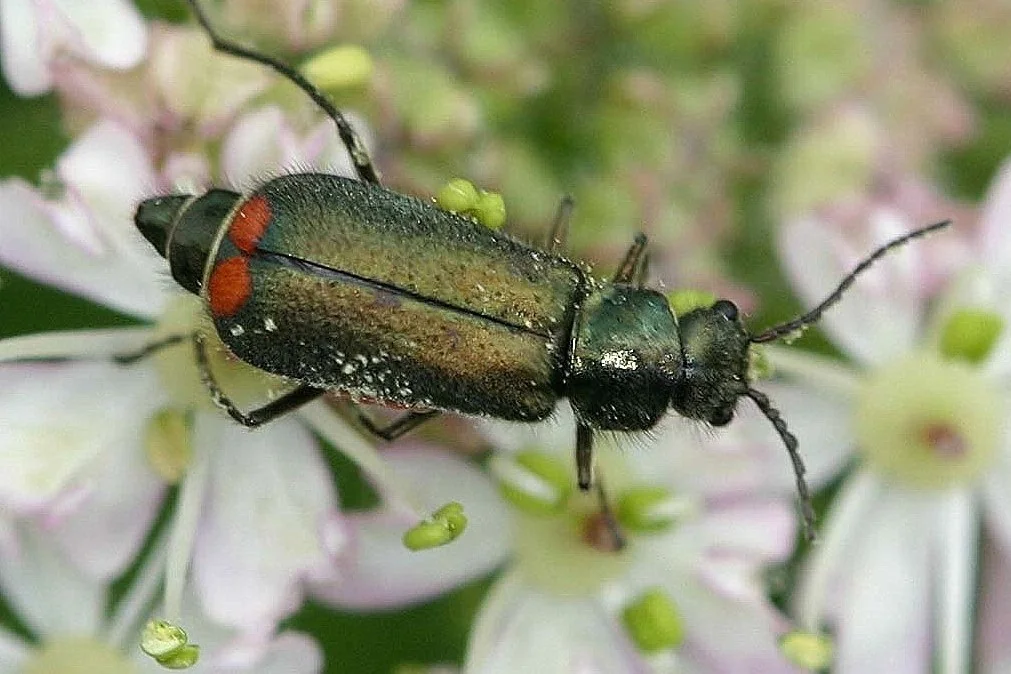
Although bees are often at the center of attention in production systems, the study identified other key players in Chilean Mediterranean ecosystems. Among them are beetles from the Melyridae family, popularly known as “Chilean pololos”.
These insects, associated with remnants of sclerophyllous forest, perform an efficient function in pollen transfer thanks to the bristles covering their bodies. Their presence increases in orchards that maintain native vegetation along field margins, resulting in more active and uniform pollination.
In addition, researchers observed that environments with greater plant diversity generate more stable microclimates within the orchard, reducing stress and improving fruit quality parameters.
The “edge effect” challenge
One of the phenomena identified was a decline in pollinator activity moving toward the interior of the plot. From about 70 meters away from the orchard boundary, the presence of beneficial insects decreases significantly, limiting the positive impact of the surrounding natural habitat.
In response to this scenario, the team proposes integrating ecological intensification criteria into farm design. Creating flower strips or clusters of native vegetation distributed every 70 meters.
Integrating typical sclerophyllous forest species, such as quillay, which attract pollinating insects. Maintaining at least 35% natural habitat in the area surrounding cherry orchards, and even higher percentages for apple orchards.
Competitiveness based on ecology
The central message of the study is clear: biodiversity conservation is not in conflict with production, but can actually strengthen it. The presence of wild insects improves fruit set, influences fruit size and provides long-term system stability.
In a context marked by water restrictions, climate variability and growing market demands, integrating nature and agriculture emerges as a concrete strategy to enhance both sustainability and competitiveness in Chilean fruit production.
Source: Mundoagro
Image source: David Nicholls - NatureSpot
Cherry Times - All rights reserved