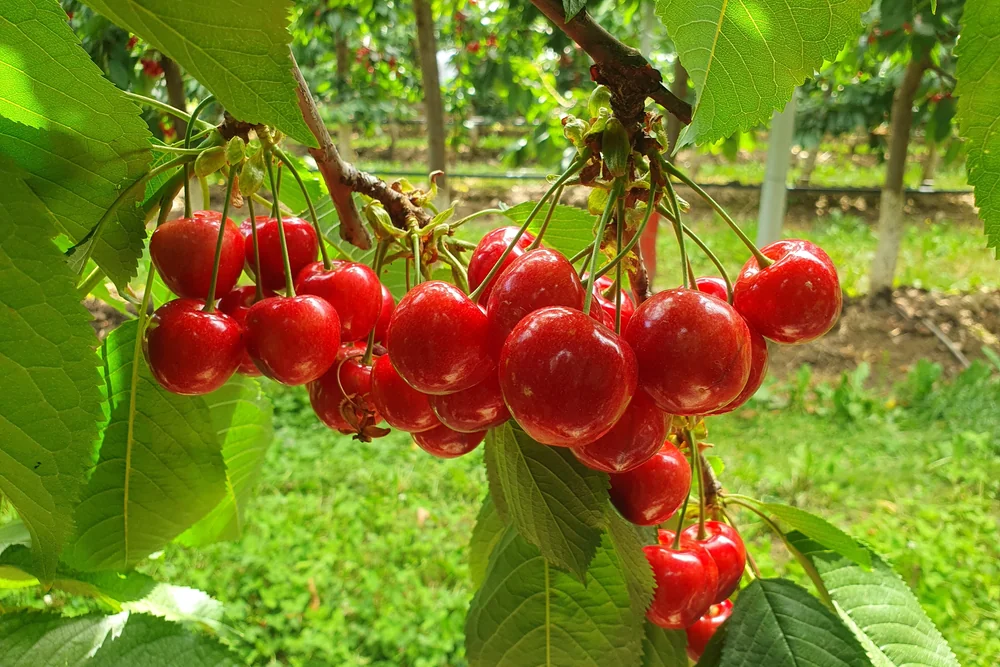
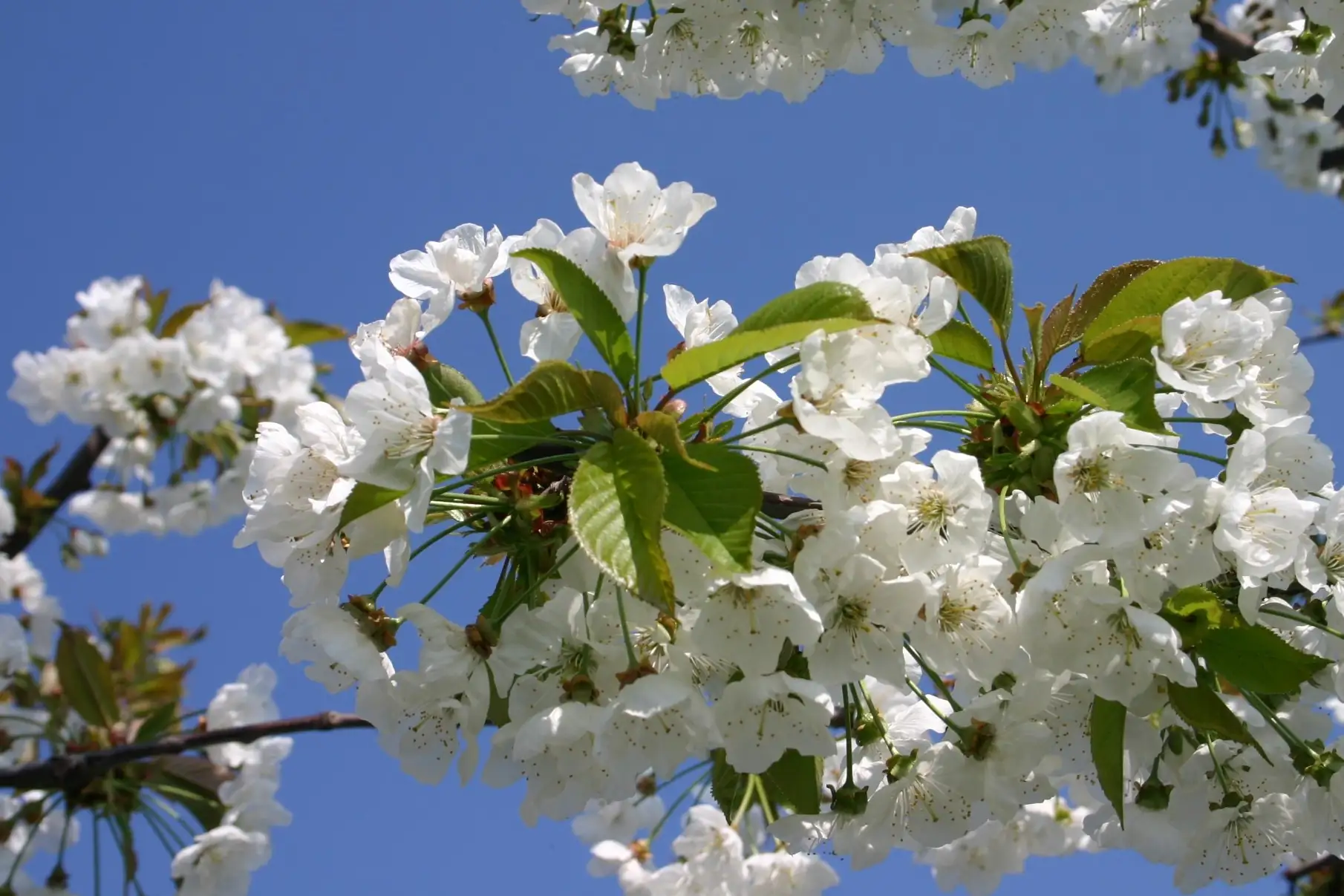
How can we accurately quantify the number of flowers available to pollinators—particularly wild bees—on fruit trees such as wild cherry trees?
This is a timely and concrete ecological question: information of this kind is essential for better understanding the relationships between vegetation structure, the availability of floral resources, and the population dynamics of insect pollinators, which are currently under pressure due to environmental change and land-use practices.
The starting point of the research lies in the authors’ awareness that traditional methods for counting flowers—based on ground-level manual observations or two-dimensional photographs—are often imprecise, labor-intensive, and difficult to scale up.
Research context
To overcome these limitations, the researchers propose an innovative approach: the use of advanced three-dimensional (3D) laser scanning technologies (LiDAR) and point clouds to capture the detailed form and structure of trees.
With this technique, each tree is fully digitized, and the resulting 3D spatial information is combined with other data to estimate the number of flowers present on each plant.
More specifically, the team collected a range of field data, including manual flower counts, photographs, and laser scans of a population of wild cherry trees.
Three-dimensional modeling
The 3D data are not simple images, but highly detailed point clouds in which each point represents a portion of the plant’s surface captured by the LiDAR system.
The algorithms developed by the authors analyze these point clouds to precisely estimate branch geometry, flower arrangement, and spatial flower density.
In practice, the model “learns” to recognize the characteristic shape and distribution of cherry blossoms within the scanned volume, making it possible to extrapolate an estimate of the total number of flowers and the potential forage available to pollinators.
Method validation
A crucial aspect addressed in the article is the validation of this method.
The authors compare the results of the 3D model with data collected manually in the field, showing that estimates derived from point clouds are highly correlated with real flower counts.
This demonstrates that 3D modeling is not only theoretically interesting, but also practically effective and potentially applicable at large scales—for example, in assessing the quality of floral resources in orchards, agroecological systems, or natural landscapes where pollinator biodiversity is a key ecological indicator.
Ecological implications
From an ecological perspective, the study has important implications.
The quantity and spatial distribution of flowers directly influence the strength and health of bee populations and other pollinators: greater flower availability can support higher survival and reproduction rates, while flower-poor areas can become bottlenecks for insect biodiversity.
Finally, the authors suggest that similar approaches could be adapted to other fruit trees and flowering plants, paving the way for a new generation of quantitative tools to monitor ecological resources and support pollinator conservation strategies at a time when their protection is increasingly critical.
Source: Schindler, Z., F. Fornoff and C. Morhart 2025. Lasers, Flowers, Bees: Modeling the Number of Flowers and Bee Forage on Cherry Trees Using 3D Point Clouds. Bull Ecol Soc Am 106(4):e70033. https://doi.org/10.1002/bes2.70033
Image source: Stefano Lugli
Melissa Venturi
University of Bologna (IT)
Cherry Times - All rights reserved