Industry analysts, including the SNA, state that the time has come to uproot orchards. Decofrut forecasts indicate a 14.3% increase in export volume by that date.
"I would not be so pessimistic; this has been a misleading season," says Manuel José Alcaíno. With two seasons to forget in China – the one just past and the one just concluded – and with the Asian giant’s Lunar New Year just days away, the question is what the outlook will be for the coming years.
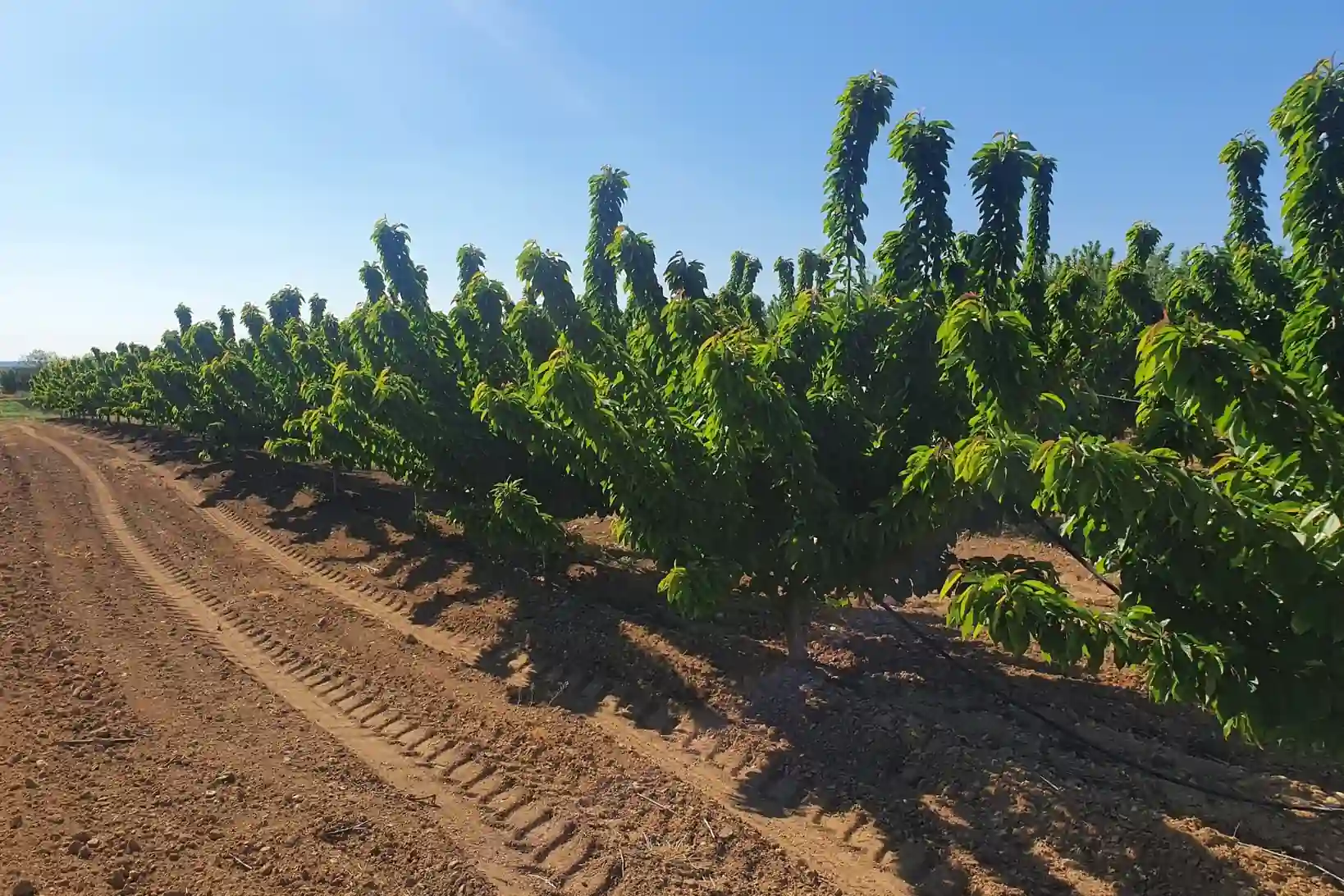
If we analyze the hectares that will enter production between now and 2030, the answer is not positive. According to a Decofrut projection based on data from Expordata, Ciren and Odepa, the current 83,721.7 hectares planted will exceed 88,700 hectares by 2030, with an increase of nearly 5,000 hectares, implying a 6% expansion.
The export volume corresponding to this expansion suggests that, from the current 626,013 tons exported, shipments will reach 715,389 tons by 2030, representing a 14.3% increase. Therefore, regardless of weather conditions, everything indicates that the expansion of cultivated hectares will lead to higher export volumes.
Impact on the Chinese market
This would increase supply in China, the market that absorbed 87% of shipments in the recently concluded season, and would further push prices down, as has happened on average in past seasons and in the current one. "Last year we exported 125 million boxes and this year 114 million, an 8.8% decrease, generally with better quality fruit, yet prices still declined," says Juan Pablo Subercaseaux, professor at the Faculty of Agronomy at PUC and cherry grower.
"If we consider that the projection for next year is 145 million boxes and, depending on weather conditions, never below 135 million, prices will remain low," he adds. By 2030, the professor and researcher foresees an equally bleak scenario.
"Based on what was planted in 2022, and considering that orchards will enter production in about five years, I had projected that we would reach 180 million boxes exported by 2030. Due to minor crop removals, I revised the figure, and I have no doubt that we will exceed 150 million," he explains.
Surface expansion
Raimundo Cuevas, technical manager at Abud y Cia, agrees that volume will continue to increase. "It is a very complex situation because, although there are other factors, the most decisive one behind falling prices has been the increase in supply."
"The problem is that many new orchards are entering production. Although projections have a margin of error, either upward or downward, volume will continue to grow," he notes.
The current situation was predictable based on the expansion of cultivated surface in recent years. Thus, while in 2019 there were 45,747 hectares, by 2025 these had reached the aforementioned 82,221 hectares, representing a 79% expansion.
According to Subercaseaux, this expansion has exceeded China’s absorption capacity, despite the difficulties of the last two seasons. "It is clear that China cannot handle more than 100 million boxes."
The president of the National Agricultural Society (SNA) is even more direct in his assessment. "We are exporting 114 million boxes, 98 million of which went to China."
"That market was performing very well in terms of prices at 75 million boxes, but when we exceeded that volume, prices began to suffer and fall significantly, which had a considerable impact on farm profitability," he emphasizes.
Determining factors
The current situation has been attributed to various factors, such as economic problems affecting Chinese demand, changes in tastes, quality issues, etc. All valid reasons, but 80% of the explanation is that China simply cannot absorb additional volumes," confirms Subercaseaux. Cuevas agrees.
"Although the Chinese economic crisis has an impact, as does the fact that cherries are no longer considered a luxury good and now compete on equal terms with other fruits, this is linked to volume. In fact, the decline in cherries’ premium status is due to the same factor," he stresses.
Manuel José Alcaíno, president of Decofrut, takes a less dramatic view of the current season and is cautious about extrapolating data. "I would not be so catastrophic, as this has been a misleading season that prevents us from drawing medium-term conclusions."
"A key issue is that we were fifteen days ahead, which significantly impacted the perception of supply, which differs from actual supply. Each week we had more fruit compared to the same week of the previous season, so people did not perceive the reduction in total volume, which would have supported prices," he explains.
"Given the perception of increasing volumes, there was a tendency to store fruit to sell it when availability was lower, but it was not always in good condition, which also affected prices. Added to this was the Chinese New Year, which this year came 15 days later than in previous seasons," he adds.
Orchard removal
The Chilean Cherry Committee is also cautious regarding projections. "It is difficult to predict what will happen in the coming seasons. As we have stated, the sector is in a phase of adjustment in which quality, logistics, and sector unity will be very important," they say.
However, the opinion of other stakeholders points to a structural adjustment involving a reduction in cultivated surface. This season marks a turning point that will force orchard removals.
"Small-scale removals have already begun, where growers have eliminated marginal-quality orchards, but the adjustment at sector level and in the medium term must be greater. I estimate that 30,000 hectares must be uprooted," says Subercaseaux.
Raimundo Cuevas of Abud y Cia. agrees on the need for removal. "A new standard must be established for orchards that, in addition to excellent quality, generate volume, thereby diluting costs."
"In this, growers must be honest with themselves and understand what is profitable and what is not, and therefore make drastic decisions," he says. The president of the SNA, Antonio Walker, shares this view.
"The sector is facing a significant adjustment of cultivated areas, which has already occurred with other fruits such as table grapes and kiwifruit. This adjustment involves uprooting orchards that are not located in areas with productive advantages, that do not achieve optimal yields, or that lack varieties demanded by the market."
Prices recovering
Prices for the latest shipments are recovering. During week seven, Decofrut reports a decline in the supply of Chilean cherries in China’s open wholesale markets, with Regina positioning itself as the variety with the highest volumes.
On the eve of Chinese New Year (February 17), fruit met quality standards, except for some lots. This suggests strong sales are expected for the final shipments of the season.
For reference, Regina, XL size fruit, was sold at USD 4.55/kg (approximately EUR 4.19/kg); J at USD 6.81/kg (approximately EUR 6.26/kg); 2J at USD 8.34/kg (approximately EUR 7.67/kg); 3J at USD 10.21/kg (approximately EUR 9.39/kg); and 4J at USD 12.58/kg (approximately EUR 11.57/kg)," the Decofrut report states.
During the season, according to a preliminary assessment by the Chilean Cherry Fruit Committee, export volume reached 113.8 million boxes, with China as the main destination, receiving 87% of shipments, compared to 92% the previous season. The association explains that it was a difficult season due to a harvest that began ten days earlier, concentrating supply in the initial weeks.
This was compounded by the delay of Chinese New Year, a factor that extended the marketing period from October 15 to February 15.
Image source: Stefano Lugli
Joaquin Riveros
Agrolun
Cherry Times - All rights reserved