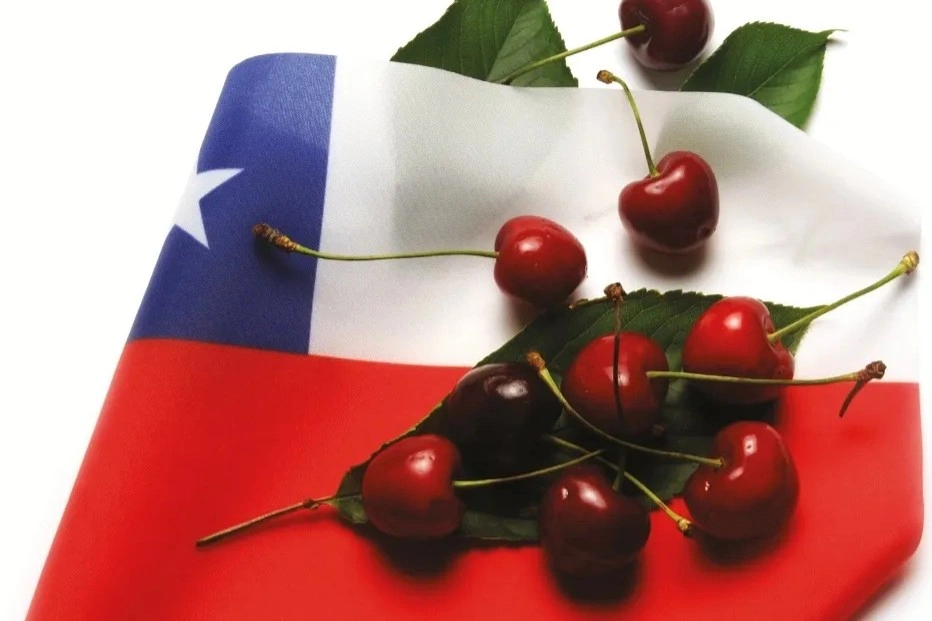
The Chilean fruit industry knows what it means to face difficult times. It has already happened with apples and table grapes, and now it is the turn of the cherry, a species that is at a crossroads in understanding how to emerge from the complex situation it is going through.
Walter Masman, an expert cherry consultant, carried out an in-depth analysis of the Chilean cherry industry as part of CherryTech 2026, where he presented the evolution of the sector, the transformations of the Chinese market and future challenges.
The consultant explained that in the last season Chile exported around 113 million boxes of cherries, generating FOB revenues estimated at around 1.8 billion dollars (approximately 1.58 billion Euros), a figure that represents a decline of close to 9% compared with 2024, the year in which the highest production volume in the country’s history was recorded.
Chinese market
“China is, will be and will probably continue to be our main trading partner for many years. They will choose the music and we will have to dance,” he said.
He also addressed the growth of other destinations, but highlighted Chile’s dependence on the Chinese market, which will continue to be decisive for the sector’s profitability.
Projections for the next season
One of the main uncertainties concerns the growth of the sector. Masman expects that, based on data related to the sale of rootstocks and sector estimates, Chile could reach around 80,000 productive hectares of cherry trees during 2026, also taking into account the uprooting of about 6,000 hectares.
Based on these parameters and considering average yields close to 10,000 kilos per hectare, the consultant estimated a production potential of 156 million boxes for the next season.
“It is still madness,” he said, warning of the need to urgently analyze the absorption capacity of markets in the face of the sustained growth in supply.
He also predicted that Chile could approach 180 million boxes of potential production by 2029.
The new characteristics of the Chinese consumer
Masman explained that one of the industry’s main mistakes was assuming that today’s Chinese consumer maintains the same buying habits as ten years ago.
He highlighted a transformation in the consumer profile: the traditional buyer linked to gifts for Chinese New Year has given way to a new generation of consumers who are more informed, digital and demanding.
“Today’s consumer is looking for an organoleptic experience. They want flavor, texture and acidity. In addition, they are health-conscious and look for foods with demonstrable nutritional benefits,” he said.
Digital commerce
Added to this is the evolution of e-commerce platforms and live broadcasts on social networks, which have profoundly changed the way fruit in China is marketed.
Currently, more than 35% of the volume passes through these digital channels, where quality is assessed in real time in front of millions of consumers.
Changes in the commercial strategy
The Chilean cherry must adapt to this new scenario. According to Masman, the industry must modify part of its commercial narrative and communicate the fruit’s nutritional attributes more strongly.
In this regard, he emphasized that cherries have a high content of anthocyanins, vitamin C, potassium and dietary fiber, as well as potential benefits for vascular health, cellular protection and the reduction of the risk of chronic diseases.
“We must learn to sell what we are really offering. Not just fruit, but a healthy food with distinctive attributes,” he said.
Another key challenge is technical in nature: obtaining a homogeneous and consistent fruit.
Climate scenario
The last season was characterized by a lack of uniformity within the boxes, compounded by the effects of heat stress, warm winters and the high temperatures accumulated in recent seasons.
For Masman, these signs reinforce the need to adapt the industry’s management strategies to a climate scenario that could become consolidated as a permanent trend.
The key to the business
One of the pillars of the business is profitability. Through different scenarios, the consultant showed how the fruit size and the harvest week determine a large part of the financial result.
In early varieties such as Santina, a good size curve and timely harvests can generate interesting returns. However, in mid-season and late varieties, the business becomes increasingly demanding.
In this context, Masman emphasized that future profitability will probably approach the usual margins of other fruit sectors, far from the extraordinary returns that characterized the years of cherry expansion.
The path forward
Masman highlighted that the growth in supply requires rethinking multiple aspects of the business, from genetics to agronomic management, from pruning to nutrition, from crop load control to cost management.
Despite the challenges, he conveyed an optimistic vision of the Chilean cherry industry: “We are the best producers of cherries in the world. We have built a path of enormous success. The question now is how to continue improving in order to maintain this leadership,” he said.
Finally, he concluded: “What cannot be measured cannot be controlled; what cannot be controlled cannot be managed; and what is not managed cannot be improved.”
Source: www.portalfruticola.com
Image source: Stefano Lugli
Cherry Times - All rights reserved