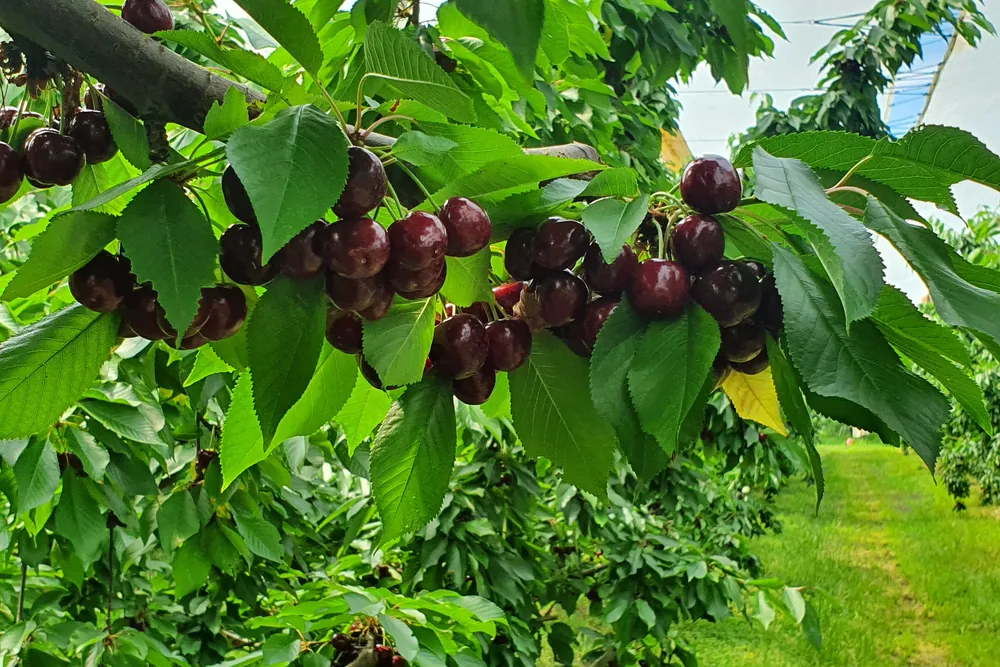
In July, Deep Brar was excited about the developing crop on these seventh-leaf Staccato trees, because 2025 would be his first harvest in the block after back-to-back losses from cold damage. (TJ Mullinax/Good Fruit Grower)
The year 2025 was supposed to be a comeback season for cherry growers in British Columbia, after back-to-back losses due to freeze damage.
The crop itself came back strong — the largest crop on record — but that volume complicated the economic recovery growers were anticipating.
“This was going to be our year. The fruit was beautiful,” said Deep Brar, a grower in Summerland. “It was some of the best Lapins, Skeenas and Stacattos we have ever had, but it was hard to get them all picked, packed and sold in time.”
Economic expectations and reality
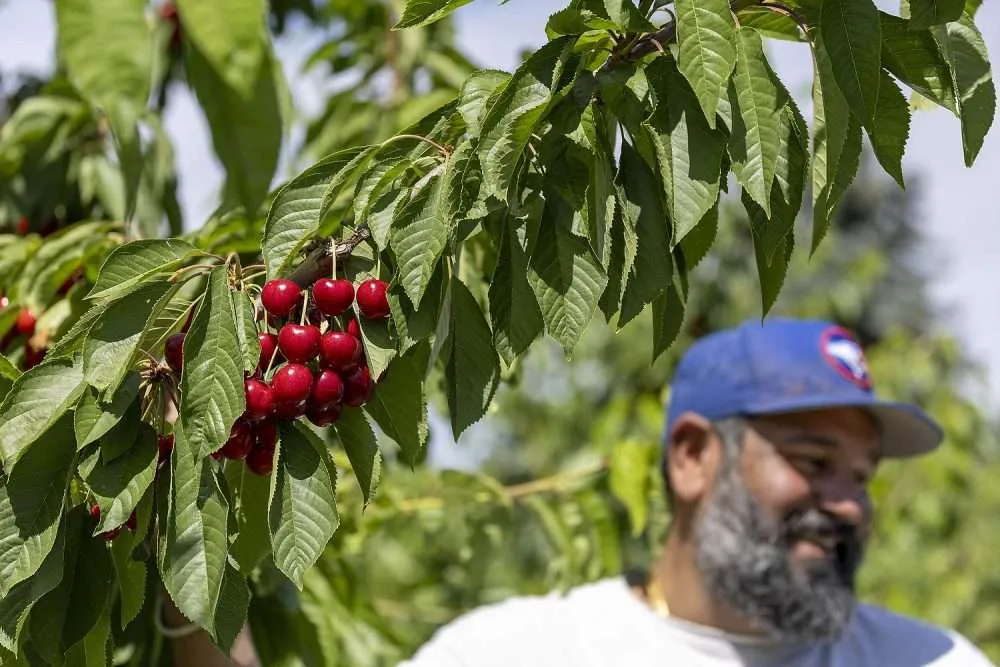 Image 1. In July, Deep Brar was excited about the developing crop on these seventh-leaf Staccato trees, because 2025 would be his first harvest in the block after back-to-back losses from cold damage. (TJ Mullinax/Good Fruit Grower)
And that record British Columbia crop aligned with a 23.6-million-box crop out of the Northwest U.S., as well as a sluggish global economy, resulting in prices that fell far short of the economic recovery growers needed.
“The hole we are trying to dig ourselves out of is massive,” said Sukpaul Bal, grower and president of the BC Cherry Association. “There are a lot of positives that are exciting, but I just came through five years of extreme weather that could be in the cards again at any time.”
BC Cherry Association president Sukhpaul Bal supervises cherry harvest at his Hillcrest Farm in Kelowna, British Columbia, on July 10, 2025. He said growers and their customers were excited to have a great crop this year, but growers are still trying to dig themselves out of a big financial hole after years of back-to-back losses. (TJ Mullinax/Good Fruit Grower)
BC Cherry Association president Sukhpaul Bal supervises cherry harvest at his Hillcrest Farm in Kelowna, British Columbia, on July 10, 2025. He said growers and their customers were excited to have a great crop this year, but growers are still trying to dig themselves out of a big financial hole after years of back-to-back losses. (TJ Mullinax/Good Fruit Grower)
Changing climate and shifting strategies
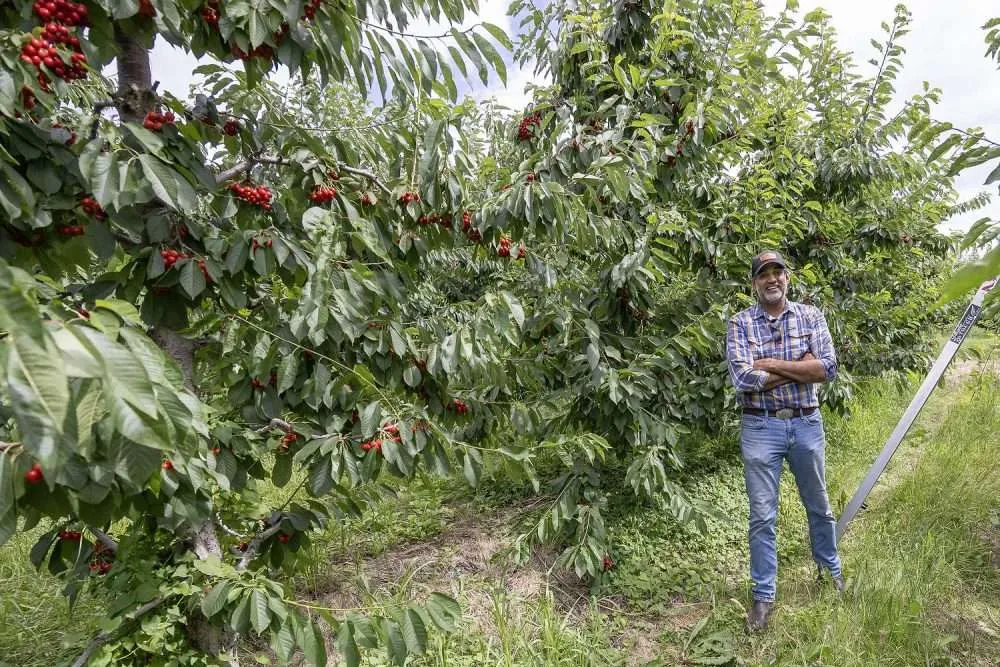 Image 2. BC Cherry Association president Sukhpaul Bal supervises cherry harvest at his Hillcrest Farm in Kelowna, British Columbia, on July 10, 2025. He said growers and their customers were excited to have a great crop this year, but growers are still trying to dig themselves out of a big financial hole after years of back-to-back losses. (TJ Mullinax/Good Fruit Grower)
Cherry growers have always taken a gamble on the weather and the markets, but recent experience shows how the odds in the game are evolving. Bal points to the changing climate and industry growth.
The province’s cherry industry took root to serve high-end export markets in Asia, filling the profitable window after the Washington and Oregon harvests slow. Small growers and small packers work with brokers to deliver fruit to customers prepared to pay a premium.
“To get into those markets, I have to make the investments in the field, and that means big spray bills and big pruning bills,” Bal said.
The BC Cherry Association was founded to help growers build and navigate those offshore markets, and it became a success story.
Domestic growth and market saturation
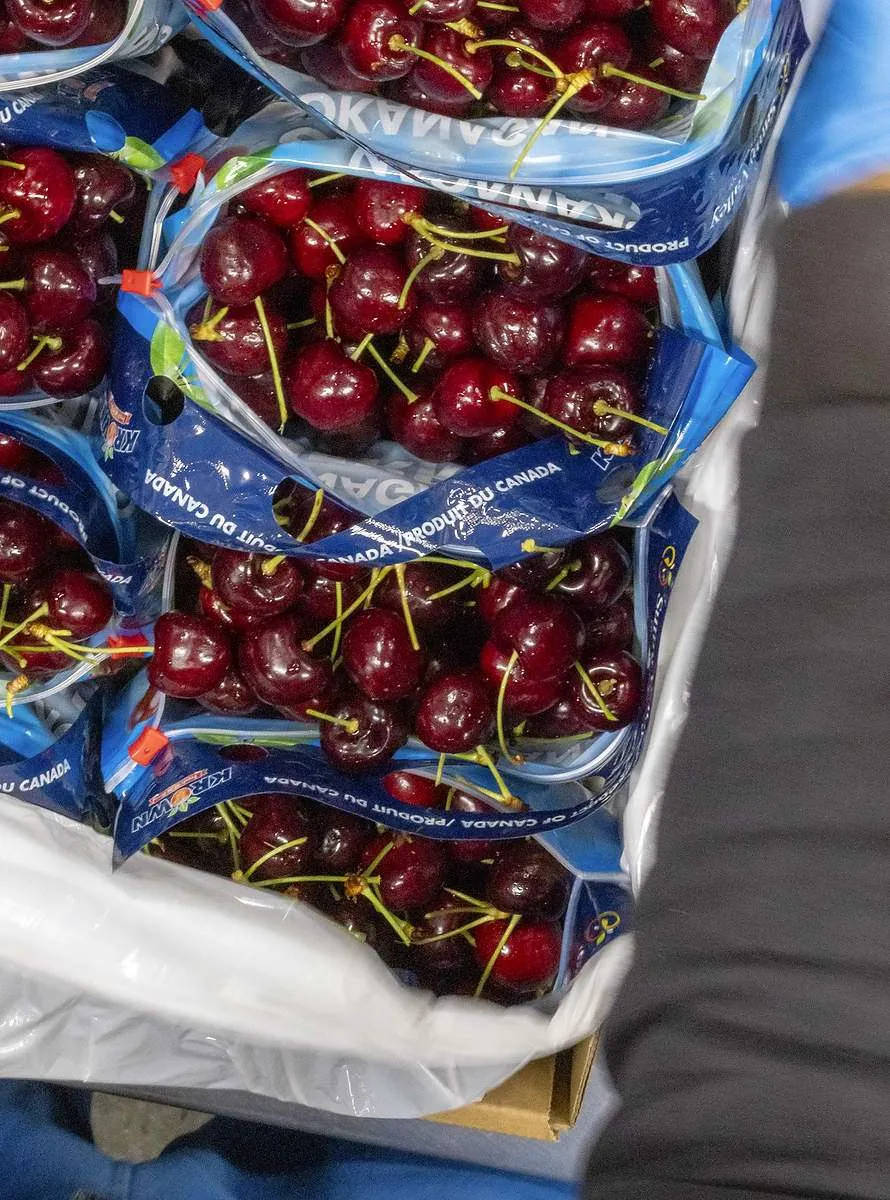 Image 3. Cherries packed for the domestic Canadian market at Sunny Valley Fruit in Keremeos, British Columbia. Owner Sunny Dhaliwal said he ran at full capacity for the season with “really good sales people and really good fruit.” (TJ Mullinax/Good Fruit Grower)
“The Canadian cherry industry was built on export markets, but now we have the acreage to support Costco Canada for six weeks,” said Erin Carlson, a grower in Summerland, in July. “There’s a lot of optimism. Canadians want cherries, and we have gorgeous ones.”
But the equation proved to be a little more complex as the season went on. While the province’s apple industry struggled, more growers planted cherries, resulting in an unexpected volume looking for buyers.
Yes, some of that new volume has enabled larger grower-packers to compete with U.S. producers to supply the domestic Canadian market. Carlson touted the Canadian Cherry Month campaign that the association launched in late July and August to encourage consumers and retailers to buy Canadian. But simultaneously, new cherry growers who planted expecting premium returns from Asian markets have found that there’s only so much demand.
“There’s more and more cherries coming in the Okanagan,” Brar said, adding that he himself has 30 new acres, and it’s changing the market. “We need to rejig some of the economic (expectations) because the returns aren’t there.”
Cost pressures and hard decisions
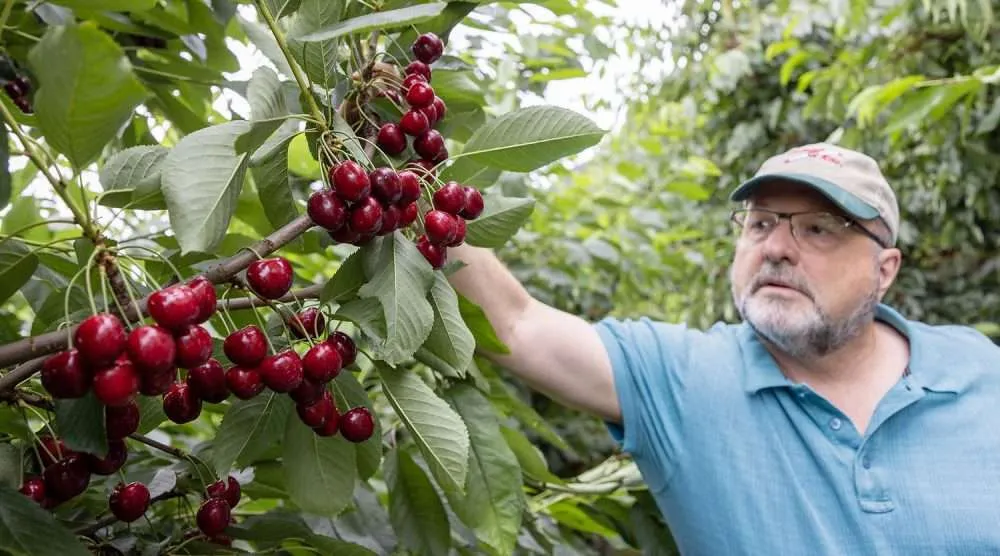 Image 4. David Geen of Jealous Fruits in Kelowna, British Columbia, examines fruit size developing in a Staccato block in July. While some trees overset after not cropping in 2024, Geen said they pruned aggressively to ensure fruit would size, and he’s pleased with what he sees. “This will be 8.5-row by harvest for sure,” he said. (TJ Mullinax/Good Fruit Grower)
He clarifies: Returns aren’t what they used to be, and input costs have skyrocketed. In the 2025 market, not every cherry was worth picking.
“I had to convince my dad to leave some fruit on the trees — too much was too small,” Brar said of a young block that wasn’t pruned hard enough after the frost. “It’s super-hard to skip them, but at least I am saving my picking and packing costs at that point.”
He was making those adjustments in real time, because he markets his own fruit, but he worries about smaller growers who were expecting higher returns.
“What growers need to understand is where the market is,” Brar said.
Adapting through integration
Cherries packed for the domestic Canadian market at Sunny Valley Fruit in Keremeos, British Columbia. Owner Sunny Dhaliwal said he ran at full capacity for the season with “really good sales people and really good fruit.” (TJ Mullinax/Good Fruit Grower)
Meanwhile, Sunny Dhaliwal has found success leaning into the domestic Canadian market. His vertically integrated company, Sunny Valley Fruit, invested in a new packing facility in Keremeos in 2019 and packs for growers from across the Okanagan. Workers were packing for Costco Canada when Good Fruit Grower visited in early July.
“We’re growing every year,” he said, and his outlook remains optimistic. “I think there’s a lot of potential out there for good fruit that sells itself.”
Vertical integration and diversification help him manage risk, Dhaliwal said.
For Jealous Fruits, another vertically integrated cherry company based in Kelowna, the strategy is all about timing.
Precision and timing in harvest
“Our fruit that ripens in July, we know we are against the full volume from Washington,” said owner David Geen. “So, we aim to grow a really big Lapin. In July, I’d rather have 6 tons I can market for good money than 10 tons I am giving away.”
David Geen of Jealous Fruits in Kelowna, British Columbia, examines fruit size developing in a Staccato block in July. While some trees overset after not cropping in 2024, Geen said they pruned aggressively to ensure fruit would size, and he’s pleased with what he sees. “This will be 8.5-row by harvest for sure,” he said. (TJ Mullinax/Good Fruit Grower)
Jealous Fruits strategically uses elevation and latitude to stretch its production season from July 1 to early September, Geen said, and makes money in the second half of the season.
When Good Fruit Grower visited him, it was raining across the Kelowna region, and Geen had several helicopters on standby to dry fruit. It costs money to make money in cherries, he said.
That’s something new cherry growers in the region — former apple growers with small acres and steep learning curves — are learning the hard way, said Brar, who sits on the board of the BC Fruit Growers Association. But the economics are shifting for everyone.
“We used to think, one in four years we’d make money,” Brar said. “But the last five years have been unbelievable. This year, I am just paying off this year, not covering the losses.” •
Source images: goodfruit.com
Opening image source: Bctreefruit
Kate Prengaman
Rredattrice di Good Fruit Grower
Cherry Times - All rights reserved