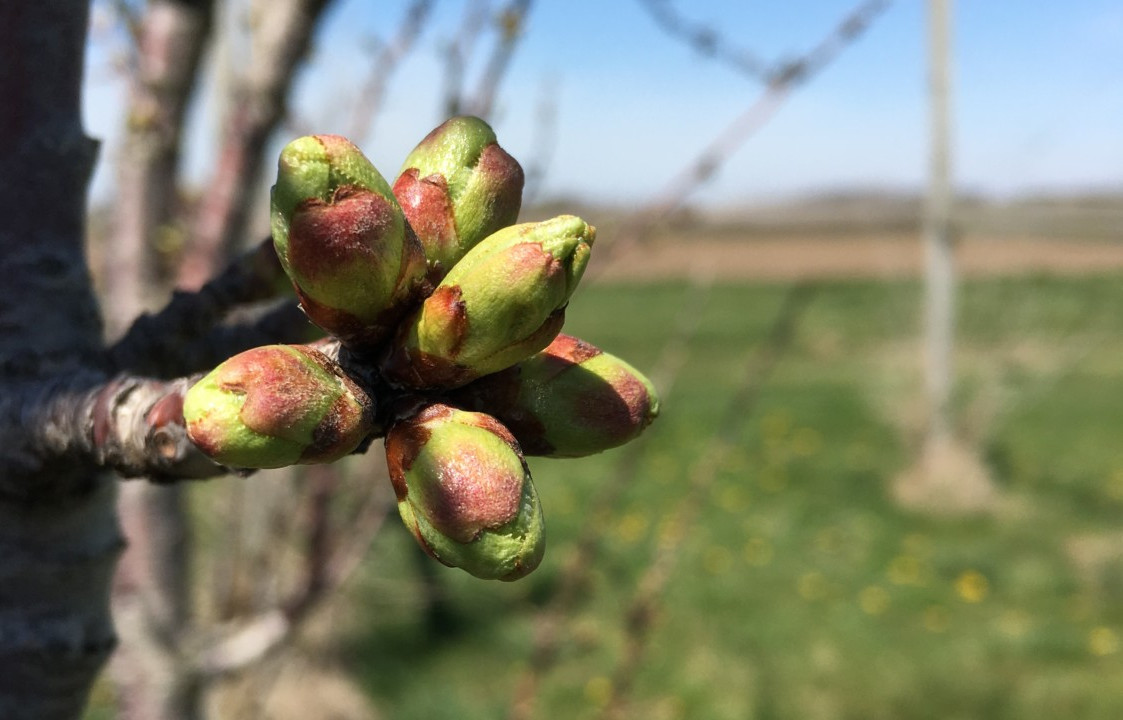
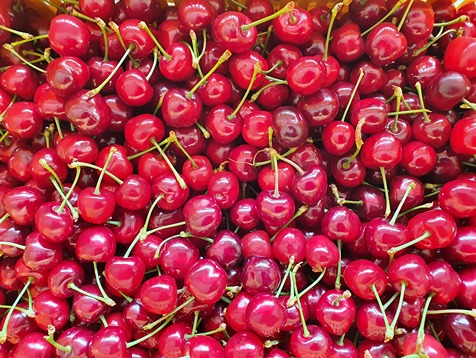
Michigan is preparing to enter the heart of the 2026 cherry harvest with cautious expectations. The crop is expected to be lighter than the State’s production potential, although fruit quality and sizing still look encouraging at this stage.
According to Trish Taylor of Riveridge Produce, the company’s orchards are expected to remain at volumes similar to last year, while yields in other production areas could be down by as much as 50%. “We had some late frost and maybe some poor pollination in areas. Until we start picking, we won’t know for sure,” Taylor explained.
Regular start, but with a pause between varieties
The season’s calendar still appears to be progressing according to the usual timing. The harvest of the first varieties is expected to begin next week, followed by a slowdown before the later cultivars enter production.
As usual, the harvest will gradually move toward the more northern areas of the State.
More limited availability could increase pressure on demand, which is already traditionally higher than supply for Michigan cherries. Taylor expects this dynamic to be even more evident this year, partly because of high fuel prices.
A strategic position for the Midwest
One of Michigan’s strengths remains its geographic location. For many retailers, especially in the Midwest, being able to rely on a centrally located production area represents an important logistical advantage.
The shorter distance to destination markets enables more efficient distribution, a particularly relevant factor at a time of high energy costs.
The main limitation, however, remains the available production acreage. “We just simply don’t have enough trees in the ground,” Taylor noted.
New plantings and protection against frost, rain and birds
The situation is gradually changing. Riveridge Produce and its growers are expanding planted acreage year after year: over the past five years, about 20 acres, around 8.1 hectares, have been planted annually, and an increasing share of these new plantings is progressively coming into production.
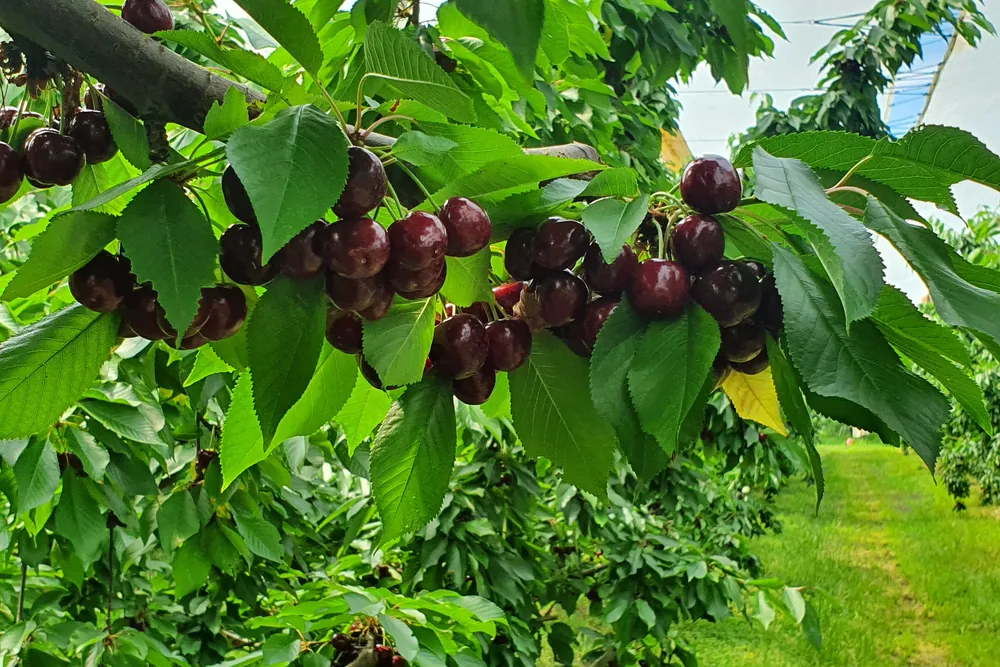
To protect both existing and newer plantings, Michigan has been using row-crop covers for at least four years. In the event of frost, the covers can be unfurled and combined with pellet stoves placed underneath the structure, with the aim of keeping the blossoms warm.
Every newly planted hectare is now automatically equipped with this system.
The covers also play a crucial role in the final stages of the season: they protect cherries ready for harvest from rain, reducing the risk of splitting, and help limit damage caused by birds.
According to Taylor, Michigan also has favorable conditions for fresh cherry production, thanks to its climate and access to fresh water.
Greater efficiency in packing
Supporting the movement of cherries from the packing facility to retail distribution is also a new batcher/sorter system, which automates part of the filling process for both pouch bags and clamshells.
For Riveridge Produce, this is the second year using this technology. Before the system was introduced, many operations were carried out manually; today, automation helps improve efficiency in a season when every available volume will be especially valuable.
A supply chain looking beyond the 2026 crop
The 2026 season for Michigan cherries is therefore opening with more limited supply, but also with signs of investment and modernization. New plantings, protection systems and packing technologies point to a supply chain aiming to strengthen its competitiveness, making the most of the State’s strategic position and the growing market demand for fresh cherries.
Source: www.freshplaza.com
Image source: Stefano Lugli
Cherry Times - All rights reserved