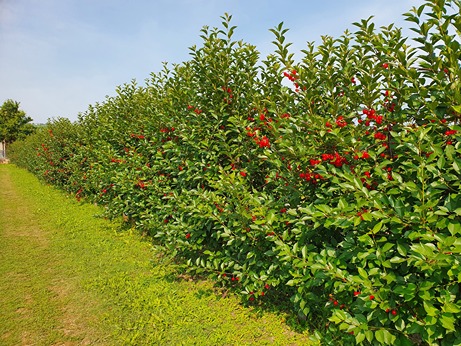
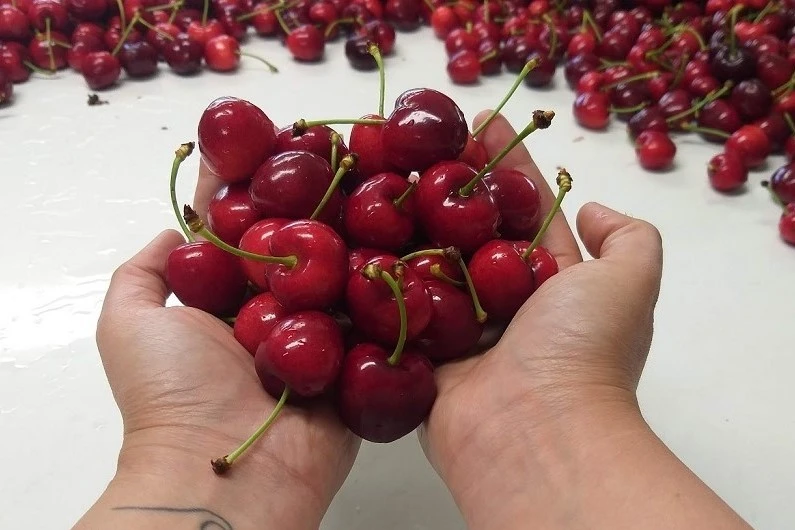
The protection of cherries and berries is entering a decisive phase. In 2026, in France, pressure from Drosophila suzukii remains one of the main challenges for growers, prompting research institutes, technicians and private companies to test more targeted, sustainable solutions compatible with the reduction of chemical inputs.
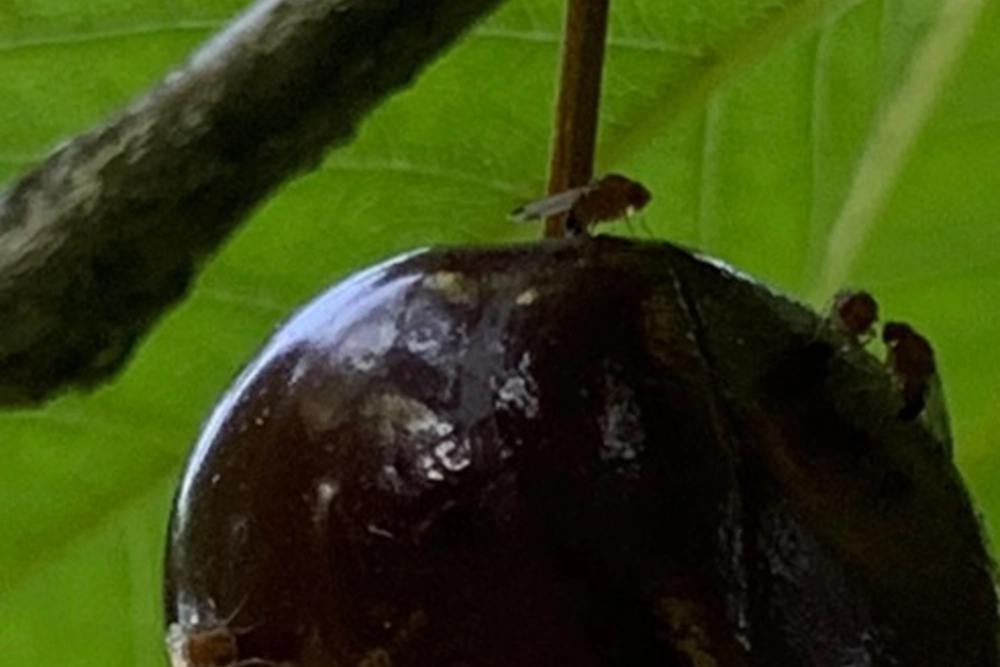
Attractive baits: less insecticide, same protection?
Among the lines of work announced by CTIFL for 2026 are attractive formulations designed to induce fruit flies to ingest very low doses of insecticide. The aim is to limit fruit damage without relying on generalised treatments.
Experiences conducted abroad have indicated that some formulations can maintain a comparable level of protection while reducing the amount of insecticide by up to 90%. In this context, products such as Russell IPM’s Probandz and Andermatt’s Combi-protec, already cited as operational references in other countries, will be tested in comparative trials to assess their adaptability to French supply chains.
The tests will assess efficacy on harvested fruit, the duration of protection and acceptability from both a regulatory and commercial perspective.
Ganaspis kimorum and targeted biological control
A second area of work concerns direct biological control. In 2026, pilot releases of Ganaspis kimorum, a parasitoid specific to D. suzukii, are planned in connection with available authorisations and with INRAE’s rearing capacity.
The objective is to observe the establishment of the parasitoid and its impact under French conditions. However, this process requires time: the average establishment period for a parasitoid is estimated at around three years, which is why the pilot sites will be monitored over several years.
The technical teams will also monitor interactions with the beneficial insects already present, as well as the effect of crop management practices such as nets, irrigation and residual treatments.
Sterile males and microbial incompatibility
The sterile insect technique, or SIT, is being tested both under semi-controlled conditions and in open orchards. The principle is to reduce the reproduction of wild populations through the release of irradiated males.
Some trials in protected orchards have already shown a reduction in damage on certain varieties, especially when the proportion of matings with sterile males is high. However, release schedules still need to be better defined according to varietal phenology.
According to Simon Fellous of INRAE, it will be essential to involve volunteer growers in order to verify the actual applicability of the approach in the field and to estimate costs, organisation and logistics.
In parallel, the Optimistii project aims to combine SIT and the incompatible insect technique (IIT), based on Wolbachia. The prospect is to improve the competitiveness of released males and reduce the required irradiation dose.
The SIT-IIT experiments planned for 2027 will be conducted on small cherry trees in greenhouses, with the aim of refining doses, release frequency and the ratio between sterile males and wild males before any possible transition to orchards.
Towards integrated strategies for farms
For interested growers, involvement will take place through regional networks, including CTIFL, chambers of agriculture and grower associations. Participation in test sites will require technical preparation: phenological monitoring, traps, net management and coordination with experimental protocols.
Plant health and environmental authorities will continue to oversee authorisations and non-target risk assessments. The results expected between 2026 and 2027 may help guide new operational recommendations for more sustainable integrated pest management, which is particularly important for small and medium-sized farms.
Source: Agronews
Image source: FiBL, S. Stöckli
Cherry Times - All rights reserved