Recently, in Chengcheng County, located on the Loess Plateau in Weinan City, Shaanxi Province, China, the protected facilities for cherry cultivation at the Ma Village Modern Agricultural Park have gradually reached maturity and harvesting is currently underway.
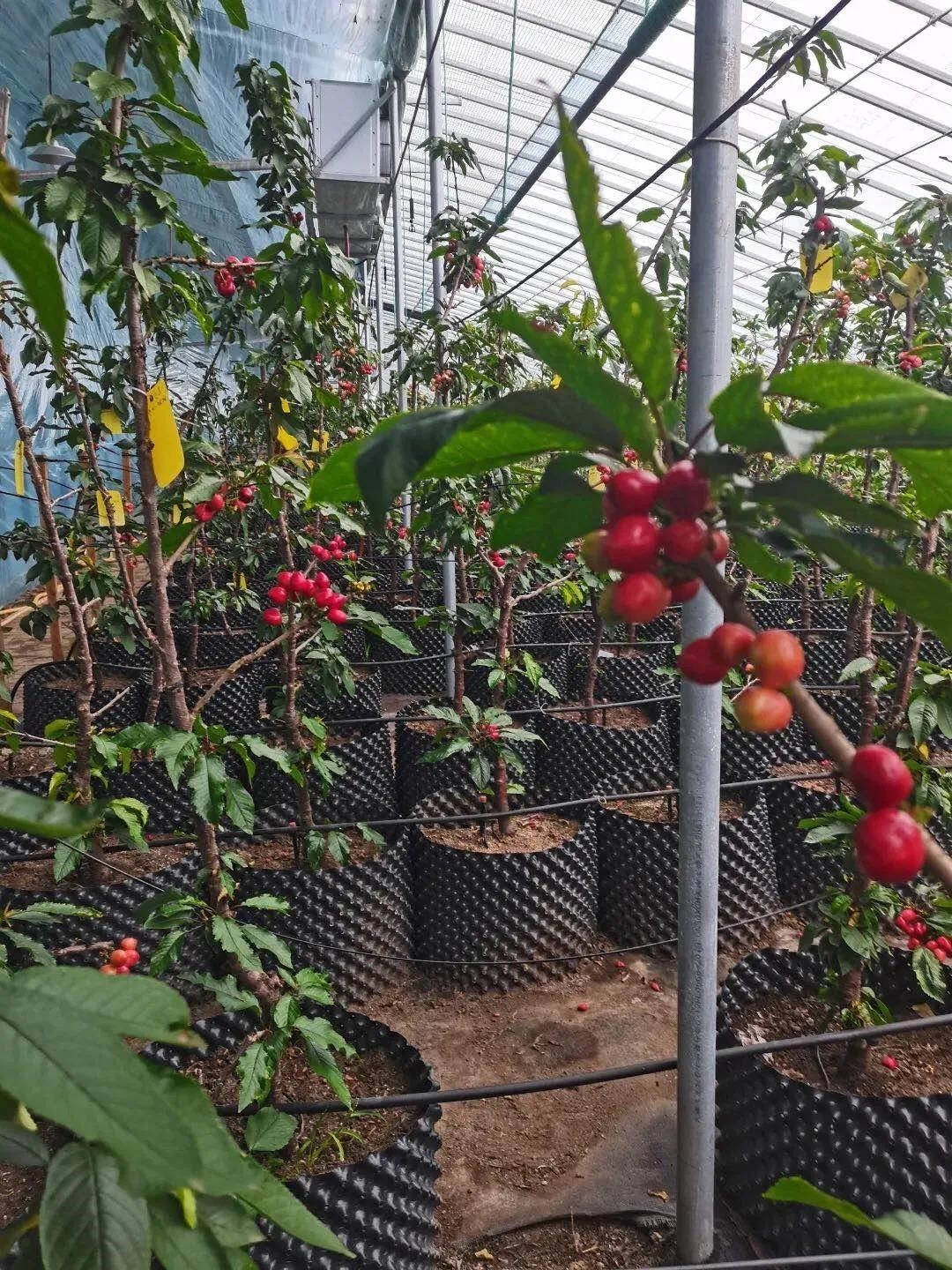
The now-mature cherries are grown using intensive planting methods, with cherry trees trained in container pots that are transferred to cold storage in August. After a dormancy period of 1,200 hours, the plants are moved into a greenhouse for heating, which induces flowering and fruit set.
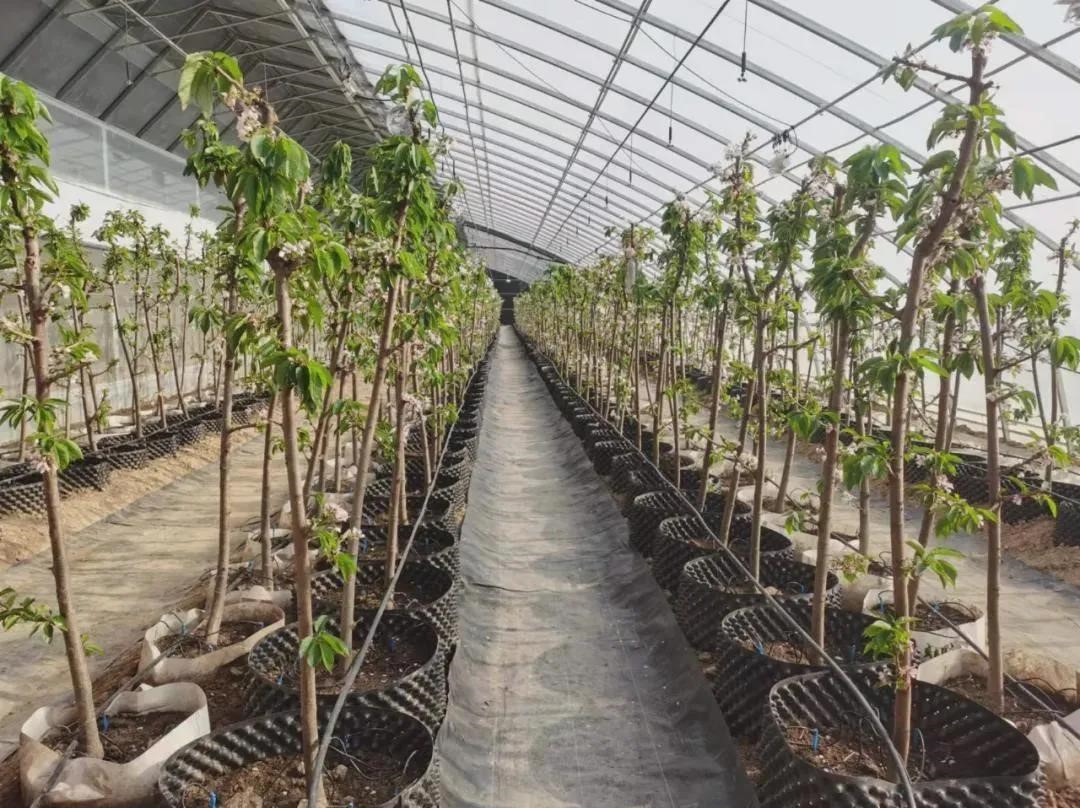
On December 24, a local fruit grower explained that this year the trees were subjected to forced dormancy and heating earlier than usual, resulting in cherry ripening about 10 days earlier than in previous years. Cherries from their greenhouse have been on sale since the 15th, and on the 23rd an agreement was reached with a buyer for the sale of the entire greenhouse crop at 300 yuan per jin (= USD 42 per 500 g), with an estimated revenue of approximately 140,000 yuan (USD 196,000).
Chengcheng County, under the jurisdiction of Weinan City in Shaanxi Province, is located in the eastern part of the Guanzhong Plain and the northeastern part of the Weibei Plateau, within the “golden belt” at 35° latitude for cherry cultivation designated by the Ministry of Agriculture and Rural Affairs.
The county features deep loess soils, an average annual temperature of 12°C, annual precipitation of 680 millimeters, and a frost-free period of up to 204 days, offering excellent natural conditions for cherry production.
Chengcheng County was originally focused mainly on apple cultivation, but shifted to cherry production in the mid-1990s. After years of development, the cherry-growing area in Chengcheng has reached 100,000 mu (approximately 6,667 hectares), of which 80,000 mu (about 5,333 hectares) are in full production, with an annual output of around 80,000 tonnes. 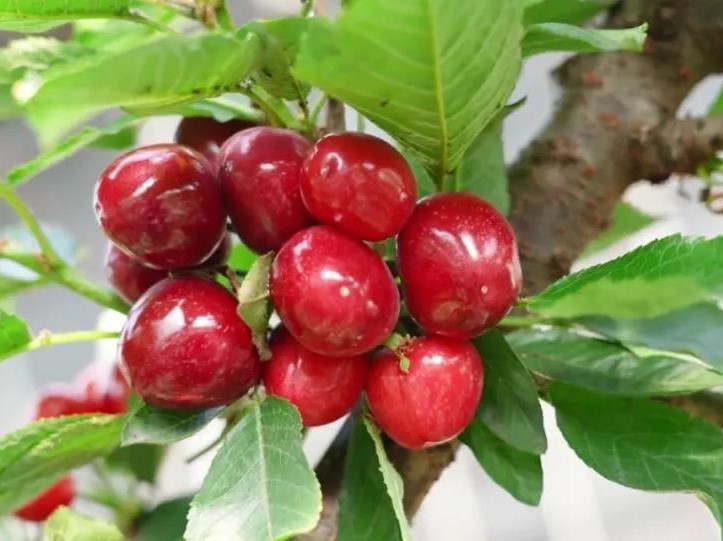
By creating a multi-tier planting model that combines “smart greenhouses + early dormancy, solar greenhouses, steel-structure heated greenhouses, continuous cold greenhouses, and open-field farmland” with early-, mid-, and late-maturing varieties, Chengcheng cherries are now able to supply markets continuously from January through June.
Text source: International Fruit and Vegetable Report
Image source: Growing Fruit
Cherry Times – All rights reserved