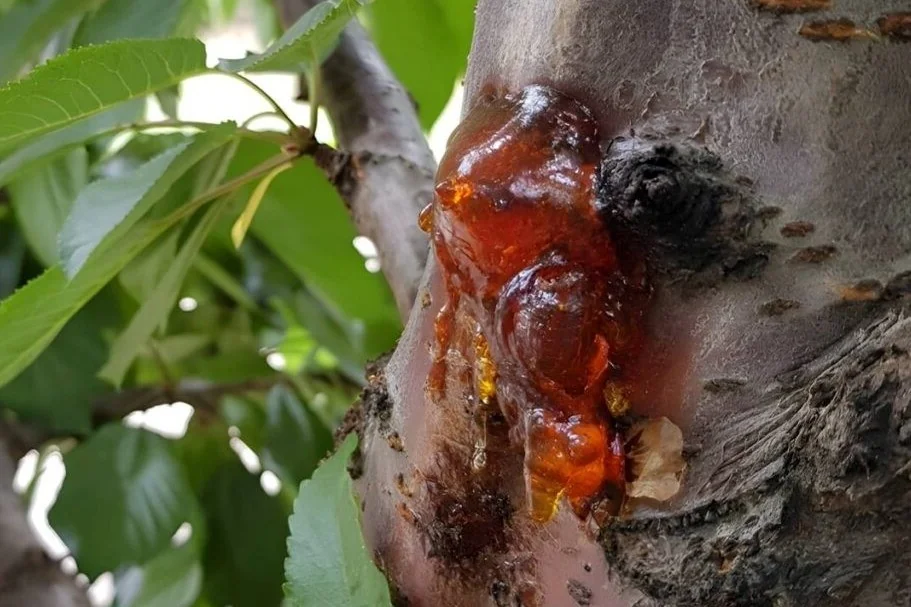
The cherry bacterial canker is once again in the spotlight of scientific research in Chile, the world’s leading cherry exporter. A new study conducted by the Instituto de Investigaciones Agropecuarias (INIA) and published in the journal Plants takes an in-depth look at the different populations of the pathogen responsible for production losses that can reach 20% per year.
A pathogen adapted to Chilean orchards
The study examined samples collected in the country’s main cherry-growing regions, highlighting a key finding: the bacterium Pseudomonas syringae pv. syringae (Pss), although originally introduced from outside, has evolved by adapting to the agroclimatic conditions and management practices typical of Chilean agriculture.
This adaptive capacity explains why bacterial canker continues to represent one of the main phytosanitary challenges for the national cherry industry, despite ongoing efforts to contain it.
“This work allows us to better understand how bacterial populations behave in Chile, which is key information for designing more effective management strategies tailored to our production reality,” said Boris Sagredo, researcher at INIA Rayentué and lead author of the study.
Bacterial canker: increasingly complex management
The cherry bacterial canker is considered the most significant disease affecting the crop in the South American country. Infections can severely impact orchard productivity, with direct consequences for exports, a cornerstone of Chile’s fruit economy.
According to the researchers, the high genetic variability and local adaptation of the pathogen make field control more difficult, requiring a more targeted and dynamic management approach.
Copper resistance: a warning sign for the sector
Among the most relevant findings is the identification of Pseudomonas syringae populations showing increased resistance to copper-based products. Copper has historically been one of the main tools for controlling bacterial diseases in fruit crops, but the emergence of less sensitive strains calls for a strategic reassessment.
The research therefore reinforces the need to adopt integrated disease management programs combining sound agronomic practices, timely monitoring, and a more rational and targeted use of available control tools.
According to INIA, the results will help strengthen detection and monitoring systems for bacterial canker, guide the selection of more tolerant plant material, and optimize control strategies in orchards. The goal is a more resilient and sustainable cherry industry, capable of maintaining high quality standards in international markets.
Research focused on the future of Chilean cherry production
The study is part of a research line launched by INIA in 2017. In its initial phase, it was supported by the Regional Government of O’Higgins and later funded by the National Agency for Research and Development (ANID) through public funds dedicated to science and innovation.
In a global context where competitiveness also depends on the ability to manage phytosanitary emergencies, understanding pathogen evolution is a strategic step to safeguard Chile’s leadership in cherry exports and ensure supply chain stability in the years ahead.
Source: www.freshfruitportal.com
Image source: INIA
Cherry Times - All rights reserved