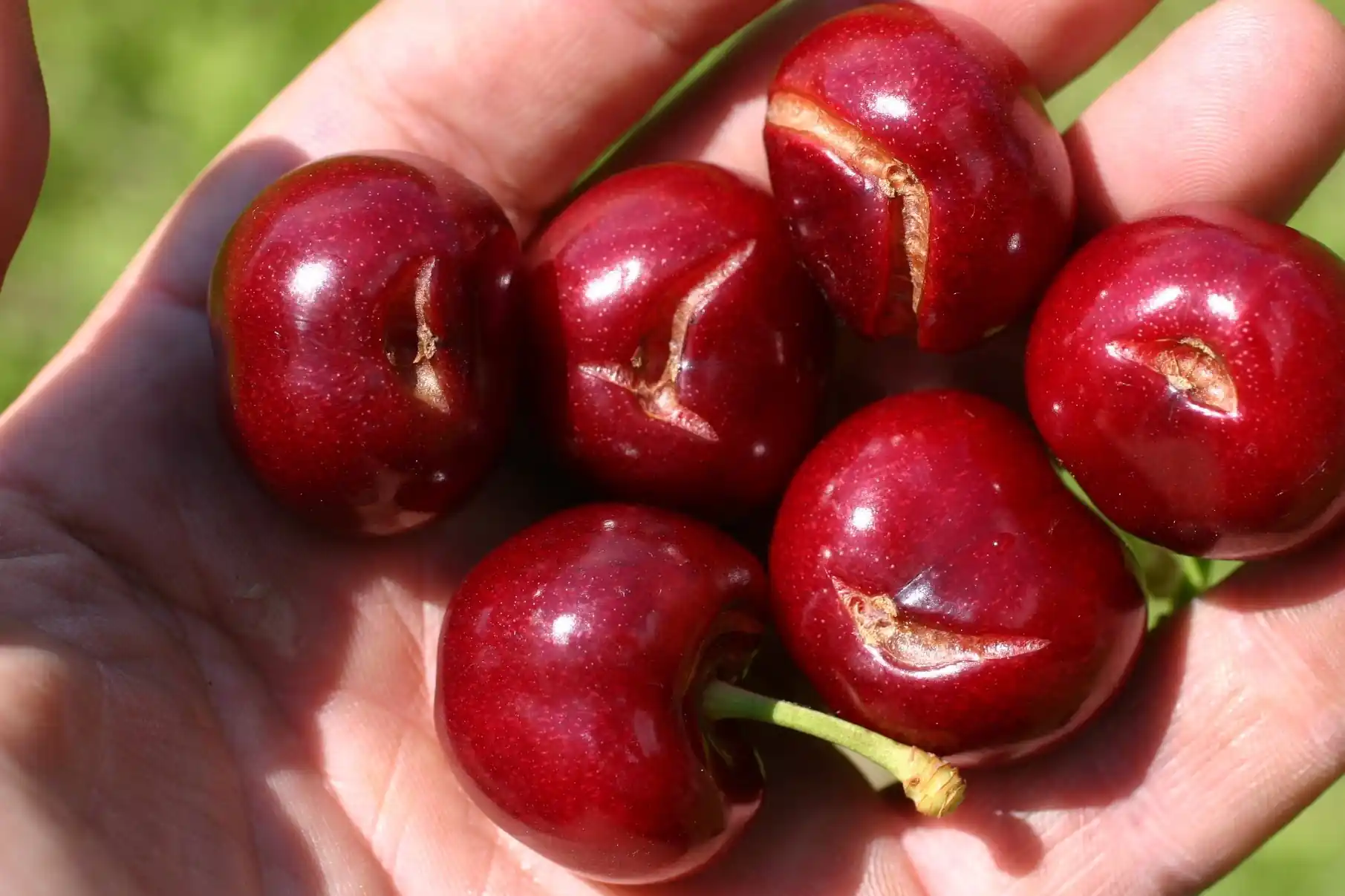
As of June 1, 2026, cherry production for the 2026 season has been revised downward, with a 4% decrease compared with 2025. This revision is explained by the damage caused by hailstorms in Auvergne-Rhône-Alpes.
Prices are poorly supported at the start of the season, under the effect of weak demand and early Spanish competition, while Europe is recording an overall good harvest.
A 2026 French production expected to decline slightly year on year
As of June 1, French cherry production for 2026 has been revised downward compared with the previous month, due to losses linked to hailstorms that occurred in May in Auvergne-Rhône-Alpes.
The reduction in surface areas, equal to -3% year on year, and unfavorable spring conditions, characterized by rain and wind, affected the production of early varieties.
In the absence of new adverse weather events, production would reach 30,800 tonnes, equal to a 4% decline compared with 2025. However, it would exceed the average production of the last five years by 8%.
European production should stand at a good level, with a recovery in Italy and a good harvest in Spain, where the season is three weeks earlier than in 2025.
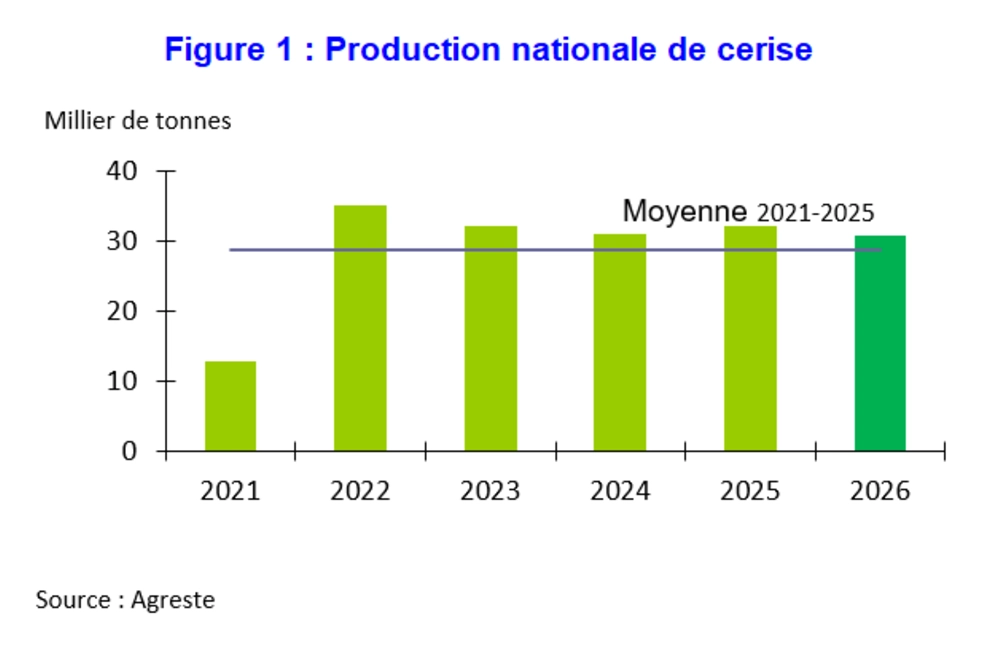 Figure 1: national cherry production
Production revised downward in Auvergne-Rhône-Alpes
In Occitanie, cherry production in 2026 should be close to that of the previous year, with variations depending on the areas. In Roussillon, production would be slightly lower than in 2025 due to flowering disrupted by rain and wind, as well as by a reduction in surface areas.
In the Garonne valley, however, production would be higher than in 2025.
In Auvergne-Rhône-Alpes, cherry production has been revised downward and is expected to decrease by 12% compared with 2025. The hailstorms that occurred in May caused losses in the orchards of Drôme and Ardèche.
Surface areas also decreased by 6% year on year. Pressure from the Drosophila fly remains significant in this region.
In Provence-Alpes-Côte d’Azur, production varies depending on the sectors. Early varieties were particularly affected by unfavorable weather conditions. However, total production is expected to remain stable compared with 2025, thanks to the good production load of later varieties.
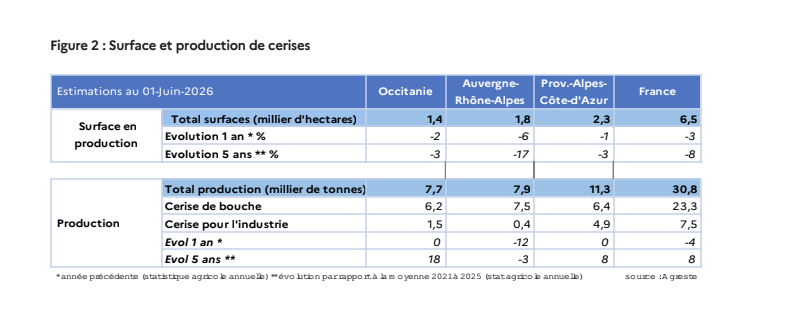 Figure 2: Cultivated area and cherry production
Prices poorly supported at the start of the season
In May 2026, cherry prices were stable year on year and 4% below the five-year average. Several factors explain this situation.
The season started earlier than usual, with an already abundant European supply, particularly in Spain, where the harvest is early.
The cool temperatures recorded at the beginning of the month limited demand. Bad weather also required significant fruit sorting. At the end of May, the early heatwave slowed cherry ripening, temporarily reducing the volumes available on the market.
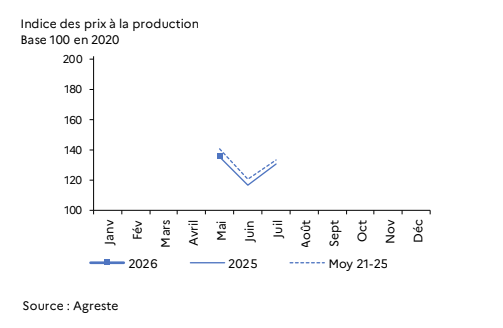 Figure 3: Agricultural producer prices
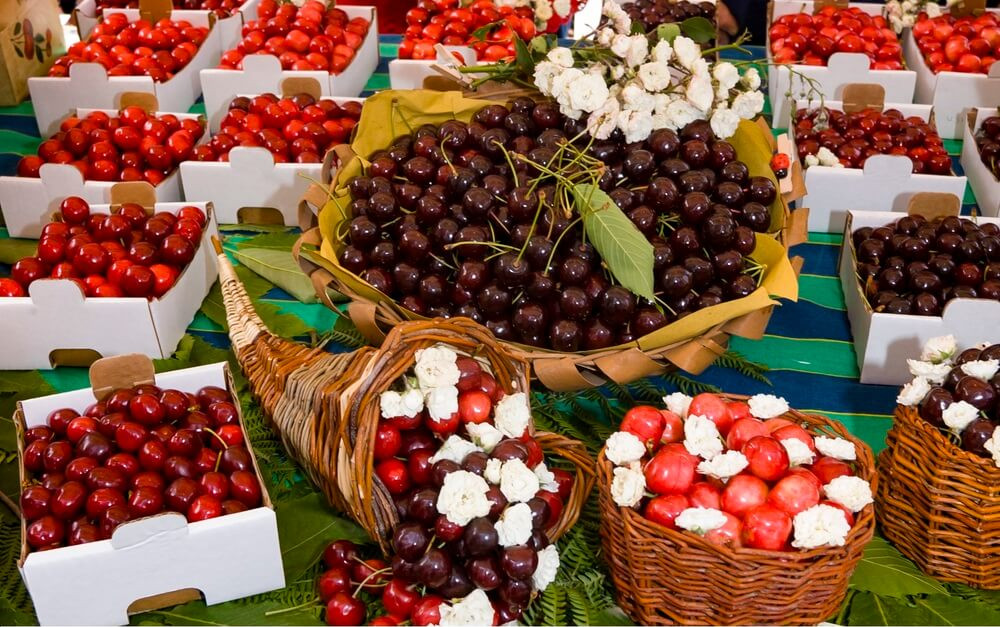
Opening image source: Stefano Lugli
Source: Agreste
Laurent Bernadette and Maurine Lousteau
SSP
Cherry Times - All rights reserved