Stefano Lugli - SL Fruit Service (IT)
Cherry Times technical-scientific committee
Nemo propheta in patria... Born and bred in Italy on the slopes of the Modenese Apennines (Vignola, Italy) Sweet Aryana has found one of her earthly paradises on the other side of the Andes. The Chilean experience is emblematic. There would be many more to tell and just as significant to demonstrate the international appeal of Sweet Aryana and her Sweet sisters.
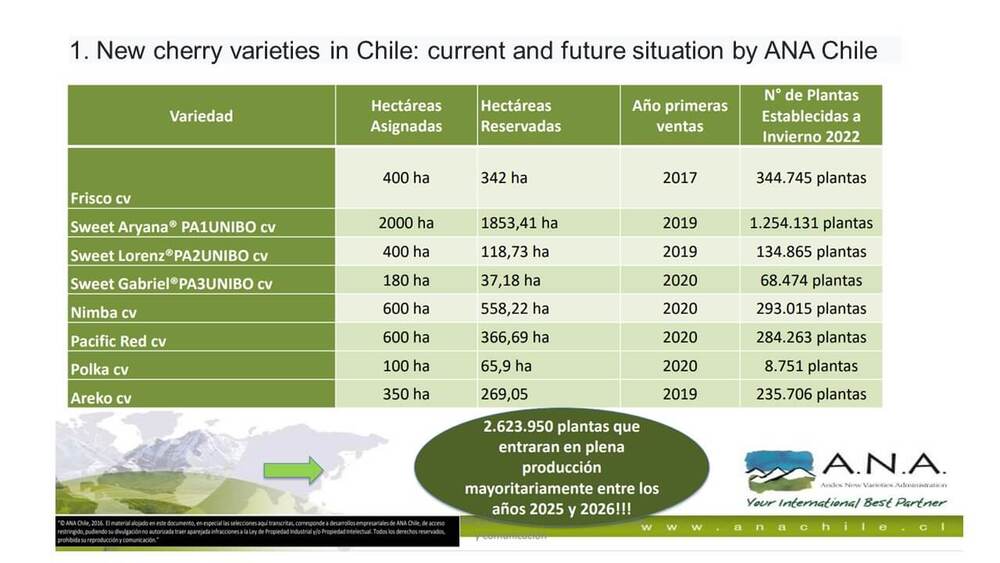
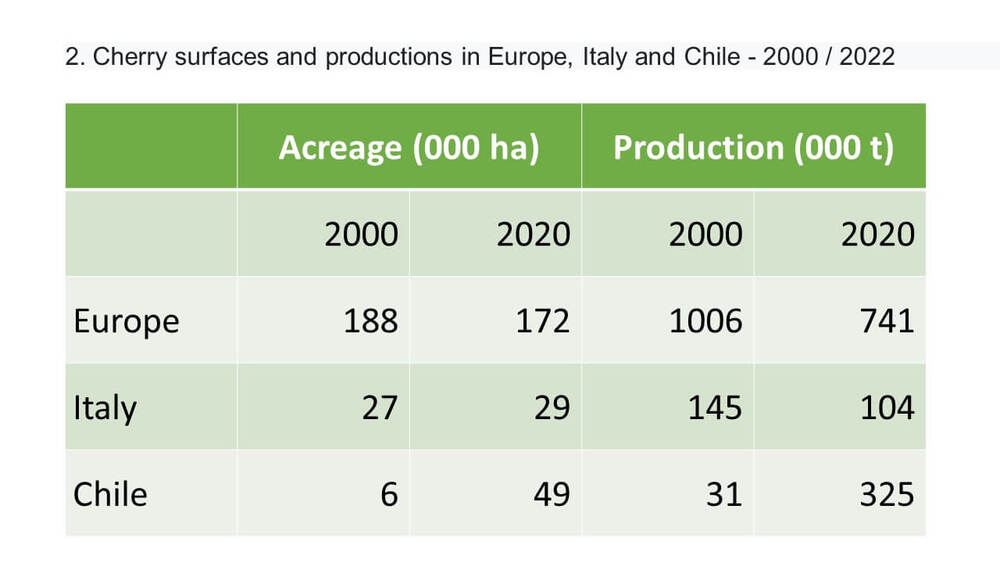
With 2000 hectares invested and 2 million plants in the nursery (source: Ana) Sweet Aryana is generating strong interest in Chile. The development performance of Sweet Aryana registered in Chile is four times higher than in Italy and Europe.
The 5 reasons to understand the popularity of Sweet Aryana
1. A new cherry variety is more likely to emerge in developing countries (e.g. Chile) than in areas where cherry cultivation is lagging behind (e.g. Italy and Europe). This applies to Sweet Aryana and equally to all other new varieties.
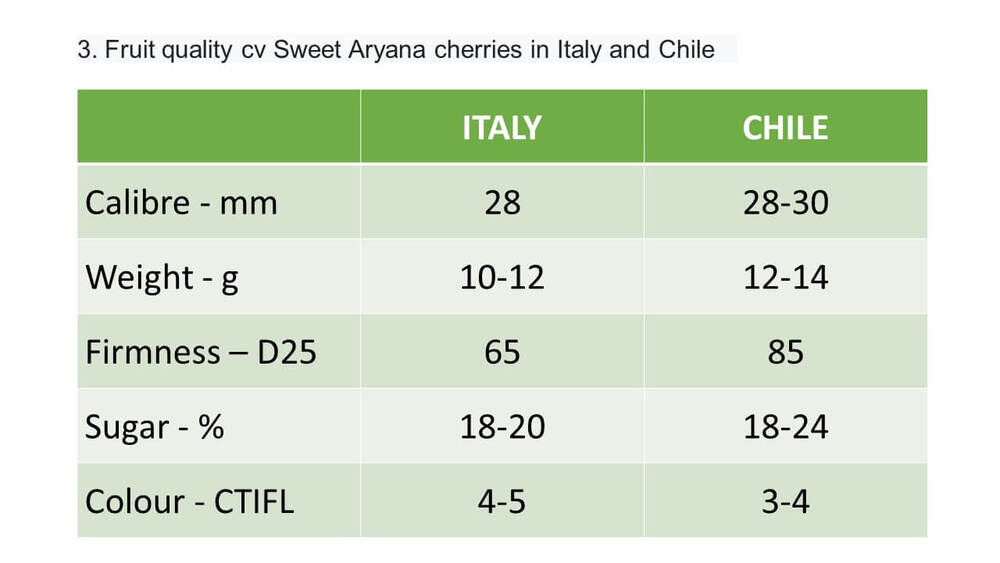
2. The cultivation area can make a fundamental contribution to the development of a new cherry variety. The results obtained in Chile on the quality of Sweet Aryana are superior to those recorded in Italy and Europe.
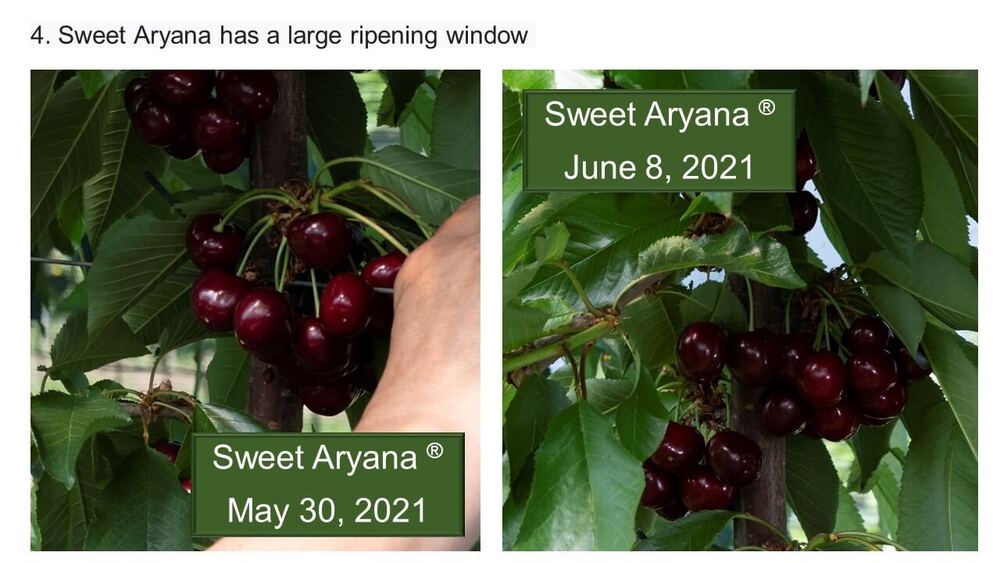
3. In spite of its earliness (-7 days Santina) Sweet Aryana has a rather large harvest window (up to 10 days and more) due to a very good ripening time of the fruit on the plant. This allows monovarietal plantings on large areas.
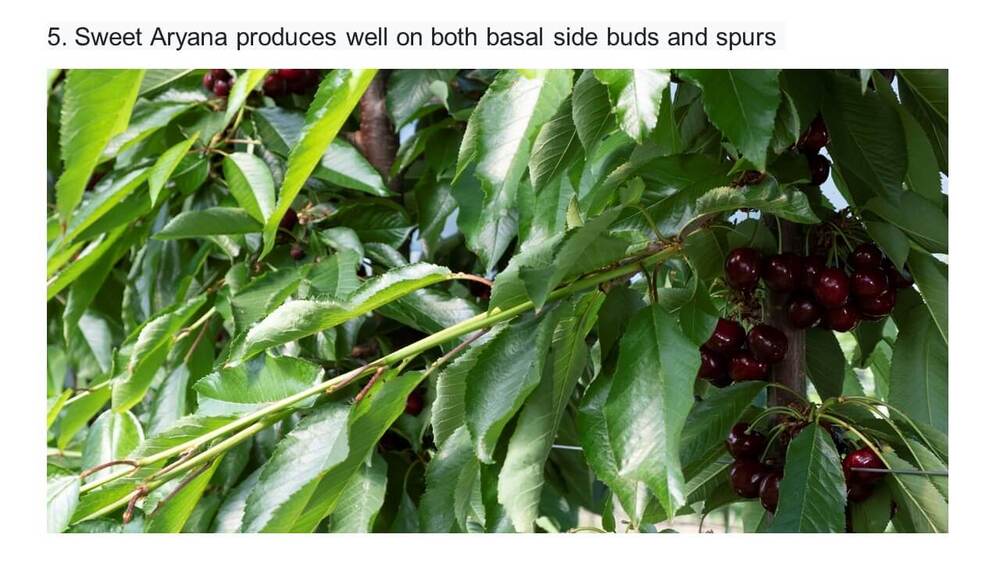
4. In addition to fruit quality, a good variety to be successful must be regularly productive and have a good plasticity of adaptation to different planting systems: both medium-density ones with vigorous rootstocks (e.g. Colt and CAB) and high and very high-density ones made with dwarfing rootstocks (e.g. Gisela).
Sweet Aryana possesses these characteristics due to its self-fertility, high vigour, expanded and well-branched vegetative habitus and intermediate productive habitus, being able to differentiate well on both lateral branches and darts.
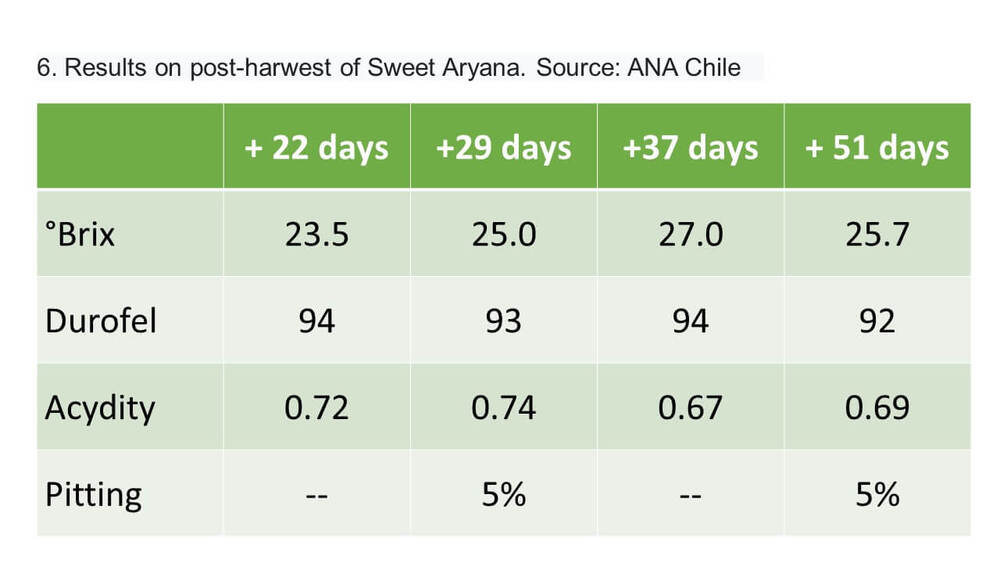
5. A final characteristic that a new variety should have, probably the main one especially if grown in countries that produce cherries for export (e.g. Chile), concerns post-harvest behaviour.
From the experimental data released by ANA Chile, the results obtained by Sweet Aryana are very positive and promising for a further development of the variety, not only for the domestic markets, as is the case in Europe, but especially for the new world cerasic realities that are aiming at exports with quality out-of-season products.
Cherry Times - All rights reserved